
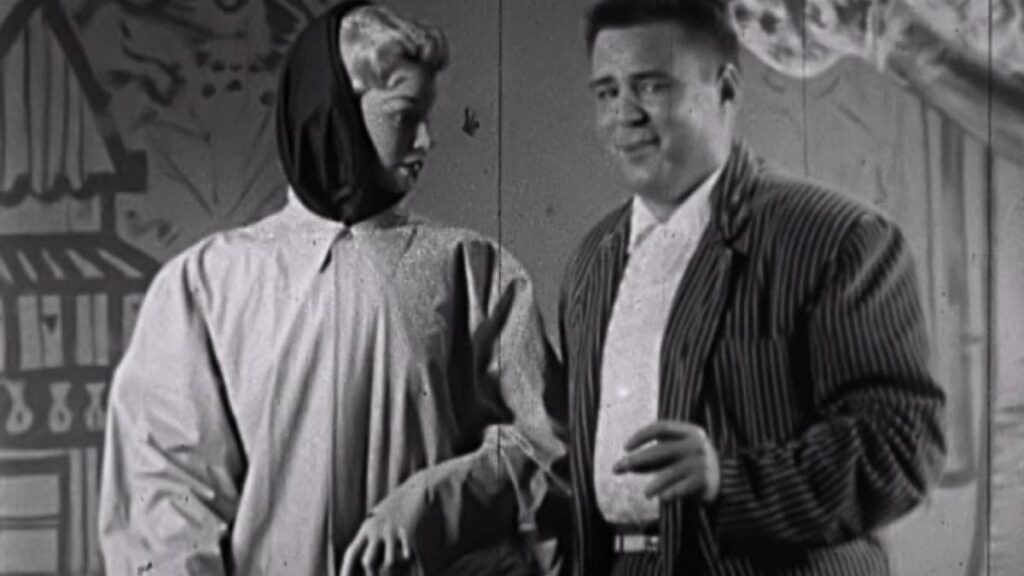
A Playful Rock and Roll Fairy Tale That Captured the Spirit of 1958
When “Little Red Riding Hood” was released in 1958 by The Big Bopper, it arrived at a moment when rock and roll was brimming with personality, humor, and a touch of mischief. Though it never matched the commercial triumph of his blockbuster hit “Chantilly Lace,” the song became a memorable companion piece, reinforcing J. P. Richardson’s reputation as one of the era’s most colorful storytellers. “Chantilly Lace” had soared to No. 6 on the Billboard Hot 100 in 1958, establishing Richardson as a national sensation, and “Little Red Riding Hood” followed in its wake as part of his debut album “Chantilly Lace.”
Richardson, known professionally as The Big Bopper, was not merely a singer but a former radio disc jockey who understood rhythm, timing, and the theatrical pulse of popular culture. In “Little Red Riding Hood,” he transforms the familiar fairy tale into a sly rock and roll narrative, filled with exaggerated vocal inflections and playful phrasing. It is less a retelling of a children’s story and more a wink toward adulthood, delivered with a grin you can almost hear through the speakers. The performance carries the same talk-singing style that defined “Chantilly Lace,” blending humor with a driving backbeat that feels unmistakably late 1950s America.
Behind the novelty lies something more revealing about its time. Rock and roll in 1958 was still young, still daring. Artists like The Big Bopper were experimenting with persona as much as melody. He leaned into character, becoming larger than life, turning simple lyrics into theatrical events. “Little Red Riding Hood” reflects a period when pop music was playful and unpolished, when personality could matter as much as vocal perfection.
There is also an undercurrent of poignancy when listening today. Richardson’s career was tragically cut short in February 1959 in the plane crash that also claimed Buddy Holly and Ritchie Valens. That loss froze his catalog in time. Songs like “Little Red Riding Hood” now feel like artifacts from a fleeting chapter in American music, when optimism and humor danced freely across jukeboxes.
Listening again, one hears not just a novelty tune but the exuberance of an artist who understood entertainment in its purest form. The laughter in his voice, the confident swagger, the slightly mischievous tone all remind us that early rock and roll was as much about storytelling as sound. “Little Red Riding Hood” stands as a charming footnote to a brief yet vivid career, echoing from a time when the airwaves crackled with possibility and every new 45 felt like a small revolution.
 Oldies Songs
  Oldies Songs