
A Gentle Anthem of Consolation: How “Pack Up Your Sorrows” Turned Heartache into Quiet Hope
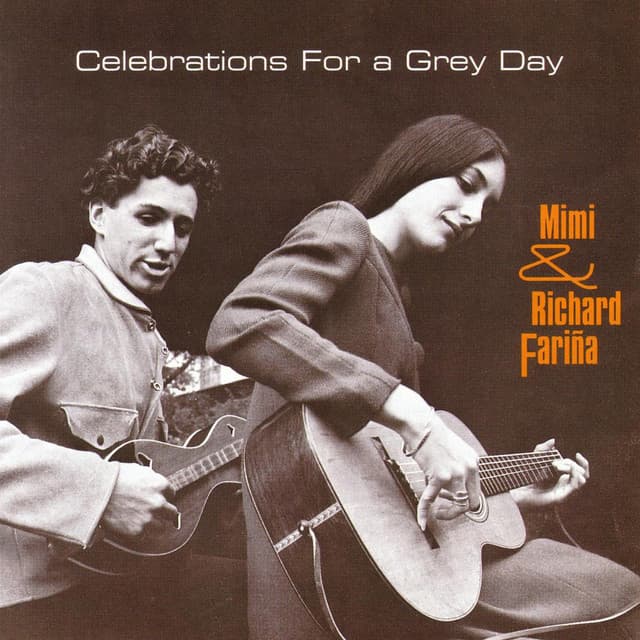
In the mid-1960s, when the folk revival was still echoing through coffeehouses and college campuses, few songs captured the tender resilience of the era quite like “Pack Up Your Sorrows.” Written and performed by the husband-and-wife duo Mimi & Richard Fariña, the song first appeared on their 1965 debut album Celebrations for a Grey Day. Though it was never designed as a commercial chart-topper, it became one of the most beloved songs of the American folk movement—an enduring piece of musical comfort whose influence would reach far beyond its modest commercial footprint.
Released in early 1965 on Vanguard Records, Celebrations for a Grey Day did not dominate the mainstream pop charts, but it was warmly received within the folk community and college radio circles that supported artists like Joan Baez, Bob Dylan, and Judy Collins. Over time, “Pack Up Your Sorrows” became the album’s most widely remembered song, frequently covered by other artists and cherished for its quietly profound message. One of the most notable later interpretations came from Joan Baez, whose recording helped introduce the song to an even wider audience.
The story behind the song is inseparable from the fascinating life of Richard Fariña, a novelist, musician, and political thinker who was deeply embedded in the 1960s counterculture. Richard was already known in literary circles for his celebrated novel Been Down So Long It Looks Like Up to Me. His partnership with Mimi Fariña, the younger sister of Joan Baez, created one of the most distinctive duos of the folk revival. Their music blended Appalachian influences, poetic lyricism, and a reflective tone that stood apart from the more overtly political songs of the time.
“Pack Up Your Sorrows” was written during a period when the American folk scene was evolving rapidly. Protest songs filled the airwaves, yet this song chose a more intimate direction. Rather than addressing social upheaval directly, it spoke to the quieter battles people fight within themselves. The song’s central refrain—encouraging someone to “pack up your sorrows and give them all to me”—is simple on the surface, but its emotional resonance runs deep.
Musically, the track reflects the delicate interplay that defined Mimi & Richard Fariña’s style. Richard’s dulcimer work adds a shimmering, almost medieval texture to the arrangement, while Mimi’s clear, gentle voice provides warmth and sincerity. The melody unfolds with an unhurried grace, allowing the listener to sit with the words rather than rush past them. It feels less like a performance and more like a quiet conversation shared in a dimly lit room.
The song’s meaning lies in its extraordinary empathy. Instead of offering grand solutions to life’s troubles, “Pack Up Your Sorrows” offers companionship. Its message is not that sorrow disappears—but that it becomes lighter when shared. That idea gave the song a timeless quality. Long after the political debates of the 1960s faded into history, the song remained relevant because its emotional truth never aged.
There is also a bittersweet layer to the song’s legacy. Richard Fariña died tragically in a motorcycle accident on April 30, 1966—ironically on the very day his novel was published. He was only 29 years old. The loss abruptly ended one of folk music’s most promising creative partnerships. In the years that followed, Mimi Fariña continued performing and later devoted much of her life to social activism, particularly through the organization Bread and Roses, which brought music to hospitals and care facilities.
Because of that history, listening to “Pack Up Your Sorrows” today carries an emotional weight that may not have been fully apparent in 1965. The song feels almost prophetic—an artist offering comfort to the world, even as his own time was heartbreakingly brief.
More than half a century later, “Pack Up Your Sorrows” still feels like a gentle hand placed on the shoulder of the listener. It belongs to that rare class of folk songs that never rely on spectacle or grandiosity. Instead, it survives through sincerity, humility, and the quiet belief that kindness—expressed through music—can soften even the hardest days.
And perhaps that is why the song endures. Long after the coffeehouses of the Greenwich Village folk scene have disappeared, the voice of Mimi Fariña, joined with the poetic spirit of Richard Fariña, continues to whisper the same comforting promise: that sorrow, when shared, becomes something easier to carry.