
A Song That Turned Rebellion Into Rhythm and Reminded the World Where Rock Began
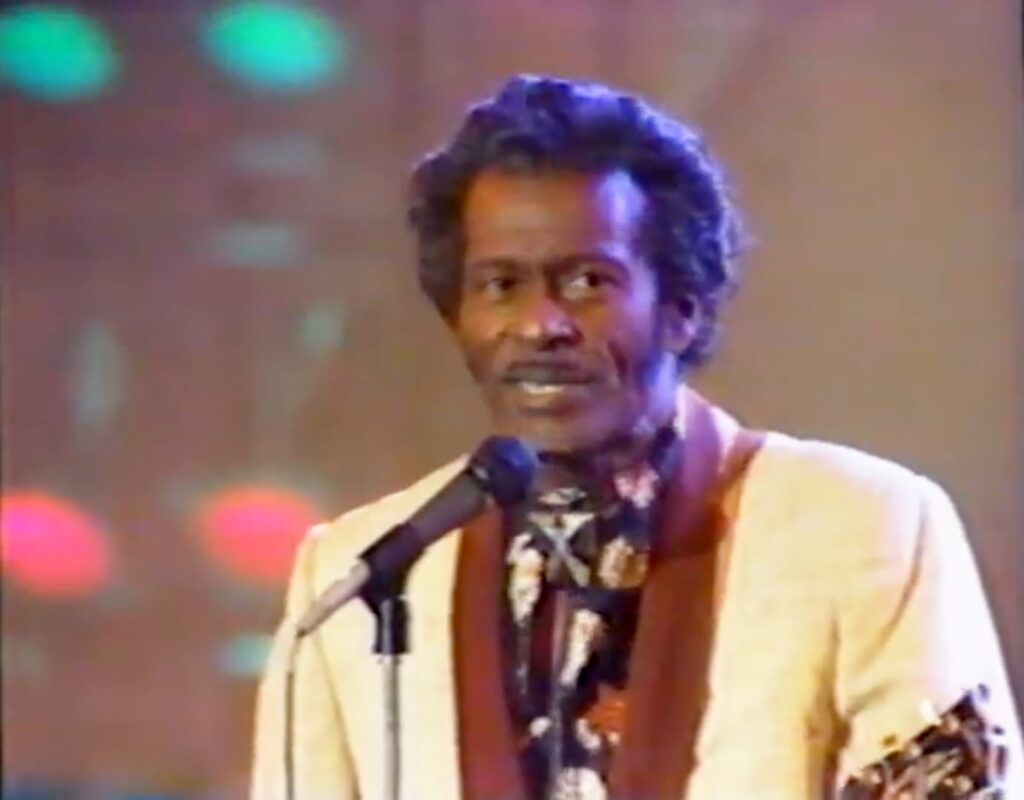
In 1984, during the electrifying television special Super Night of Rock ’n Roll, Chuck Berry stepped onto the stage with the quiet authority of a man who had nothing left to prove, yet everything still to give. By then, his legacy was already etched into the foundation of modern music. But when the opening chords of “Roll Over Beethoven” rang out, it was not history that filled the room. It was something immediate, alive, and unmistakably urgent.
Originally released in 1956, the song had long stood as a declaration of independence for a new generation. By the time Berry performed it that night, it had become both a cultural artifact and a living force. His voice, slightly weathered yet still sharp with conviction, carried the same playful defiance that once challenged classical tradition and reshaped popular sound. The famous line about telling Tchaikovsky the news still landed with a knowing smile, as if Berry himself were in on a timeless joke that never grew old.
What made this 1984 performance remarkable was not technical perfection, but presence. Berry’s guitar work, lean and deliberate, retained its signature bite. Every riff felt economical yet essential, reminding listeners that rock ’n roll was never about excess, but about feel. As he moved across the stage with that familiar duckwalk spirit, there was a sense that time had folded in on itself. The young pioneer and the seasoned legend existed in the same moment.
The audience responded not just with applause, but with recognition. They were not merely watching a performance. They were witnessing continuity. A song born in the infancy of rock returned decades later, still breathing, still moving feet, still stirring something restless and joyful.
In retrospect, this performance of “Roll Over Beethoven” was less a revival and more a reaffirmation. Chuck Berry did not revisit the past. He carried it forward, proving that the pulse of rock ’n roll, once ignited, does not fade. It simply waits for the right hands to strike the chord again.
 Oldies Songs