
A humble anthem of the open road, where a simple truck becomes a symbol of freedom, memory, and a life honestly lived.
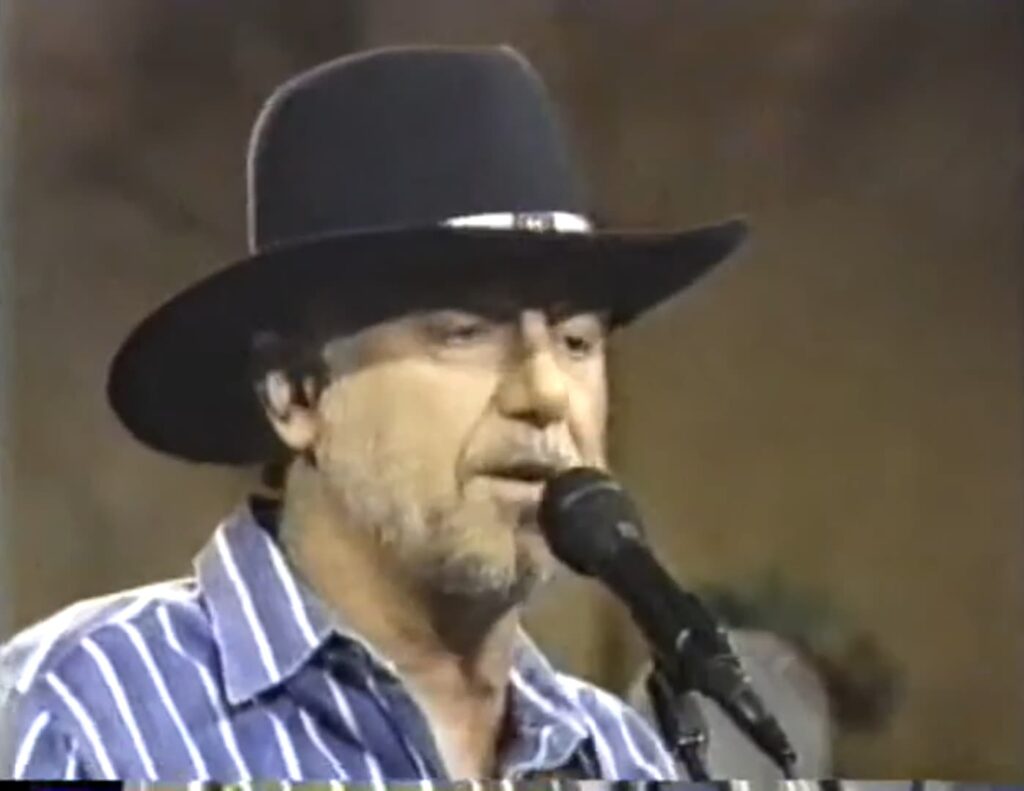
Around 1990, during a period when outlaw country had already carved its legacy into American music, Jerry Jeff Walker delivered a performance of “Pickup Truck Song” that felt less like a stage act and more like a front-porch confession. Captured in The Texas Connection, this rendition stands as a quiet document of an artist who never chased polish, only truth. By that time, Walker had long been established as a central figure in the progressive country movement, known for blending folk storytelling with the laid-back rhythms of Texas life.
The song itself was never designed for radio dominance. Instead, “Pickup Truck Song” thrives on its plainspoken charm, painting a portrait of everyday existence where a truck is not just a vehicle, but a companion through changing seasons. In this performance, Walker’s voice carries a weathered warmth, slightly rough around the edges, yet steady in its sincerity. There is no theatrical strain in his delivery, only a relaxed confidence that comes from years spent living the stories he sings.
What makes this particular moment endure is its unfiltered intimacy. Backed by a tight, unpretentious band, Walker leans into the rhythm as if he is guiding listeners down a long Texas highway at dusk. The arrangement remains simple, allowing the narrative to breathe. Each lyric lands with quiet familiarity, evoking images of worn seats, dusty roads, and the kind of solitude that feels more comforting than lonely.
By the early 1990s, Jerry Jeff Walker had already influenced a generation of songwriters who valued authenticity over perfection. Performances like this reaffirmed his role not just as a musician, but as a storyteller rooted in place and experience. There is a lived-in quality to “Pickup Truck Song” that cannot be replicated, only remembered.
In retrospect, this recording from The Texas Connection serves as more than archival footage. It is a reminder of a time when songs did not need grandeur to leave a mark. They only needed honesty, a steady rhythm, and a voice willing to tell the truth, no matter how simple it seemed.