
A forgotten television love song that never reached the charts, yet somehow survived in memory far longer than many official hits of the early 1970s.
There are songs that become famous because the world cannot stop playing them, and then there are songs like “Stephanie” — delicate little moments in pop culture that quietly slip through the cracks of time, only to return decades later carrying far more emotion than anyone expected. Performed in connection with Bobby Sherman and The Partridge Family, “Stephanie” was never released as a major commercial single during its original era, which means it never entered the Billboard Hot 100 or the major UK charts upon release. Yet among devoted fans of early 1970s television pop, the song gradually became something almost mythical — a hidden treasure tied to two of the decade’s most beloved teen idols, Bobby Sherman and David Cassidy.
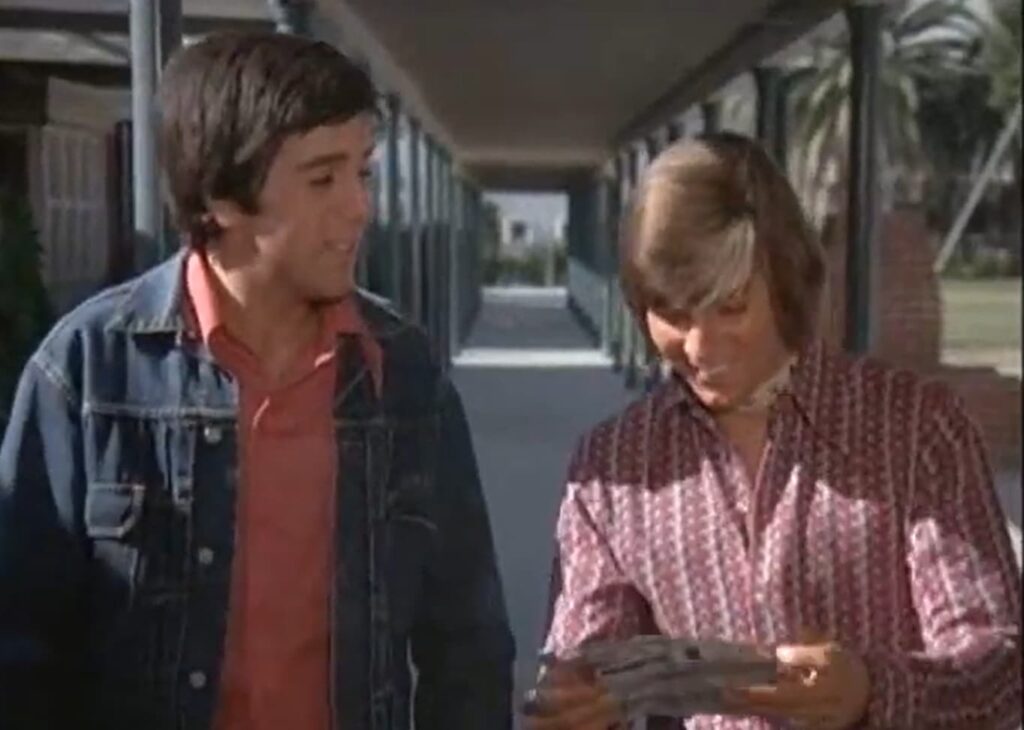
The story behind the song is deeply connected to the television world of The Partridge Family. “Stephanie” appeared in the 1971 episode “A Knight in Shining Armor,” an episode that also functioned as a launching point for Sherman’s later sitcom Getting Together. In that episode, Bobby Sherman played struggling songwriter Bobby Conway, a gentle dreamer trying desperately to finish a song that matters to him. What made the episode memorable was not simply the plot itself, but the chemistry created by seeing Sherman and David Cassidy together onscreen at the height of their popularity. For many viewers in 1971, it felt like two worlds colliding — two faces that had filled countless magazine covers, bedroom posters, and afternoon conversations suddenly sharing the same television hour.
“Stephanie” itself carries the unmistakable warmth of early 1970s soft pop. The melody feels unhurried, almost innocent, floating on the kind of easy acoustic arrangement that once drifted from AM radios during long summer evenings. Lyrically, the song is simple, but that simplicity is exactly what gives it emotional staying power. There is no dramatic heartbreak here, no grand philosophical statement. Instead, the song speaks with quiet sincerity about affection, admiration, and emotional vulnerability — themes that became the heartbeat of so much television pop music during that era.
One fascinating detail often overlooked is that “Stephanie” was actually a rewritten version of another Partridge Family-related composition titled “All of the Things.” The chord structure and much of the melodic framework remained intact while new lyrics were added later. Several recordings reportedly existed, but the version fans cherish most features Bobby Sherman singing the opening verse before David Cassidy takes over the remainder of the performance. According to accounts connected to the series’ history, the collaboration was never commercially pushed at the time because managers feared combining the two teen idols too directly might blur their carefully marketed individual identities. Ironically, that very decision is part of what later made the recording feel so special.
For decades, “Stephanie” existed almost like a whispered memory among collectors and longtime fans. It was not treated as one of the official flagship songs of The Partridge Family, unlike massive hits such as “I Think I Love You” — the group’s landmark 1970 single that reached No. 1 on the Billboard Hot 100 in America. Instead, “Stephanie” became something more intimate: a song people remembered because of how it made them feel rather than because of chart statistics or radio dominance.
And perhaps that is why the song has aged so gracefully.
Listening to “Stephanie” today feels like opening an old photo album where the edges have softened with time. The production is unmistakably from another era — gentle harmonies, warm analog instrumentation, and vocals untouched by modern studio perfection. Yet underneath all that nostalgia is something surprisingly human. Bobby Sherman’s voice carries a kind of boyish tenderness that defined much of his appeal, while David Cassidy brings emotional polish and melodic confidence that helped make him one of the defining pop figures of the early 1970s.
There is also something deeply touching about the way “Stephanie” survived despite never becoming a commercial event. Many chart-topping songs disappear after a few years, but forgotten television recordings sometimes linger for generations because they become attached to personal memory rather than public success. Fans did not hold onto “Stephanie” because it dominated radio stations. They held onto it because it reminded them of a gentler cultural moment — a time when television music still believed in innocence, sincerity, and uncomplicated emotion.
In many ways, “Stephanie” represents the softer side of early 1970s pop culture: melodic, sentimental, slightly naïve, yet completely genuine. And now, decades later, that sincerity feels more valuable than ever.