
A Quiet Prayer for Tomorrow Hidden Inside “Blind Hope” — Where Youthful Longing Meets the Fragility of Faith
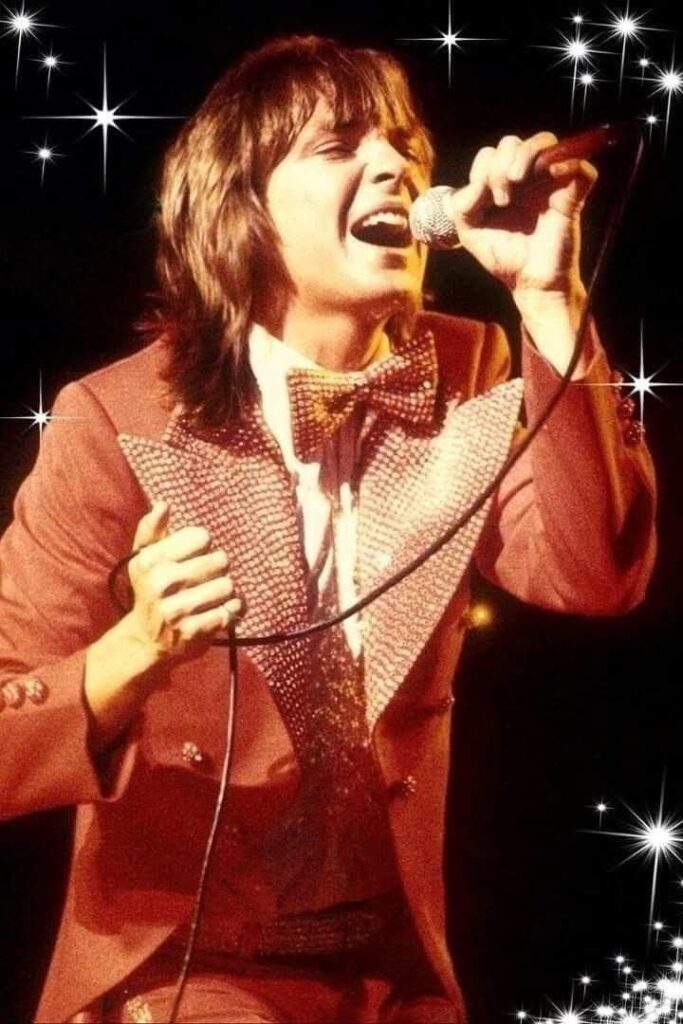
When speaking of David Cassidy, many listeners instinctively return to the bright, polished pop of The Partridge Family—a world filled with catchy melodies and carefully arranged optimism. Yet beneath that glossy surface, there existed a more introspective artist, one who longed to be taken seriously beyond teen idol status. It is in “Blind Hope”, a lesser-discussed but deeply revealing track, that we encounter that more vulnerable voice.
Released during the early 1970s, a period when Cassidy was attempting to break free from the constraints of his television persona, “Blind Hope” did not storm the charts in the way his earlier hits did. Unlike the bright commercial success of songs like “Cherish” or “I Think I Love You,” this particular recording did not secure a prominent position on the Billboard Hot 100. And yet, its absence from high chart rankings tells a story of its own—one of artistic risk, quiet rebellion, and the cost of authenticity in an industry that often rewards familiarity over depth.
The song itself unfolds like a soft confession. From the opening lines, there is a sense of emotional hesitation—of someone standing at the edge of belief, unsure whether to step forward or retreat. “Blind Hope” speaks to that delicate human condition where faith is not built on certainty, but on necessity. It is not hope born of confidence, but rather hope that exists despite doubt. In Cassidy’s delivery, one hears not the polished confidence of a pop idol, but the trembling sincerity of a man searching for something real.
Behind the scenes, this period in Cassidy’s life was marked by exhaustion and disillusionment. The relentless touring schedules, the pressure to maintain a carefully curated image, and the constant expectations of a young fanbase had begun to take their toll. He was no longer content to be simply adored—he wanted to be understood. Songs like “Blind Hope” became his quiet rebellion, an attempt to communicate something deeper than the surface-level joy that had defined his earlier career.
Musically, the arrangement reflects this shift. Gone are the overly bright harmonies and bubblegum textures; in their place, a more subdued and reflective tone emerges. The instrumentation is gentle, allowing space for the lyrics to breathe. There is a subtle melancholy woven through the melody, as if each note carries a weight that cannot quite be spoken aloud. It is the kind of song that does not demand attention, but rather invites it—patiently, almost humbly.
The meaning of “Blind Hope” can be interpreted in many ways, but at its core lies a universal truth: the courage it takes to keep believing when certainty has long since faded. Whether one hears it as a reflection on love, personal identity, or the search for purpose, the song resonates because it refuses to offer easy answers. Instead, it sits with the listener in that quiet space between doubt and faith, where so much of life is truly lived.
In retrospect, the lack of chart success for “Blind Hope” feels almost fitting. It was never meant to be a crowd-pleaser in the traditional sense. Rather, it stands as a deeply personal statement—one that perhaps found its true audience not in the masses, but in those willing to listen closely. For those who revisit it today, especially with the distance of time, the song carries an added poignancy. It reminds us that even those who seem to have everything can feel uncertain, searching, and profoundly human.
In the broader arc of David Cassidy’s career, “Blind Hope” may not be the song that defined him publicly, but it is certainly one that reveals him privately. And sometimes, it is in these quieter moments—far from the spotlight—that an artist’s true voice can finally be heard.