
A Gentle Return to Home Through Harmony and Memory
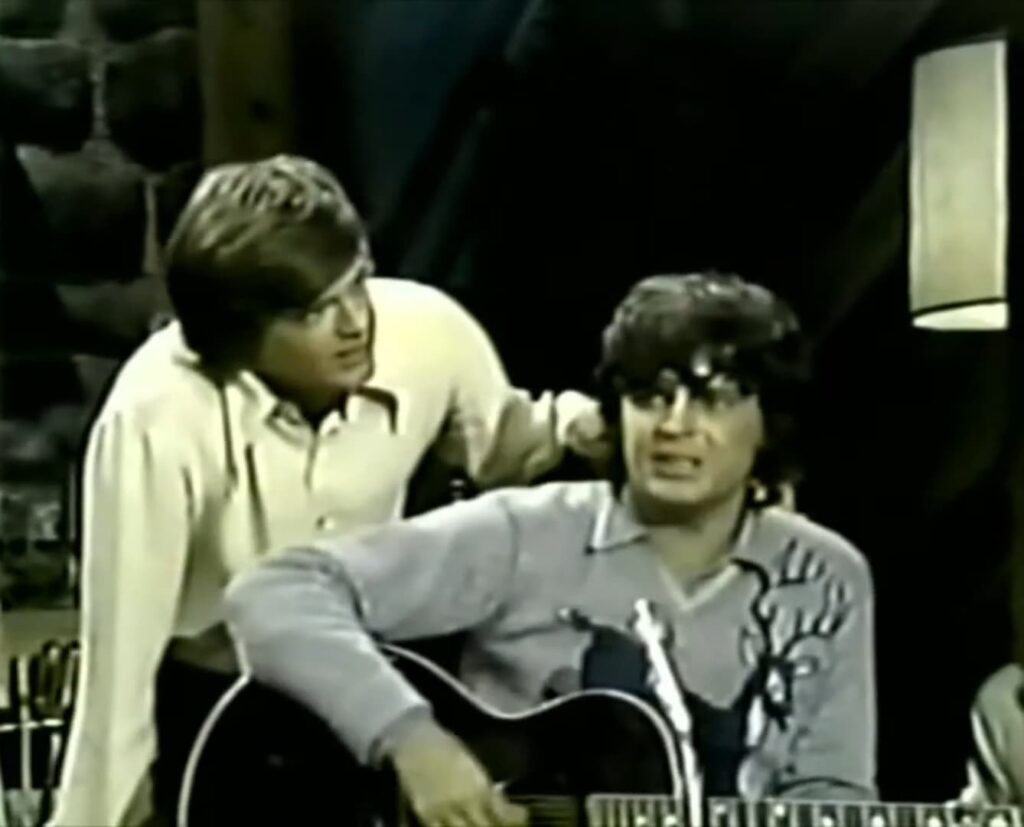
On an episode of The Johnny Cash Show in the early 1970s, The Everly Brothers delivered a quietly powerful rendition of “Kentucky”, a song long rooted in American folk and country tradition. Originally popularized in 1940 by Karl Davis and later embraced by generations of artists, the song carried deep cultural resonance, especially for audiences tied to notions of home, distance, and longing. Positioned within the informal, living-room atmosphere that Johnny Cash often cultivated, this performance stood out not for spectacle, but for its sincerity.
The segment began with light humor. Cash welcomed viewers “to our house,” setting a tone that felt more like a family gathering than a television broadcast. There was laughter, a casual mention of singing “for your supper,” and then, with warm applause, he introduced Don Everly and Phil Everly. What followed was a brief exchange about choosing a song “about home,” with a passing mention of Christmas, subtly framing the emotional terrain before a single note was sung.
When “Kentucky” began, the Everlys did what they had always done best. Their harmonies, close and unforced, carried the melody with a kind of natural grace that had defined their career since the late 1950s. There was no dramatic arrangement, no orchestral backing, only guitars and voices that seemed to remember something older than the moment itself. The lyrics, simple on the surface, spoke of yearning for a place left behind, a sentiment that resonated deeply in an era marked by constant movement and change.
What made this performance linger was its restraint. The Everly Brothers did not reinterpret the song. They honored it. In doing so, they allowed its emotional weight to settle gently over the room, and by extension, over everyone watching. The applause that followed was warm, but it never broke the spell entirely.
In retrospect, this rendition of “Kentucky” on The Johnny Cash Show serves as a reminder of a time when music on television could feel personal, almost intimate. It was not about reinvention or novelty, but about connection. And for a few minutes, through harmony and memory, that connection felt unmistakably real.