
A Timeless Dream of Love, Where Harmony Turns Longing into Memory
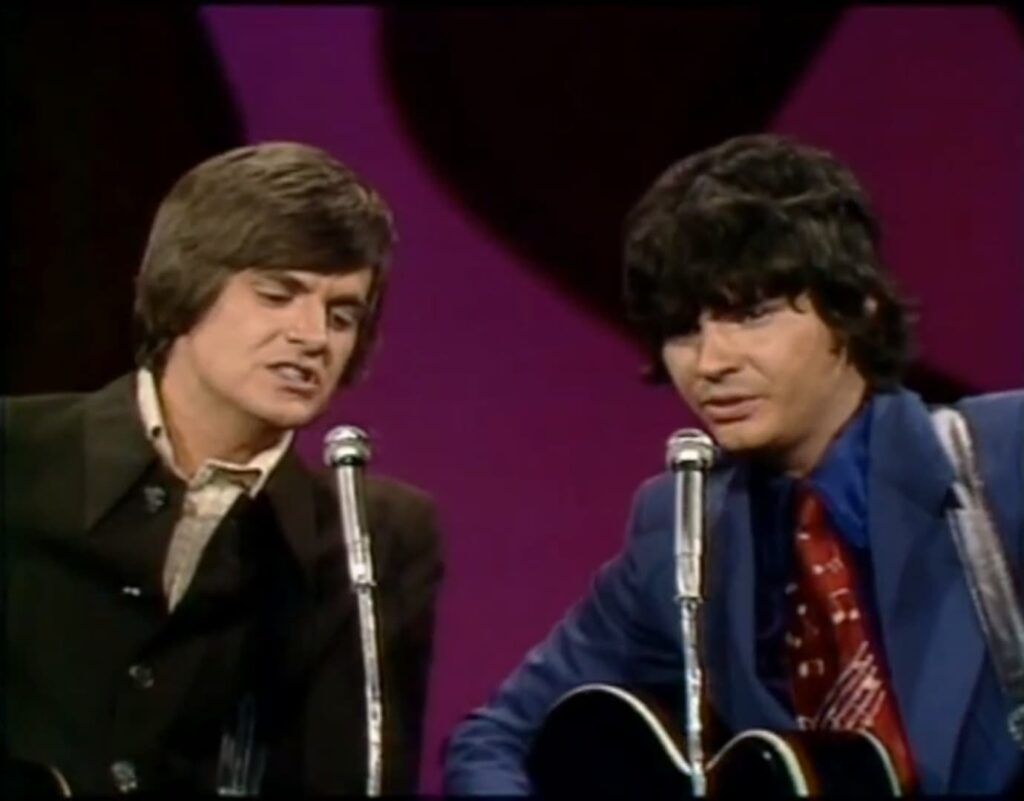
On February 28, 1971, The Everly Brothers returned to the national spotlight with a performance of “All I Have To Do Is Dream” on The Ed Sullivan Show, reviving a song that had already secured its place in music history more than a decade earlier. Originally released in 1958 and written by Boudleaux Bryant, the song had topped multiple charts, becoming one of the most recognizable ballads of the early rock and roll era. By the time of this televised appearance, the cultural landscape had shifted, yet the emotional resonance of the song remained untouched.
That evening, Don Everly and Phil Everly stood side by side, their voices blending with the same seamless precision that first captivated audiences years before. There was no need for elaborate staging. The strength of the performance lay in its simplicity. As they sang, their harmonies carried a quiet intimacy, as if the years between the original recording and this moment had only deepened the meaning behind every lyric.
What made this rendition particularly striking was its sense of reflection. The brothers were no longer the fresh-faced young men of the late 1950s, yet their delivery suggested a deeper understanding of longing and devotion. The line between memory and present feeling seemed to blur. Each note felt lived in, shaped by time and experience.
“All I Have To Do Is Dream” has always been a song about the power of imagination in love, but in this 1971 performance, it became something more. It felt like a quiet conversation between past and present, between who they were and who they had become. The audience was not just hearing a hit song. They were witnessing a piece of musical history revisited with grace and sincerity.
As the final harmonies faded, what lingered was not just the melody, but a feeling. A reminder that some songs do not belong to any single era. They travel with us, growing richer over time, waiting for the right moment to be heard again, and felt even more deeply than before.