
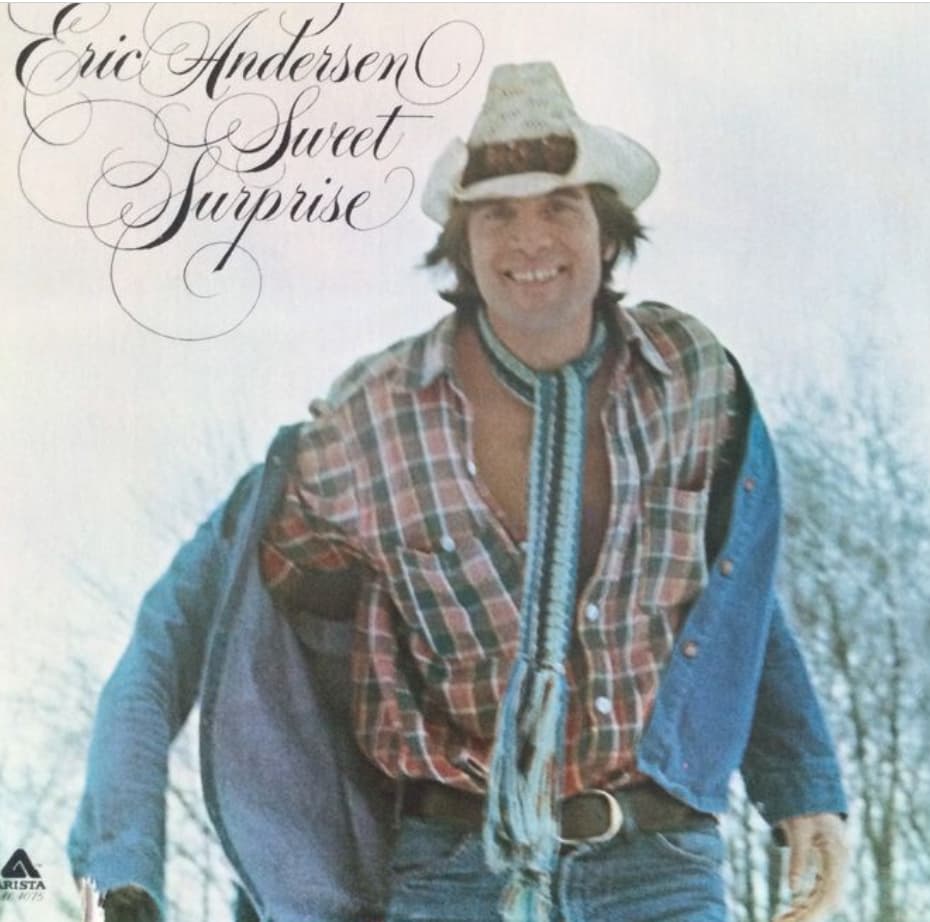
A Tender Ballad of Longing and Love from Eric Andersen’s Folk Heart
In the tapestry of 1960s and early ’70s folk music, few voices resonate with as much honest yearning and poetic lucidity as Eric Andersen. His song “Come to My Bedside, My Darlin’,” a quietly powerful expression of desire and emotional vulnerability, stands out as one of those pieces that seems to have been meant for the twilight hours of reflection — sung softly around a fire, or played for oneself in a moment of solitude.
“Come to My Bedside, My Darlin’” isn’t remembered for dominating the mainstream charts at the time of its release — it never achieved a major hit ranking on the Billboard singles charts — but it lives on as a deep cut that has haunted those who discovered it. Instead of commercial accolades, the song’s resonance comes from its inclusion on the deeply cherished Blue River album, released on January 1, 1972 under the Columbia/Legacy label. The album itself, while not a blockbuster, peaked modestly at #169 on the U.S. Top LPs & Tape chart and reached #61 in Canada — solid numbers for a folk singer-songwriter in an era dominated by rock, pop, and emerging soul music.
For those who lived through the folk revival of the 1960s and early ’70s, Eric Andersen was more than a songwriter — he was a companion of the spirit. Born in Pittsburgh and rooted in the vibrant Greenwich Village scene, Andersen’s work was celebrated by peers and later covered by luminaries like Judy Collins, Johnny Cash, Bob Dylan, and others. His songs were the whispered confidences at the heart of that community — tales of love, loss, and human striving that felt deeply personal yet universally true.
What makes “Come to My Bedside, My Darlin’” so haunting — and so beloved to those who cherish it — is its raw, unvarnished longing. The lyrics unfold like an intimate letter written on a quiet evening: “Come to my bedside, my darlin’ / Come over here and close the door / Won’t you lay your body soft and close beside me…” These opening lines convey more than desire — they capture a lifetime of waiting, of growth, and of transformation through love. The narrator speaks not just to a beloved, but to the idea of love as an almost sacred force capable of refining a restless heart.
Andersen was always a keen observer of the human condition. His writing in this song transforms physical closeness into something almost sacred: the “petticoat upon the floor” becomes symbolic of vulnerability; eyes “bluer than the mountain waters” evoke a timeless beauty; and the repeated invitation to come close is an invitation to intimacy of both body and soul. In a way, this song feels like a bridge between the innocence of early folk ballads and the more confessional singer-songwriter style that blossomed in the 1970s.
To understand this track is to understand a certain kind of longing that many of us carry beneath the surface — that yearning for connection that only grows as years pass. It’s no wonder that, even without chart-topping fame, “Come to My Bedside, My Darlin’” remains a favorite among dedicated listeners of Andersen’s music and the folk genre at large. For an older audience — those who remember the first time they heard Andersen’s voice on vinyl, or who saw him perform in an intimate club — the song can feel like an old friend: familiar, tender, and impossible to forget.
In its simplicity and honesty, this song offers something rare in music: the courage to speak love out loud, without embellishment, without artifice. It’s a gentle reminder that some of the most moving melodies are those that invite us — softly, insistently — to come closer, to listen deeply, and to feel.