
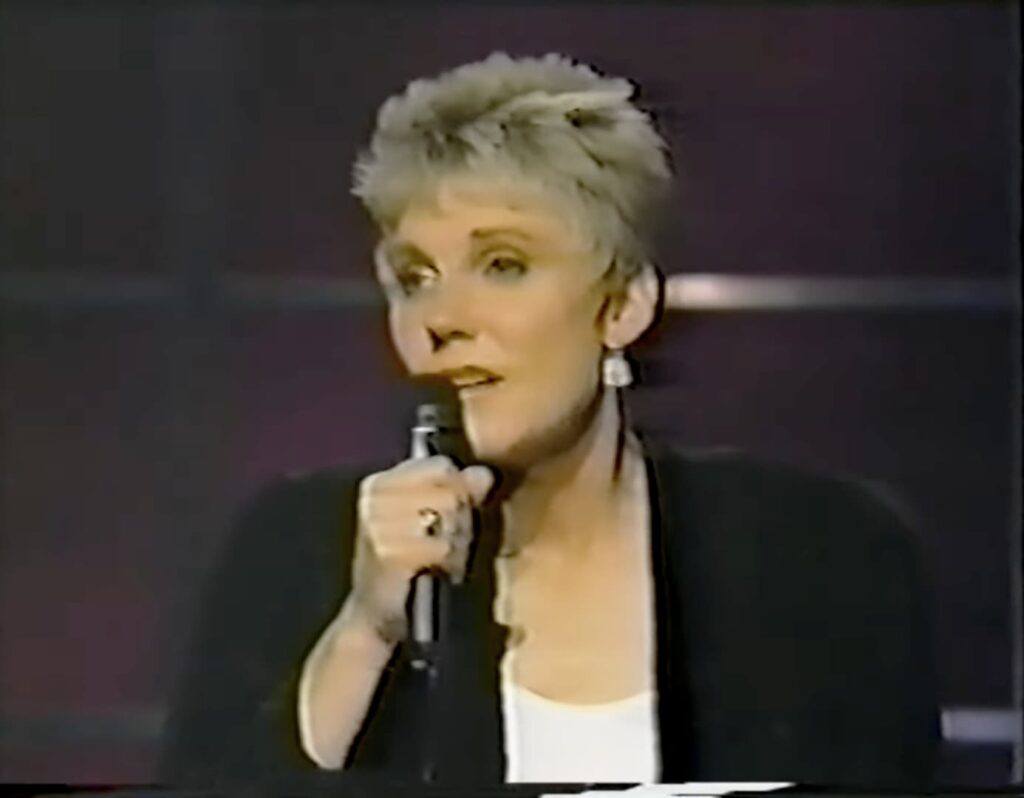
Anne Murray Didn’t Sing “Cry Me A River” With Anger. She Sang It With Experience.
On the 1993 CBC special Croonin’, Anne Murray transformed a famous torch song into something quieter, older, and somehow even more heartbreaking.
By the time Anne Murray performed “Cry Me A River” on the CBC television special Croonin’ in 1993, she no longer needed to prove anything as a vocalist. She had already spent decades becoming one of the most recognizable and beloved voices in adult contemporary and country-pop music. What made this performance unforgettable was not vocal power or dramatic intensity. It was restraint.
And that restraint carried enormous emotional weight.
Originally made famous by Julie London in 1955, “Cry Me A River” had long been associated with smoky nightclub heartbreak, sophisticated bitterness, and cool emotional revenge. Most singers approached the song like a confrontation. The lyrics practically invited theatrical pain:
“Now you say you’re lonely…”
For many performers, those words became sharp weapons aimed at a former lover. But Anne Murray approached them differently. She sounded less interested in winning the heartbreak and more like someone exhausted by it.
That subtle change transformed the entire song.
On Croonin’, Anne stood beneath soft television lighting surrounded by elegant orchestration that recalled the classic era of late-night supper clubs and traditional pop television specials. The entire production was built as a tribute to the old-school crooner tradition, celebrating timeless standards, jazz-influenced ballads, and sophisticated adult songwriting. It was a world far removed from flashy modern television performances.
The atmosphere mattered.
Everything moved slowly. Gracefully. The music breathed.
And inside that setting, Anne Murray’s mature voice fit perfectly.
By the early 1990s, her vocals had deepened with age. The youthful softness that defined many of her 1970s recordings had evolved into something richer and more weathered. There was a quiet fatigue in her phrasing now, the kind that only arrives after years of living, loving, losing, and surviving. That emotional texture made her interpretation of “Cry Me A River” profoundly different from earlier versions.
When she sang:
“Now you say you love me…”
it no longer sounded like accusation.
It sounded like recognition.
Like she had heard those words too many times before.
That is what made Anne Murray such a compelling interpreter of songs during this era of her career. She never oversang emotion. She trusted phrasing, silence, and timing more than vocal theatrics. Rather than exploding into heartbreak, she allowed disappointment to quietly settle into the room. In many ways, the sadness became heavier precisely because she refused to dramatize it.
Fans of classic vocalists often point to performances like this as reminders of a disappearing style of singing. Artists such as Karen Carpenter, Rosemary Clooney, and Anne Murray belonged to a tradition where emotional control mattered more than vocal gymnastics. They sang conversationally, almost as though speaking directly to a single listener late at night.
That intimacy fills every second of this CBC performance.
There is also something deeply nostalgic now about revisiting television specials like Croonin’. The warm lighting, live orchestration, respectful pacing, and adult sophistication feel almost lost in modern entertainment culture. Programs like this were designed for audiences who wanted to sit quietly and truly listen.
And Anne Murray rewarded that attention beautifully.
Perhaps the most haunting part of the performance is the realization that her version of “Cry Me A River” contains very little bitterness at all. The anger has already burned away. What remains is acceptance, loneliness, and emotional weariness.
That may be why the performance continues resonating so strongly decades later.
Because sometimes the saddest heartbreak songs are not the ones that scream.
They are the ones that barely raise their voice at all.