
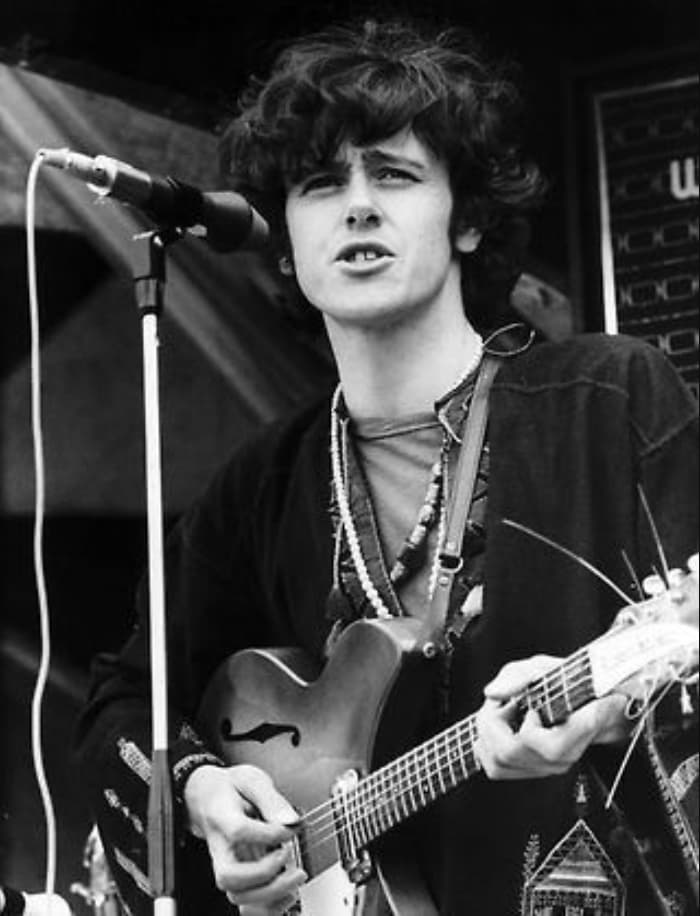
A hypnotic portrait of uncertainty and transformation—“Season of the Witch” captures the restless spirit of a generation standing at the edge of change.
Released in 1966 on the landmark album Sunshine Superman, “Season of the Witch” by Donovan did not initially chart as a single in the way many of his more radio-friendly hits did. Unlike “Sunshine Superman”—which soared to No. 1 on the US Billboard Hot 100—this track took a different path. It became a slow-burning classic, gaining prominence through album sales, underground radio play, and later cover versions by artists such as Julie Driscoll and Vanilla Fudge, whose rendition reached No. 65 on the Billboard Hot 100 in 1968. Over time, Donovan’s original recording earned its place as one of the defining psychedelic songs of the era, even without a conventional chart peak tied to its initial release.
The story behind “Season of the Witch” is inseparable from the shifting cultural landscape of the mid-1960s. Donovan, often seen as a gentle folk troubadour in the mold of Bob Dylan, surprised listeners with this darker, more hypnotic composition. Recorded in London with producer Mickie Most, the track marked a turning point in Donovan’s artistic evolution—from acoustic folk into the swirling textures of psychedelia. The title itself was inspired by a phrase Donovan encountered during a conversation about the paranoia and suspicion creeping into society—an atmosphere thick with change, where people felt watched, judged, and misunderstood.
Musically, the song is built on a repetitive, almost trance-like groove, driven by a steady bassline and subtle shifts in arrangement. This hypnotic structure mirrors the lyrical theme: a world where nothing feels entirely safe or certain. Lines like “When I look out my window / So many different people to be” evoke a sense of fragmentation, as if identity itself is dissolving under the weight of expectation and fear. Donovan’s vocal delivery—calm yet slightly detached—adds to the unease, as though he is both observer and participant in this strange new reality.
The phrase “season of the witch” has often been interpreted as a metaphor for a time of suspicion and upheaval. In the context of the 1960s, it resonated with the growing counterculture, the questioning of authority, and the tension between conformity and individuality. Yet the song’s meaning extends beyond its era. It speaks to any moment when the world feels unpredictable, when trust is fragile, and when people must navigate shifting identities and uncertain truths.
There is also a deeply personal layer beneath the song’s surface. Donovan was, at the time, navigating his own transformation—from a young artist influenced by traditional folk to a figure at the forefront of a new musical movement. The song reflects that internal tension: the pull between past and future, innocence and experience. It is not a protest song in the conventional sense, but rather a quiet, introspective meditation on change itself.
Over the decades, “Season of the Witch” has endured not because it offers clear answers, but because it captures a feeling—one that remains strikingly familiar. Its slow, immersive rhythm invites listeners to sit with their thoughts, to reflect on moments when the world seemed just slightly out of balance. For many, it recalls a time when music was not just entertainment, but a companion in navigating life’s uncertainties.
In the end, Donovan created something rare: a song that feels both anchored in its time and timeless in its emotion. “Season of the Witch” does not shout; it lingers. It drifts through memory like a half-remembered dream—unsettling, beautiful, and impossible to forget.