
A Dream of Lost Love, Where Longing Echoes Beyond Sleep and Memory
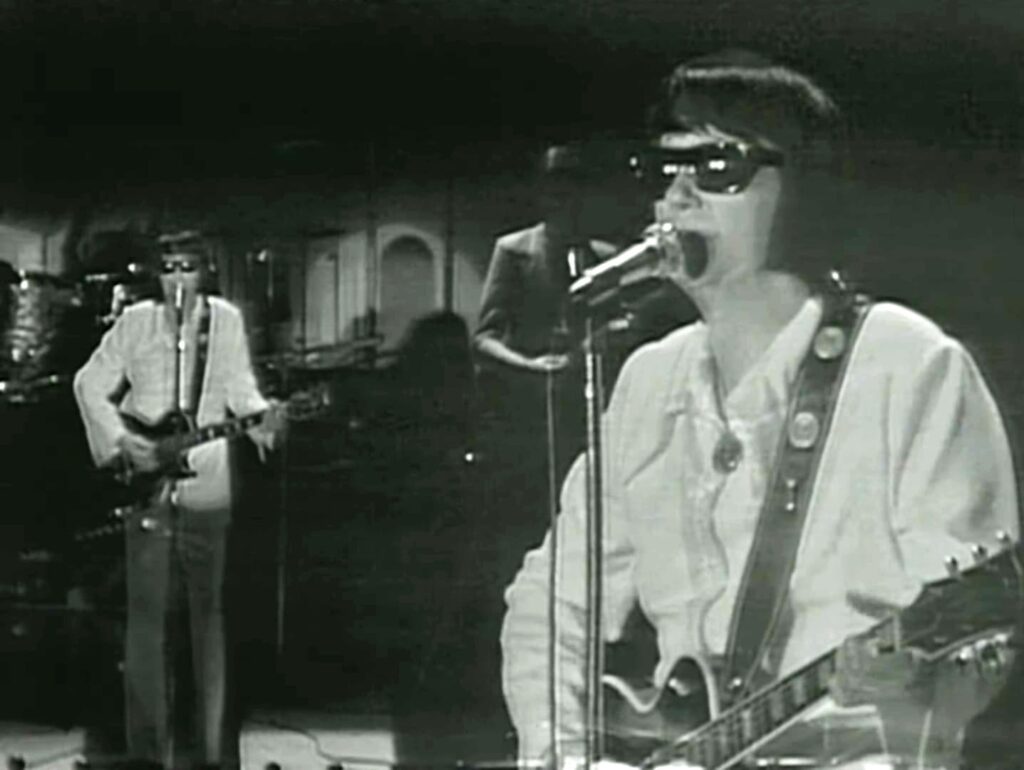
In 1972, during his Live From Australia concert, Roy Orbison delivered a haunting performance of Leah, a piece that revealed the full emotional range of an artist often defined by heartbreak and longing. Before an attentive audience, Orbison transformed a simple narrative into something deeply cinematic, blurring the line between dream and reality.
Originally released in the early 1960s, “Leah” stands apart within Orbison’s catalog for its storytelling structure. The song follows a pearl diver risking his life to bring beauty to the woman he loves, only for the tale to dissolve into the realization that it is all a dream shaped by loss. In this 1972 performance, that narrative felt even more vivid, carried by Orbison’s unmistakable voice.
From the opening call of “Hey, Leah,” his delivery drew listeners into a world suspended between hope and sorrow. His voice, rich and controlled, moved effortlessly from gentle tenderness to quiet desperation. As the story unfolded, the tension built not through instrumentation alone, but through the emotional precision of his phrasing.
What made this live rendition especially powerful was its sense of immersion. Orbison did not simply sing the story. He inhabited it. The moment where the diver becomes trapped beneath the water carried a subtle urgency, yet never tipped into excess. Instead, the restraint made the realization that follows even more affecting. The dream fades, and what remains is absence.
By 1972, Orbison’s career had already seen both immense success and personal hardship. That lived experience seemed to echo through the performance. Lines about waking to memories of a lost love carried a weight that felt unmistakably real, as though the boundary between the song and the singer had quietly dissolved.
The audience response, rising in waves of applause, reflected the emotional pull of the moment. It was not just appreciation for technical brilliance, but recognition of something deeper, something shared.
As the final refrain drifted back into the dream, “back to sleep and in my dreams I’ll be with Leah,” the performance settled into a quiet, lingering echo. In that space, Roy Orbison reminded listeners that some loves never fully leave. They return in memory, in music, and sometimes, only in dreams.