
In 1975, Roy Orbison Stood Under the BBC Studio Lights and Sang “It’s Over” Like Heartbreak Had Never Left Him
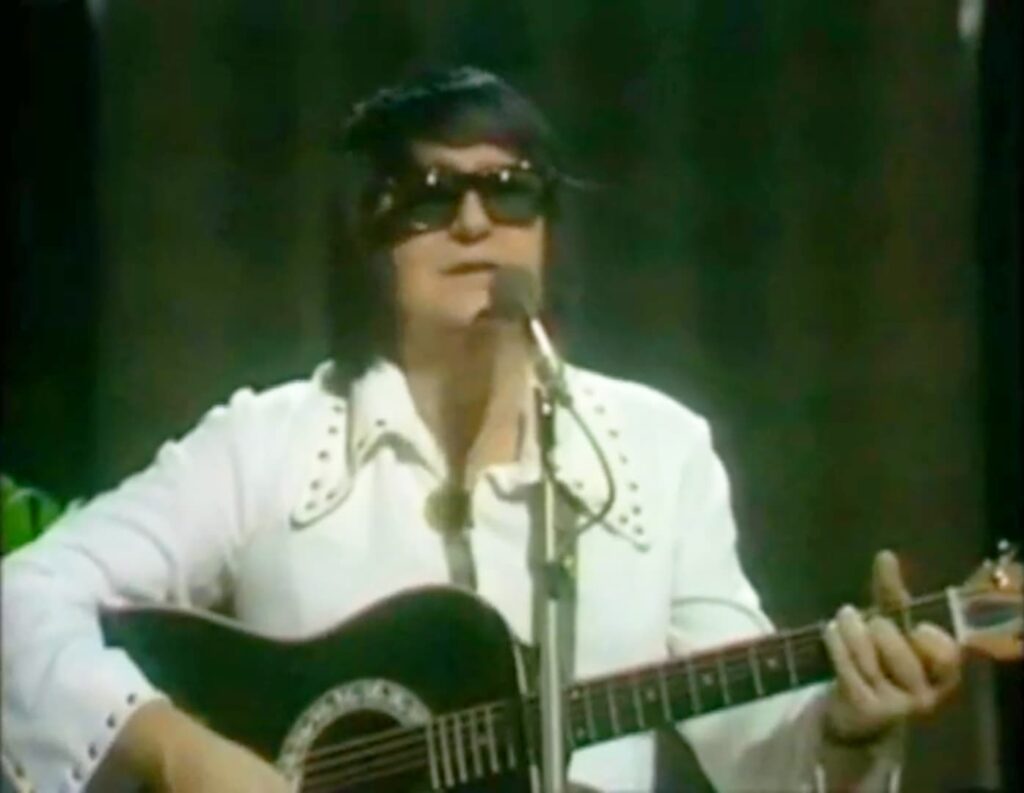
On July 11, 1975, during a rare BBC television appearance, Roy Orbison delivered a live performance of “It’s Over” that reminded audiences why few singers in popular music history ever understood heartbreak the way he did. Standing almost motionless beneath the studio lights, dressed in white with his trademark dark glasses, Orbison transformed a television performance into something intensely personal and emotionally devastating.
More than a decade had passed since “It’s Over” first became a major international hit in 1964, yet by 1975 the song sounded even sadder in his voice.
Originally written by Roy Orbison and legendary songwriter Bill Dees, the ballad captured the painful moment when love collapses completely and there is nothing left to save. Unlike many breakup songs built around anger or blame, “It’s Over” speaks from the stunned emotional emptiness that follows rejection. The relationship has already died before the singer fully understands it.
That quiet devastation became Orbison’s signature.
During the BBC performance, Roy did not rely on dramatic movement or theatrical gestures. He rarely needed to. His voice carried all the emotional weight by itself. When he sang lines like “All the rainbows in the sky start to weep, then say goodbye,” the words felt enormous, almost cinematic. Orbison possessed one of the most distinctive voices ever recorded, capable of moving from delicate vulnerability to operatic intensity within a single phrase.
Even in a television studio, the emotional atmosphere felt immense.
The arrangement stayed faithful to the sweeping orchestral style that defined many of Orbison’s greatest recordings. Rich instrumentation surrounded his vocal without distracting from it, allowing the melancholy grandeur of the song to unfold naturally. The performance captured the unique quality that separated Roy from nearly every other rock-and-roll star of his era: he never sounded concerned with image or coolness. He sounded consumed entirely by emotion.
By 1975, Orbison occupied a complicated place in popular music.
The British Invasion and changing musical trends had pushed many early rock pioneers away from mainstream dominance. Yet Roy Orbison remained deeply respected by musicians and loyal audiences who recognized the timeless emotional depth inside his songs. While trends shifted around him, his music endured because heartbreak itself never changes.
Watching the BBC footage today feels almost haunting because Orbison appears so calm while delivering such overwhelming sadness. He stands nearly still, yet every line lands with extraordinary force. Younger singers often tried to perform heartbreak. Roy Orbison simply inhabited it.
That emotional authenticity influenced generations of artists afterward.
Musicians ranging from Bruce Springsteen to Chris Isaak admired Orbison’s ability to combine vulnerability with dramatic musical scale. Even decades later, few performers have matched his capacity to make loneliness sound simultaneously intimate and epic.
There is also something especially nostalgic about the visual atmosphere of the 1975 BBC broadcast itself. The soft studio lighting, formal television staging, and quiet audience attention belong to an era when music performances on television often felt elegant and deeply focused. There were no distractions, no elaborate production tricks, only the singer and the song.
And for Roy Orbison, that was always enough.
Because when he sang “It’s Over,” listeners did not simply hear a man describing heartbreak. They heard someone revealing the private loneliness hidden behind dignity, restraint, and memory.