
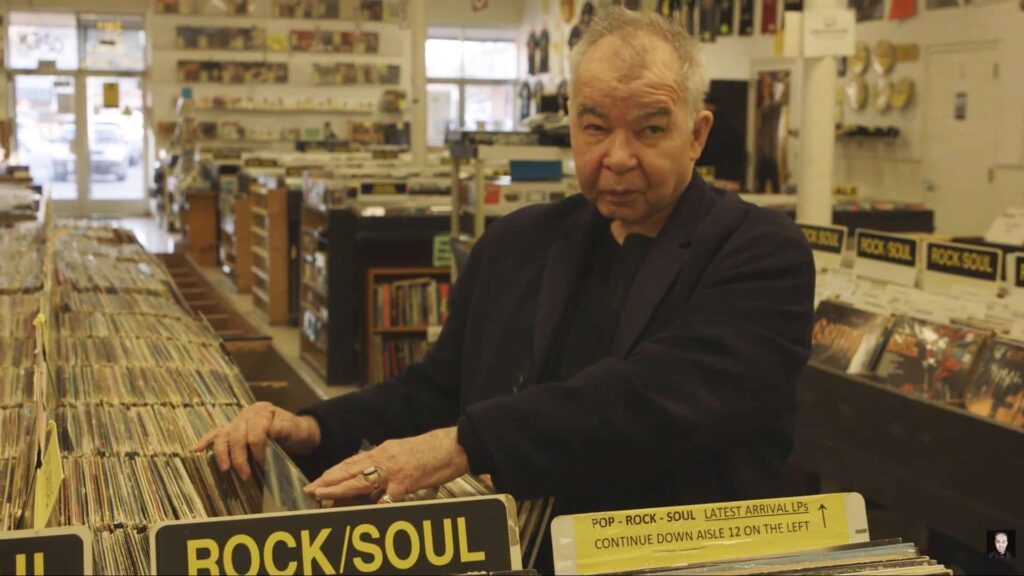
A Long Road Back to Song, Where Time, Survival, and Truth Find Their Voice Again
In the short film The Road to The Tree of Forgiveness, John Prine offers something rare in modern music storytelling. Not a performance built on spectacle, but a quiet, reflective journey through memory, resilience, and rediscovery. Filmed during a simple afternoon drive around Nashville, the piece captures Prine not as a legend, but as a man still trying to understand the road he has traveled.
From the outset, Prine recalls his earliest days, when he stepped onto a stage as a former mailman from the Midwest, unsure if his songs even qualified as songs. That uncertainty, he suggests, never fully disappeared. Yet it was precisely that humility that shaped his voice, one grounded in observation rather than ambition. His decision to leave the postal service for a modest life in Chicago folk clubs marked the beginning of a career that would quietly influence generations.
The film interweaves these reflections with an intimate performance of Summer’s End, a centerpiece from The Tree of Forgiveness, his first album in over a decade. The song carries a weight that feels earned rather than written. After surviving cancer twice, Prine sings with a perspective that cannot be imitated. Each line feels measured, shaped by experience rather than crafted for effect.
Interspersed throughout the film are tributes from artists such as Dan Auerbach, Rosanne Cash, and Todd Snider, all of whom speak not only of Prine’s songwriting, but of his ability to capture entire lives within a few verses. They describe a craftsman who can make listeners laugh, reflect, and ache within the same breath, a quality rarely sustained over time.
What emerges most clearly is not nostalgia, but renewal. Prine speaks of seeing the world differently after illness, noticing small details that once passed unseen. There is no grand declaration of triumph. Instead, there is a quiet acceptance, a recognition that life, in all its fragility, continues to offer moments worth singing about.
As the film closes, there is no sense of finality. Much like The Tree of Forgiveness itself, it feels like a continuation rather than a conclusion. In returning to songwriting after thirteen years, John Prine does not attempt to reclaim the past. He simply picks up where life has carried him, proving that the most meaningful journeys are not the ones we plan, but the ones we survive and learn to understand.