
A Working-Class Anthem That Turned Simplicity Into Global Triumph
Few songs in the canon of classic rock carry the unpretentious, open-road spirit quite like “Rockin’ All Over the World”—a track forever associated with Status Quo and, by extension, the steady, grounding presence of bassist Alan Lancaster. Released in 1977 as the title track of the album Rockin’ All Over the World, the song reached No. 3 on the UK Singles Chart, marking one of the band’s most commercially successful moments. Yet behind its deceptively simple, foot-stomping rhythm lies a story that speaks volumes about resilience, reinvention, and the quiet dignity of musicians who built their legacy one chord at a time.
Originally written and recorded by John Fogerty in 1975, the song had a looser, more reflective tone in its first incarnation. But when Status Quo took hold of it, something transformative happened. They stripped it down, tightened the tempo, and infused it with that unmistakable boogie-rock drive—a sound that had become their signature. It was not just a cover; it was a reimagining that turned a modest tune into an anthem of movement and connection.
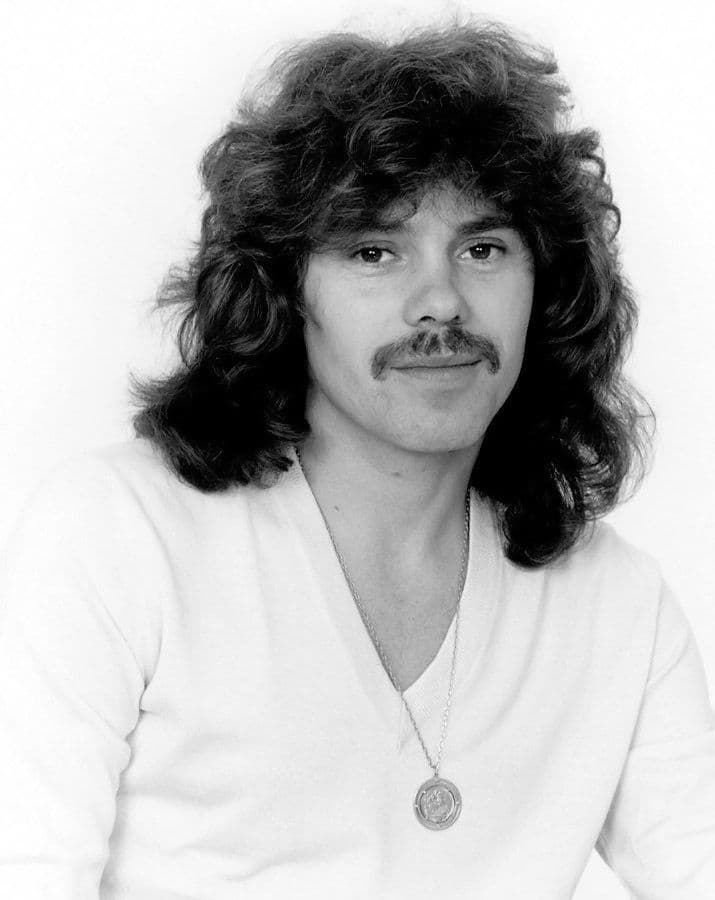
At the heart of this transformation stood Alan Lancaster, whose bass playing rarely sought the spotlight but instead provided the bedrock upon which everything else stood firm. His style was not flashy, but it was deeply felt—anchoring the rhythm section with a kind of stubborn consistency that mirrored the ethos of the band itself. In many ways, Lancaster embodied the spirit of Status Quo: grounded, unyielding, and quietly powerful.
The late 1970s were a time of shifting musical landscapes. Punk was rising, disco dominated the airwaves, and many of the earlier rock acts were struggling to maintain relevance. Yet “Rockin’ All Over the World” managed to cut through the noise with its simplicity. There were no grand statements, no elaborate arrangements—just a straightforward declaration of joy, carried by a relentless rhythm that felt almost like a heartbeat. It was music you didn’t have to think about too much; you simply felt it.
And perhaps that is where its true meaning lies. Beneath the surface, the song speaks of continuity—the idea that no matter how much the world changes, there are certain rhythms that remain. The steady chug of a guitar, the reassuring thump of a bass line, the communal energy of a live performance—these are constants, threads that connect moments across time. Listening to it now, one cannot help but recall evenings filled with radio crackle, crowded halls vibrating with sound, and the quiet satisfaction of music that asked for nothing more than your presence.
The song would later gain renewed cultural significance when it was used as the official anthem for the Live Aid opening in 1985, further cementing its place in British musical heritage. By then, it had already transcended its origins, becoming a kind of shared memory—one that belonged not just to the band, but to everyone who had ever tapped their foot along to its rhythm.
For Alan Lancaster, whose later years saw him step away from the limelight, the song remains a reminder of a time when music was built on camaraderie and craft rather than spectacle. It reflects a period when success was measured not only in chart positions but in the ability to bring people together, if only for the length of a song.
In the end, “Rockin’ All Over the World” endures because it never tried to be anything more than it was. It is honest, direct, and unpretentious—a testament to the enduring power of simplicity. And in that simplicity, it finds something profound: a quiet assurance that as long as there are songs like this, the world will keep turning, and somewhere, somehow, the music will go on.