
A gentle promise carried on the wind — “Someday Soon” as a quiet meditation on love, distance, and the roads we choose
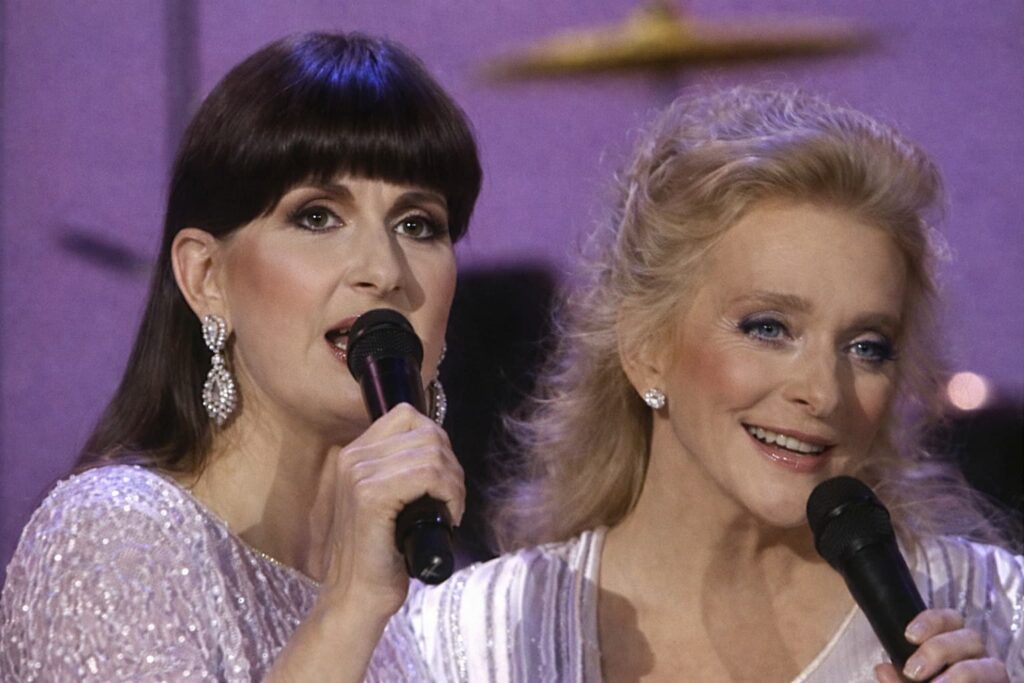
When “Someday Soon” returned to the stage in 1986, performed by Ian & Sylvia alongside Judy Collins on CBC television, it felt less like a revival and more like a homecoming. The song itself, written by the incomparable Ian Tyson in the early 1960s, had already lived many lives by then—most famously through Judy Collins’ 1968 recording on her landmark album Who Knows Where the Time Goes. That version reached No. 55 on the Billboard Hot 100 and climbed to No. 11 on the Adult Contemporary chart, quietly establishing the song as a staple of reflective folk repertoire rather than a chart-dominating hit. Yet numbers alone never told the story of “Someday Soon.”
At its heart, this song is built on a deceptively simple narrative: a young woman in love with a restless rodeo rider, a man bound more to the open road than to any promise of permanence. But in that simplicity lies a profound emotional tension—the eternal conflict between longing and belonging. When Ian & Sylvia, who had themselves been pioneers of the North American folk revival, revisited the song with Judy Collins in 1986, the years added weight to every line. This was no longer just a tale of youthful defiance; it had become a reflection on choices made, roads taken, and perhaps, quietly, those left behind.
The origins of “Someday Soon” are deeply rooted in Ian Tyson’s own observations of Western life. Unlike many folk songs of the era that leaned toward urban introspection or political commentary, Tyson’s writing often drew from the wide, unromantic landscapes of the Canadian prairies. The rodeo rider in the song is not a metaphor invented in a coffeehouse—it is a real figure, a symbol of a life defined by movement, risk, and a refusal to settle. That authenticity gives the song its enduring credibility. You believe every word because it feels lived-in, not imagined.
Judy Collins’ interpretation in 1968 softened some of that ruggedness, wrapping the story in her signature crystalline voice. Her version leans into the emotional vulnerability of the narrator—the quiet hope that love might one day anchor the drifting soul she adores. It’s a performance marked by restraint, where the pauses speak as loudly as the lyrics. By contrast, when Ian & Sylvia joined her in the 1986 CBC performance, there was a sense of dialogue—almost as if the song had come full circle, returning to its creators with the wisdom of time layered upon it.
What makes “Someday Soon” so enduring is its refusal to resolve. There is no clear ending, no promise fulfilled. The title itself suggests a future that may never arrive. And yet, that uncertainty is precisely what resonates. The song captures a universal human experience: loving someone whose path may never fully intersect with your own. It is about patience, yes—but also about the quiet ache of knowing that patience may not be enough.
By the mid-1980s, when this CBC performance took place, both Ian & Sylvia and Judy Collins had already secured their places in folk history. But rather than sounding like veterans revisiting an old favorite, they approached “Someday Soon” with a kind of reverence, as though they too were rediscovering its meaning. The arrangement is understated, allowing the storytelling to take center stage. There is no need for embellishment; the song carries its own emotional weight.
Listening to this performance today, one cannot help but feel a sense of continuity—how a song written in the early days of the folk revival could still speak so clearly decades later. “Someday Soon” is not bound to any one era. It belongs to anyone who has ever waited, hoped, or quietly wondered whether love can outlast distance and time.
And perhaps that is its greatest achievement: not the charts it touched, but the hearts it continues to reach, softly, patiently—someday soon.