
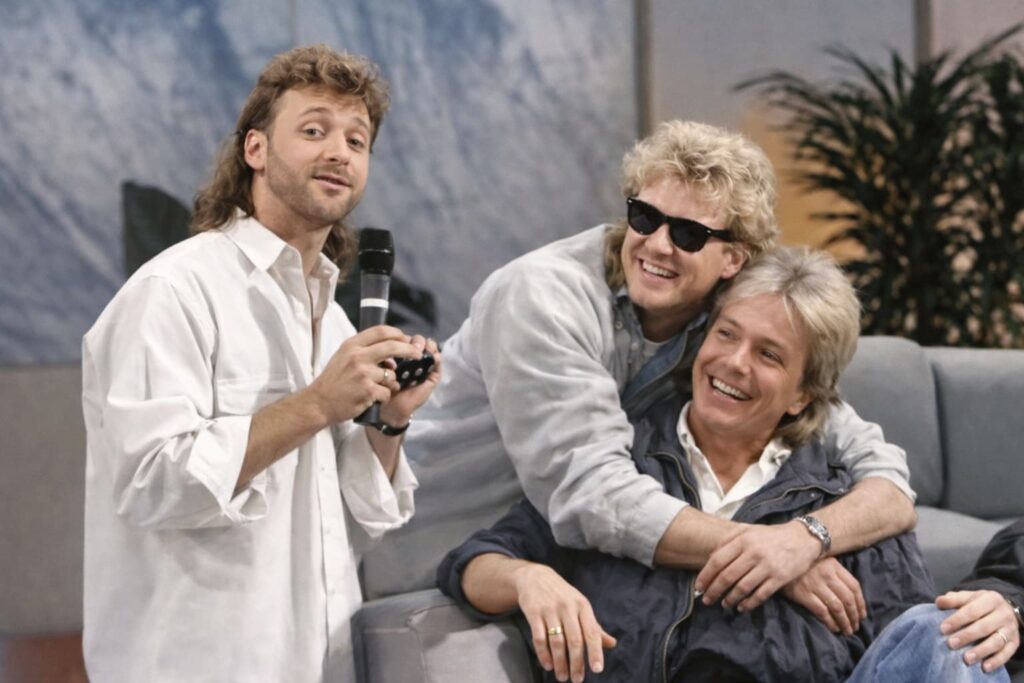
A Playful Comeback: David Cassidy Turns a Radio Prank into a Career Revival
There’s something irresistibly human about watching a former teen idol laugh at his own legacy—and in this lively radio appearance, David Cassidy does exactly that. The video captures a spontaneous, humorous, and surprisingly revealing moment on the Mark and Brian Show, where nostalgia, self-awareness, and showbiz instinct collide in real time.
From the very beginning, the atmosphere is loose and playful. The hosts banter with Cassidy, poking fun at his image, his hair, and his past fame. There’s laughter, applause, and a sense that nothing here is overly scripted. But beneath the jokes lies a fascinating story—one that Cassidy himself recounts with charm and timing. He explains how, on his birthday about a year earlier, he had been listening to the very same radio show while doing mundane work at home. Hearing the hosts speculate wildly about his glamorous life, he decided to call in anonymously.
What followed was both comedic and oddly brilliant. Initially, the radio station staff didn’t believe it was really him. Once they put him on air, Cassidy improvised a fictional version of himself—portraying a washed-up, desperate, and even “homeless” version of David Cassidy. It was satire, but also a clever commentary on fame and public perception. That brief, humorous phone call turned into something much bigger: an invitation to appear on the show in person.
During that visit, which lasted several hours, Cassidy shared demo recordings of new material he had been working on. The result? Multiple record label offers—an unexpected career boost sparked by a joke. This anecdote becomes the emotional core of the video: a reminder that reinvention in the entertainment industry often comes from the most unlikely moments.
Of course, the hosts can’t resist bringing up Cassidy’s most iconic hit, I Think I Love You, originally performed with The Partridge Family. They repeatedly try to coax him into singing it live, but Cassidy initially refuses, half-jokingly distancing himself from his teen idol past. Yet as the segment continues, the tension between past and present becomes more playful than defensive.
Eventually, the crowd and hosts begin singing the song themselves, turning the studio into a spontaneous singalong. Cassidy resists, laughs, and deflects, but the moment highlights something deeper: he can’t fully escape the song that defined him, nor does he entirely want to. There’s a sense of reconciliation here—between who he was and who he has become.
The video ends on a light note, filled with applause and humor, but it leaves a lasting impression. This isn’t just a nostalgic radio clip; it’s a portrait of an artist navigating fame, identity, and reinvention. David Cassidy comes across not as a relic of the past, but as someone actively reshaping his story—one joke, one song, and one unexpected opportunity at a time.