
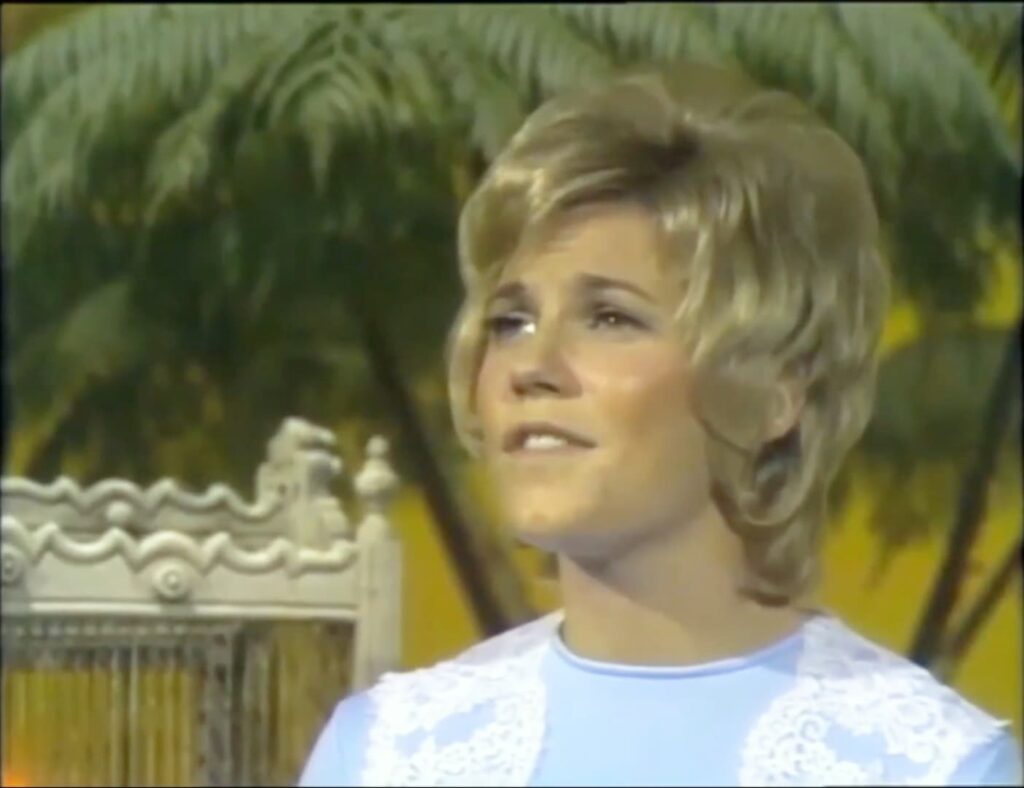
Before the Fame, Before the Hits: A Young Anne Murray Sings of Heartbreak and Hope in “Bidin’ My Time”
Long before Anne Murray became one of the most successful recording artists in country and pop music, she was a young singer from Nova Scotia searching for songs that could showcase the warmth, sincerity, and emotional honesty that would later make her a household name. One of those early treasures was “Bidin’ My Time,” a beautiful recording from 1970 that reveals a side of Murray many listeners have since forgotten.
Released during the same period that “Snowbird” was beginning to transform her career, “Bidin’ My Time” captures Murray at a fascinating crossroads. She was not yet the international star who would fill concert halls and collect awards across multiple decades. Instead, she was still a rising artist, relying on the simple power of her voice to tell a story.
And what a story it is.
The song revolves around a familiar heartbreak. A woman senses that someone she loves may soon walk away. Night after night, she rehearses the words she hopes will make him stay. She imagines conversations, practices confessions, and searches for the courage to reveal her feelings. Yet when the moment finally arrives, emotion overwhelms her and the words disappear behind tears.
It is a theme that has echoed through countless country songs, but Anne Murray brings an unusual tenderness to it.
Rather than dramatizing the pain, she approaches the lyrics with quiet restraint. Her voice never sounds angry or desperate. Instead, it carries the sadness of someone who understands that love cannot always be held onto, no matter how deeply it is felt. That gentle vulnerability became one of Murray’s greatest strengths throughout her career.
Listening to “Bidin’ My Time” today, it is easy to hear why audiences connected with her so strongly. There is an authenticity in her delivery that makes every line believable. When she sings about spending sleepless nights thinking of what she might say, the listener feels as though they are hearing a private thought rather than a performance.
The recording also reflects the musical atmosphere of the early 1970s, a period when country and pop music were beginning to blend in new ways. Producers were moving away from the harder edges of traditional country music and embracing smoother arrangements that appealed to a broader audience. Murray would become one of the defining voices of that movement, helping pave the way for future artists who successfully crossed between genres.
What makes this early performance especially meaningful is the perspective it offers on Murray’s journey. Many fans first discovered her through major hits like Snowbird, Danny’s Song, or You Needed Me. But recordings such as “Bidin’ My Time” reveal the foundation upon which that success was built.
The qualities that would define her entire career are already present: the clear voice, the emotional honesty, the ability to make a listener feel understood, and the remarkable gift of turning simple lyrics into something deeply personal.
Looking back more than fifty years later, “Bidin’ My Time” feels like a snapshot from a quieter era of popular music. It comes from a time when songs often focused on ordinary emotions rather than spectacle, when a singer could hold an audience’s attention with sincerity alone.
Today, the recording stands as more than an early chapter in Anne Murray’s story. It is a reminder of the artist she was before international fame arrived, standing before a microphone and singing about hope, uncertainty, and the fear of goodbye. In that moment, the future remained unwritten, but the voice that would soon captivate millions was already unmistakably there.