
A Ballad of Outlaws and Regret, Where Time Softens Legends but Not Their Consequences
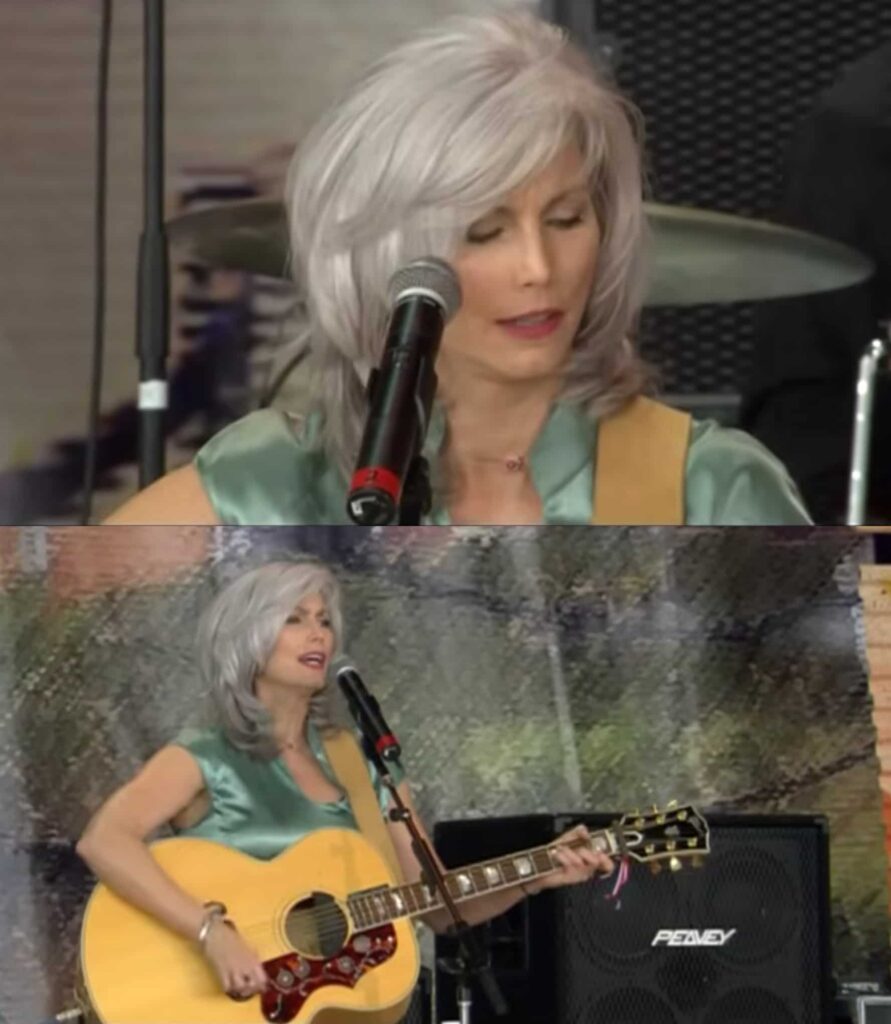
On September 7, 2003, at the annual Farm Aid in Columbus, Ohio, Emmylou Harris stepped into the fading light at Germain Amphitheater and delivered a haunting rendition of Pancho and Lefty. Originally written by Townes Van Zandt, the song had long been regarded as one of the most evocative narratives in American folk music. In Harris’s hands, it became something even more reflective, almost like a story remembered rather than told.
From the opening lines, her voice carried a quiet gravity. There was no rush, no attempt to dramatize the tale of outlaws and betrayal. Instead, she allowed the story to unfold naturally, as if each word had already lived a long life before reaching the stage. The imagery of dusty roads, fleeting freedom, and distant borders emerged with clarity, yet always softened by her gentle phrasing.
“Pancho and Lefty” has always been a song about contrasts. One man becomes legend, the other fades into anonymity. One lives fast and dies young, the other survives, burdened by memory. Harris leaned into that tension with remarkable restraint. Her delivery did not assign judgment. It simply observed, allowing the listener to feel the weight of choices made long ago.
The arrangement remained understated, anchored by subtle instrumentation that never overshadowed the narrative. This simplicity gave the performance its power. Each pause, each lingering note, felt intentional. It created space for reflection, for the audience to step inside the story rather than just hear it.
There was also a sense of distance in her interpretation, as though the events described were being recalled from far away, both in time and emotion. That distance added a layer of poignancy. The famous refrain, suggesting that perhaps things might have turned out differently, carried an almost resigned tone. Not regret exactly, but an understanding that some paths cannot be retraced.
As the final notes drifted into applause, the performance left behind a quiet stillness. It was not the kind of song that demands a reaction. Instead, it lingers, unfolding slowly in memory long after the stage lights fade.
In that moment at Farm Aid, Emmylou Harris did more than perform a classic. She honored its spirit, preserving its mystery while revealing its humanity. And in doing so, she reminded us that the most enduring stories are often the ones that leave something unsaid.