
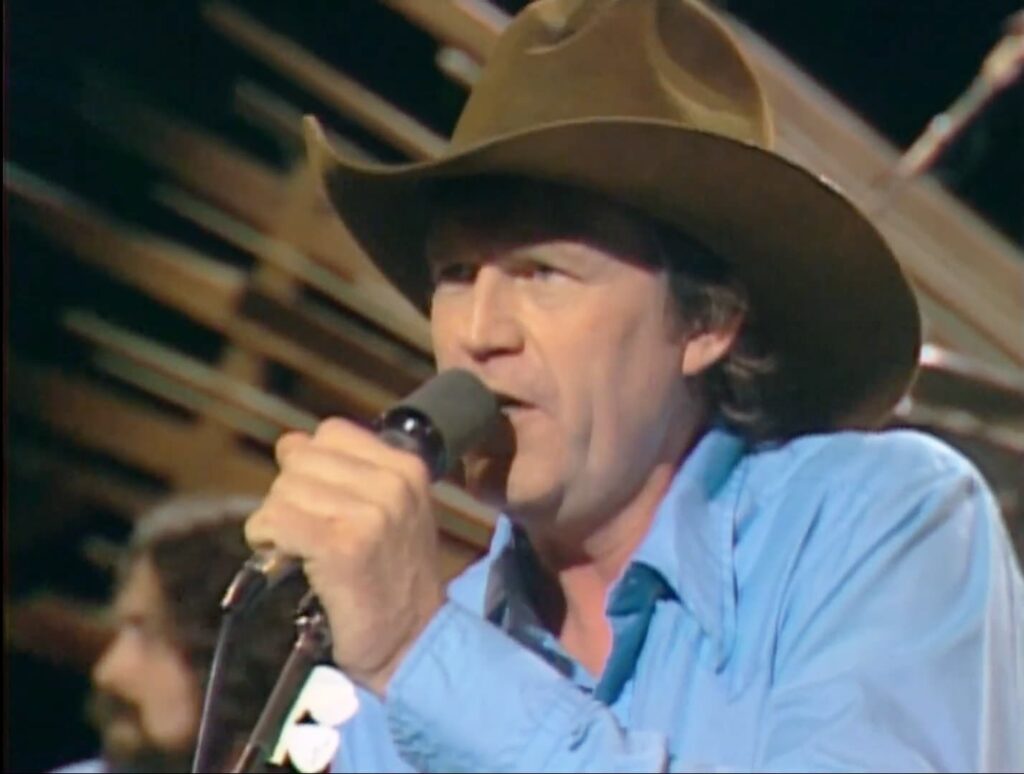
A Haunted Love Song Where Temptation and Regret Walk Hand in Hand
When Billy Joe Shaver stepped onto the stage of Austin City Limits in 1980, he was not simply performing a song. He was laying bare a piece of hard-lived truth. His rendition of “Black Rose” carried the weight of a life shaped by struggle, faith, and the constant pull between redemption and temptation. Though the song itself had already earned recognition through Waylon Jennings, who recorded it on his 1973 album Honky Tonk Heroes, hearing Shaver sing it in his own voice revealed something far more intimate and unguarded.
From the opening line set deep in Louisiana sugarcane country, “Black Rose” unfolds like a Southern gothic tale. Shaver does not rush the story. His voice, weathered and steady, feels like it has carried these words for years before ever sharing them. There is a quiet authority in the way he sings about a man caught between desire and conscience, between the bottle in his hand and the prayer on his lips. For listeners who have lived long enough to know the cost of their own choices, every line lands with a familiar ache.
What makes this 1980 performance so compelling is its stark simplicity. No elaborate staging, no theatrical distractions. Just Shaver, his guitar, and a story that refuses to let go. When he reaches the refrain about the devil and personal responsibility, it does not sound like metaphor alone. It sounds like confession. Like a man who understands that blaming the devil might explain the first mistake, but never the second.
There is also a subtle tenderness hidden beneath the rough edges. The “black rose” is not merely a symbol of temptation. It is something more complicated. A love that wounds, a memory that lingers, a weakness that refuses to fade. Shaver’s delivery captures that contradiction perfectly. He does not condemn the feeling, nor does he excuse it. He simply tells it as it is.
Looking back now, this performance stands as a quiet testament to what outlaw country was truly about. Not rebellion for its own sake, but honesty. The kind that does not polish the past or soften the truth. For older listeners especially, “Black Rose” feels less like a song and more like a mirror. It reflects those moments when we knew better, yet chose otherwise, and the long road we walk afterward trying to make peace with it.
And as the final notes fade and the applause rises, there is a lingering sense that Shaver was not asking for forgiveness from the audience. He was still working that out with himself.