
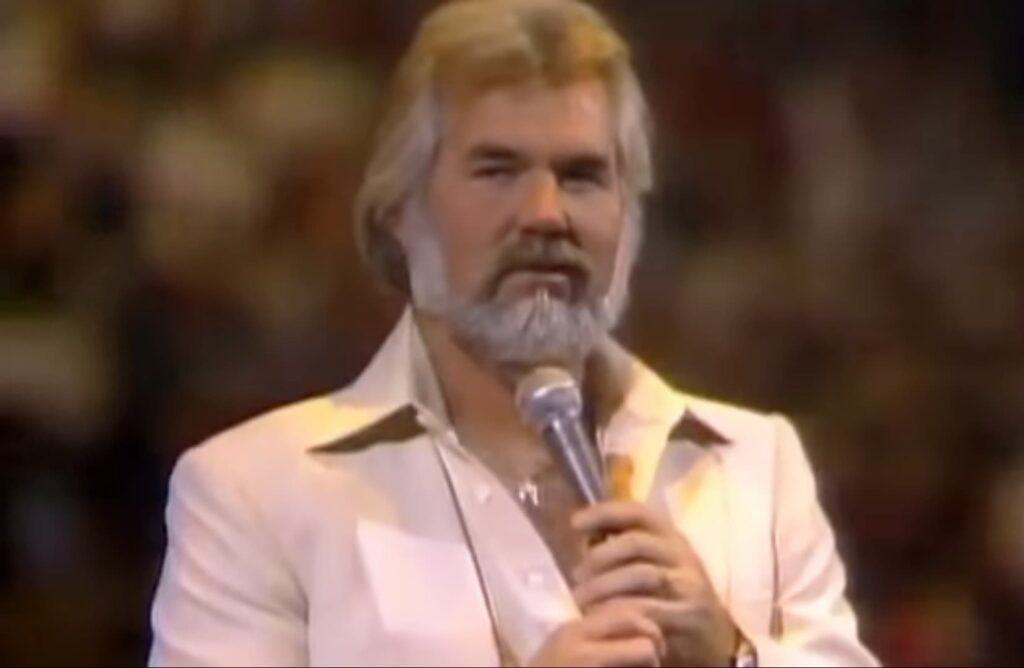
When Coward of the County Turned Silence into Strength and Redefined Courage
Released in 1979 and featured on the album Kenny Rogers’ America (1980), “Coward of the County” became one of Kenny Rogers’ most enduring narrative ballads, reaching No. 1 on the Billboard Hot Country Songs chart and crossing into mainstream success. Built on a spoken-word style delivery and restrained instrumentation, the song stands as a defining example of country music’s storytelling tradition at its peak.
At the heart of the performance is the character Tommy, a young man shaped by the shadow of his father’s final words. Raised with a solemn promise to avoid violence, Tommy grows up misunderstood by his community. Labeled as weak and ridiculed as a coward, his restraint is mistaken for fear rather than discipline. Rogers delivers these early verses with a measured calm, allowing the narrative to unfold like a quiet confession.
The tension escalates in the now-famous barroom sequence. After enduring years of humiliation, Tommy is pushed beyond his limits. In the performance, this moment is handled with striking control. Rogers does not rush the transition. Instead, he lets the silence carry weight, allowing listeners to feel the years of suppressed emotion before the inevitable release.
When Tommy finally locks the door, the story pivots. The line describing “twenty years of crawling bottled up inside” lands with emotional force, marking the transformation from restraint to action. Yet the resolution is not framed as triumph. Instead, it returns to the moral complexity introduced at the beginning. Tommy has not abandoned his promise lightly. He has redefined it.
The closing message challenges the audience’s understanding of strength. The refrain suggests that true manhood is not measured by constant aggression, but by knowing when restraint must give way to defense of dignity and love. This duality is what gives “Coward of the County” its lasting resonance.
Decades later, the performance remains powerful because it reflects a universal conflict. The struggle between patience and pride, between peace and justice. In the voice of Kenny Rogers, that struggle feels deeply and unmistakably real, leaving behind a story that continues to echo far beyond the final note.