
A quiet song about legacy, distance, and the fragile thread between a father’s influence and a son’s wandering life
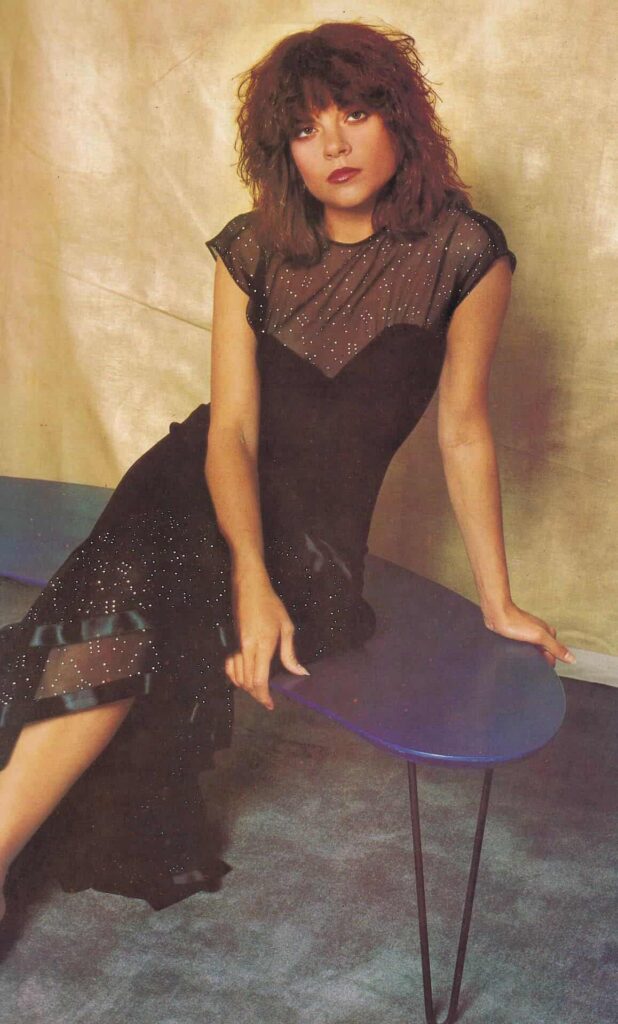
When “Tennessee Flat Top Box” by Rosanne Cash climbed to No. 1 on the Billboard Hot Country Singles chart in early 1988, it carried with it more than just commercial success—it carried history, lineage, and a kind of emotional echo that few songs ever achieve. Originally written and recorded by her father, Johnny Cash, in 1961, the song had only reached a modest No. 11 on the country charts at the time. Decades later, in her hands, it found not only a wider audience but a deeper resonance, as though time itself had given the story new meaning.
Included on her landmark album “King’s Record Shop” (1987), the song became one of the defining moments of Rosanne Cash’s career—a career that, by then, had already begun to step out of her father’s long shadow. Yet, paradoxically, it was this very song—rooted so firmly in her father’s storytelling—that cemented her identity as an artist in her own right. It’s a rare and almost poetic irony: a daughter revisiting her father’s narrative, only to redefine it through her own voice.
At its surface, “Tennessee Flat Top Box” tells the story of a boy named Little Jimmy Brown, who grows up playing his guitar—his “flat top box”—in a rural setting. There’s no grand drama, no sweeping orchestration, just a simple, almost conversational narrative that follows Jimmy from obscurity to fame. But underneath that simplicity lies something more reflective: a meditation on how talent is discovered, shaped, and ultimately consumed by the wider world.
The song’s structure mirrors its message. It moves steadily, almost gently, as though time itself is passing in quiet increments. We see Jimmy evolve—from a child strumming for coins to a performer drawing crowds—yet the tone never becomes celebratory. Instead, there’s a subtle distance, a sense that success comes at the cost of something unspoken. That restraint is part of what gives the song its enduring power.
When Rosanne Cash recorded the track, she didn’t dramatically reinvent it. In fact, she honored its original spirit with remarkable fidelity. But her voice—clear, controlled, and tinged with introspection—brought a different emotional weight. Where Johnny Cash’s version felt like a storyteller recounting a tale from the outside, hers feels more internal, more reflective, as if she’s quietly examining the very idea of inheritance—musical, emotional, even personal.
There’s also a deeper layer that listeners have often noted: the song subtly mirrors the life of Johnny Cash himself. A young boy with a guitar rising from humble beginnings to national fame—it’s not difficult to see the parallels. And when Rosanne Cash sings it, that parallel becomes almost generational, as though she is both telling her father’s story and, in some quiet way, acknowledging her own place within it.
By the late 1980s, country music was shifting. The polished “Urban Cowboy” sound had dominated much of the early decade, but artists like Rosanne Cash were helping steer the genre back toward storytelling and emotional authenticity. “King’s Record Shop” itself produced four No. 1 hits, and “Tennessee Flat Top Box” stood among them not because it was the most modern or the most radio-friendly, but because it felt timeless.
And perhaps that’s the song’s greatest strength. It doesn’t demand attention—it earns it slowly, over time. It speaks in a voice that doesn’t rush, doesn’t exaggerate, but instead trusts the listener to hear what’s between the lines. In an era increasingly driven by spectacle, it remained grounded, almost humble.
Listening to “Tennessee Flat Top Box” today feels like opening an old photograph—one that doesn’t just show you a moment, but invites you to sit with it, to remember not only what happened, but how it felt. It reminds us that music is often less about the destination than the journey, and that sometimes, the quietest songs carry the deepest truths.
 Oldies Songs