
When Jerry Lee Lewis Put Down the Piano, the Silence Became Even Sadder
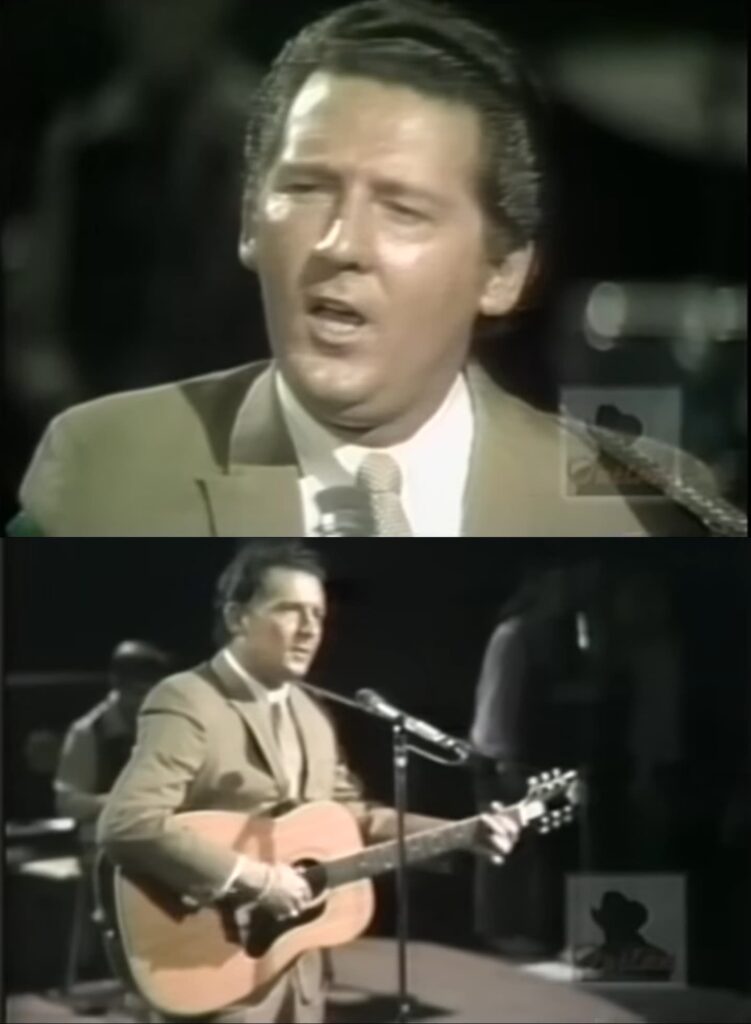
In 1969, during Many Sounds of Jerry Lee, Jerry Lee Lewis delivered a deeply restrained performance of “Green Green Grass of Home” that revealed an entirely different side of the man once known as rock and roll’s wildest survivor. This time, there were no flaming pianos, no reckless energy, no explosive swagger. Instead, Lewis stood with a guitar in his hands and sang as though he were quietly revisiting a memory he was not certain he could survive hearing again.
Originally written by Curly Putman, the song had already become famous through versions by artists like Tom Jones and Porter Wagoner. But Lewis approached it differently. He stripped away much of the dramatic polish and leaned into the emotional loneliness hidden beneath the lyrics.
At first, the song unfolds like a comforting homecoming. Lewis sings about trains, old trees, familiar roads, and a woman named Mary waiting nearby. His voice carries warmth, even tenderness. The images feel deeply Southern and personal, filled with the textures of small-town memory. For a few moments, the listener is allowed to believe this is a story about return and reconciliation.
Then comes the devastating shift.
When Lewis reaches the line about the “four gray walls that surround me,” the illusion collapses. Suddenly, the entire song changes shape. The homecoming exists only inside the condemned man’s dream, imagined during the final night before execution. Lewis does not overplay the revelation. In fact, he almost understates it, which makes the moment even more painful.
That restraint defines the performance. Lewis sings the tragedy quietly, as though trying to keep himself composed. His phrasing slows slightly, and his voice takes on a weary softness rarely heard in his earlier rock recordings. Instead of dramatizing sorrow, he allows it to settle naturally into the room.
The decision to perform the song on guitar rather than piano is equally significant. Without the aggressive attack of the keyboard, the performance becomes more intimate and exposed. Every lyric feels closer. The absence of chaos forces attention onto the story itself.
Looking back now, the performance carries additional emotional weight because of what history would later bring to Lewis’s life: personal losses, public scandals, broken relationships, and years spent balancing brilliance against self-destruction. Though none of that fully belonged to 1969 yet, there is already a sense of exhaustion in the way he sings.
And perhaps that is why this version still lingers decades later. Because beneath the familiar melody, Jerry Lee Lewis understood something essential about the song: it was never really about returning home.
It was about realizing, too late, that home only truly exists in memory once you know you can never reach it again.