
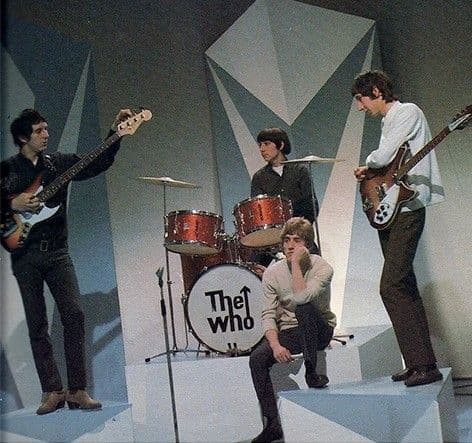
A song about empty glamour, cocaine-fueled nights, and the loneliness hidden behind success — “Eminence Front” remains one of The Who’s most haunting reflections on illusion and escape.
Released in late 1982 as part of the album It’s Hard, “Eminence Front” arrived during a difficult and uncertain chapter for The Who. The band was no longer the explosive young force that had shaken the 1960s with songs like “My Generation” and “Won’t Get Fooled Again.” By the early ’80s, the world had changed, rock music had changed, and perhaps most painfully of all, the members themselves had changed. Yet from that atmosphere of exhaustion and disillusionment came one of the most hypnotic and quietly devastating songs of their later years.
Written primarily by Pete Townshend, the track became one of the standout moments on It’s Hard, reaching No. 68 on the Billboard Hot 100 in the United States while becoming a much stronger presence on rock radio, where its slow-burning groove and icy synthesizers found a lasting audience. Over time, the song would grow far beyond its original chart performance. Today, many listeners consider it one of the definitive late-era songs by The Who.
But what truly gave “Eminence Front” its power was not commercial success. It was the mood.
From the very first notes, the song feels strangely detached — cool on the surface, yet emotionally exhausted underneath. The hypnotic keyboard loop, the restrained rhythm, and the distant vocal delivery create the sensation of walking through an expensive party where everyone is smiling, drinking, and pretending everything is perfect. Yet behind the elegance lies emptiness.
And that is exactly what the song was about.
According to Pete Townshend, the phrase “eminence front” referred to a kind of social façade — a polished illusion people create to hide pain, addiction, insecurity, or emotional collapse. The song was heavily inspired by the cocaine culture that surrounded wealthy celebrity circles in the late 1970s and early 1980s. During that period, cocaine was often glamorized in elite social environments, presented almost as a fashionable accessory of success. But Townshend saw something darker underneath it all: people using glamour, parties, and substances to avoid confronting their real lives.
That haunting line — “It’s an eminence front… it’s a put-on” — became the emotional center of the song. A “put-on.” A performance. A mask.
Few bands could communicate disillusionment quite like The Who because they had lived through every stage of fame already. By 1982, the group carried deep emotional scars. Keith Moon had died in 1978, leaving an emptiness that could never truly be replaced. The surviving members were older, wearier, and facing the possibility that the band itself was nearing its end. In fact, It’s Hard was widely promoted at the time as a “farewell” album before the group embarked on what was intended to be a final tour.
That sense of emotional fatigue hangs over “Eminence Front” like cigarette smoke in an empty nightclub after midnight.
Unlike the youthful rage of earlier Who classics, this song does not explode. It drifts. It watches. It observes people dancing while quietly recognizing how fragile they really are. Even Roger Daltrey sings the lyrics with a kind of weary distance, as though he already understands the emptiness behind the spectacle.
Musically, the track also showed how much The Who had evolved. The heavy synthesizer textures reflected the changing soundscape of the early ’80s, yet the band never completely abandoned their identity. John Entwistle anchors the song with subtle precision, while Townshend’s guitar work appears less aggressive than in the past, serving more as atmosphere than attack. The result is sophisticated, restrained, and strangely cinematic.
Over the decades, “Eminence Front” has aged remarkably well because its message never stopped being relevant. Every generation creates its own version of the “put-on.” Different clothes, different parties, different technologies — but the same human instinct to hide loneliness behind appearances remains unchanged.
That may be why the song feels even more powerful now than it did in 1982.
There is something deeply moving about hearing a legendary rock band step away from youthful rebellion and instead confront emotional truth with quiet honesty. “Eminence Front” is not merely a song about cocaine or celebrity culture. It is about the masks people wear to survive socially, emotionally, and spiritually. Beneath the polished surface of success, the song suggests, many people are still frightened, isolated, and searching for meaning.