
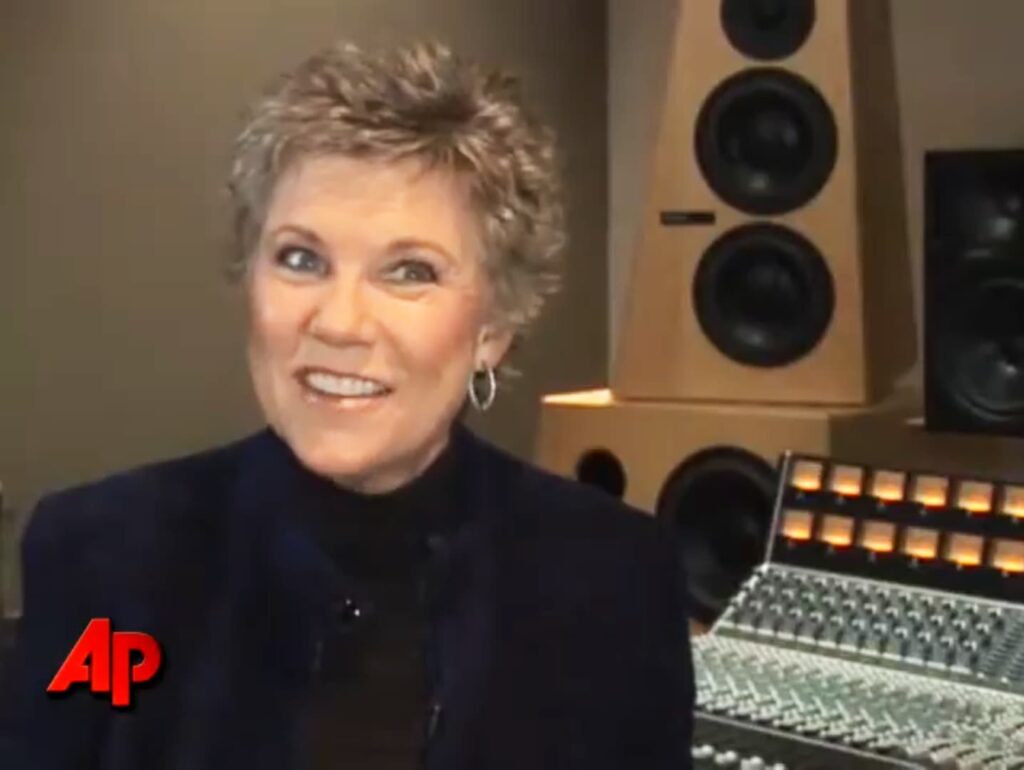
She Became Canada’s First Global Female Superstar… But Success Came With a Private Cost Anne Murray Rarely Spoke About
Long before Shania Twain, Alanis Morissette, or Sarah McLachlan carried Canadian music onto the world stage, Anne Murray had already walked through a door nobody believed was open. Coming from the quiet landscapes of Nova Scotia, she entered an American music industry that rarely made room for Canadian artists, especially women who refused to fit neatly into one category. Yet over a remarkable 41-year career, Anne did something extraordinary. She crossed the boundaries between country, pop, and adult contemporary music with such natural ease that audiences often forgot how revolutionary it really was.
In this deeply reflective interview, Anne speaks not with the confidence of a superstar looking back at triumph, but with the honesty of someone still carrying the emotional weight of what it cost to get there.
“The odds were against me coming from Nova Scotia,” she says quietly, almost as if she still cannot fully believe it herself. As a young girl, the idea of international fame felt like “a wild dream.” But once success arrived, it came fast. One hit led to another. Tours expanded. Awards followed. And before she fully realized it, she had become caught inside the momentum of a career too large to slow down.
What gives this interview its emotional power is the contrast between public victory and private sacrifice.
At one point, Anne recalls trying to bring her children on the road with her during tours. But both developed serious ear problems that prevented them from flying. They needed medical procedures, stability, and routine. Slowly, she was forced to leave them behind more often. The decision devastated her.
“I felt terrible guilt,” she admits.
There is no self-pity in the way she says it. Only the lingering sadness of a mother who understood, even at the height of fame, that something important was slipping away. For many older listeners, especially parents who spent years balancing work and family responsibilities, her words strike a painfully familiar chord. Behind the glamorous photographs and sold-out concerts was a woman privately wrestling with loneliness, pressure, and emotional exhaustion.
And yet, despite the personal struggles, Anne never lost sight of what her career represented for others.
With characteristic humility, she says she “supposedly blazed the trail” for future Canadian female artists. Then she casually lists names that would later dominate international music: k.d. lang, Alanis Morissette, Sarah McLachlan, and Shania Twain. What Anne says next reveals the core of her artistry. She resisted being placed “in a slot.” The industry wanted labels. Country singer. Pop singer. Easy listening artist. But Anne refused to choose.
If she heard a beautiful song like “Could I Have This Dance” or “Somebody’s Always Saying Goodbye,” she simply wanted to sing it.
That freedom became her signature.
One of the most moving moments comes when she reflects on winning the Grammy for Best Pop Vocalist. To Anne, the award meant more than personal success. It validated the idea that music should not be confined by categories. Crossing those lines mattered deeply to her because she had spent years proving she belonged in rooms where many initially doubted her.
Looking back now, Anne Murray’s legacy feels larger than charts or trophies. She changed how Canadian artists were viewed internationally. She helped normalize the idea that a female artist could move gracefully between genres without apology. But perhaps most importantly, she reminds us that even the strongest public figures carry private burdens invisible to the audience.
That is what makes this interview linger long after it ends.
Not the fame.
Not the awards.
But the image of a woman who achieved almost everything she dreamed of, while quietly wondering what pieces of herself had been left behind along the way.