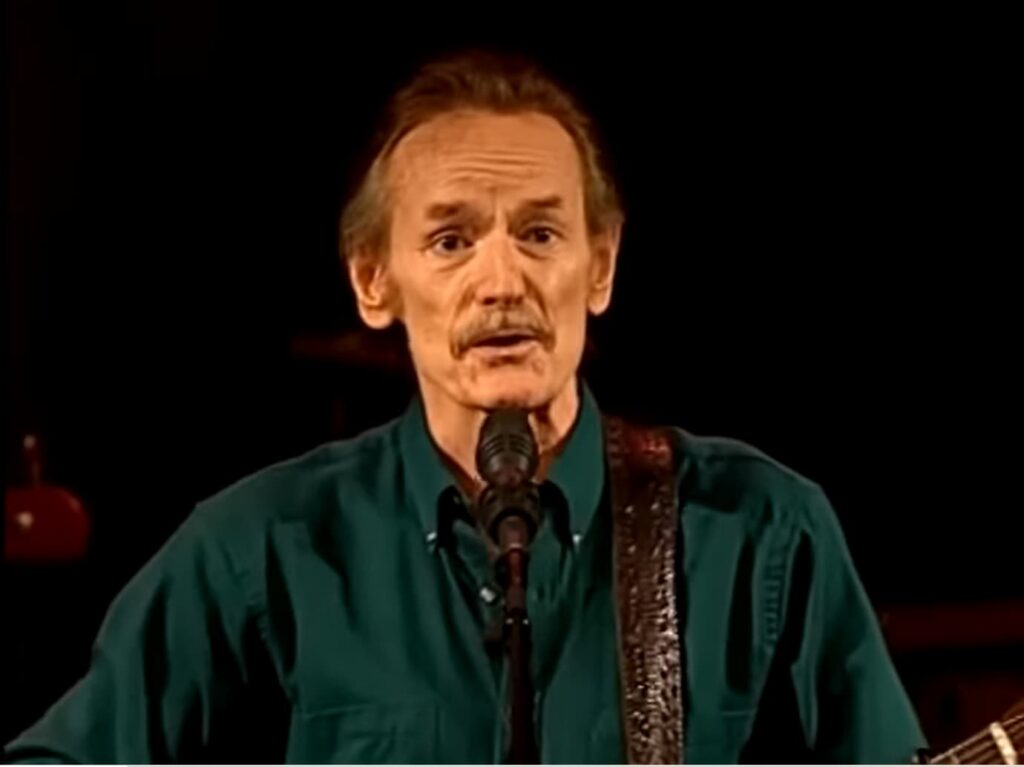
A weary traveler searching for truth in a restless world — “Don Quixote” became one of Gordon Lightfoot’s most thoughtful reflections on dignity, idealism, and the loneliness of believing too deeply.
There are songs that entertain for a season, and there are songs that quietly follow listeners through the years like old companions. “Don Quixote” belongs to the second kind. Long before the phrase “singer-songwriter” became fashionable marketing language, Gordon Lightfoot was already proving that popular music could carry the weight of literature, philosophy, and human longing without ever sounding forced. His music did not shout for attention. It simply sat beside you, patiently, until life itself revealed what the songs truly meant.
Originally released in 1972 as the title track of the album Don Quixote, the song arrived during one of the strongest creative periods of Lightfoot’s career. The album reached the Top 50 on the Billboard charts in the United States and performed especially well in Canada, where Lightfoot had already become one of the nation’s defining musical voices. By that point, he was no longer merely a folk artist from Ontario with a warm baritone and a gifted pen. He had become a storyteller whose songs felt carved from memory itself.
The live performance often referred to as “Don Quixote (Live In Reno)” carries an even deeper emotional resonance than the studio version. On stage, Lightfoot rarely relied on theatrical gestures. There were no grand speeches, no dramatic flourishes, no desperate attempts to impress an audience. Instead, he stood with calm authority, allowing the song’s poetry to breathe naturally. That restraint is precisely what gave performances like Reno their power. You were not watching a performer act out emotion — you were witnessing a man who had already lived inside the song for many years.
The inspiration behind “Don Quixote” came partly from Miguel de Cervantes’ legendary literary character — the aging dreamer who charges at windmills believing them to be giants. But Lightfoot’s interpretation was never simply about the famous novel. In his hands, Don Quixote became symbolic of every person who refuses to surrender imagination, honor, or hope in a cynical world. The song feels less like a historical portrait and more like a quiet meditation on idealism itself.
Lines throughout the composition suggest admiration rather than mockery. Lightfoot does not laugh at dreamers. He understands them. Perhaps because he was one himself.
By the early 1970s, the musical landscape was changing rapidly. Rock music had grown louder, harder, and more commercially aggressive. Yet Lightfoot continued writing songs filled with subtle emotional shading and poetic introspection. While others chased trends, he remained devoted to craftsmanship. That unwavering artistic identity is part of why songs like “Don Quixote” still feel timeless decades later.
Musically, the track is deceptively gentle. The acoustic guitar patterns move with a calm, almost wandering rhythm, while the melody unfolds like conversation rather than performance. There is space inside the arrangement — room for silence, room for thought. In the live Reno rendition especially, every pause seems meaningful. Lightfoot understood that melancholy does not always arrive dramatically. Sometimes it enters softly, like evening light fading through a window.
What makes “Don Quixote” endure is the emotional contradiction at its center. The song is hopeful, but wounded. Noble, but weary. It speaks to the painful realization that the world often misunderstands sincerity. Yet it also suggests that holding onto one’s ideals may still be worthwhile, even when doing so invites loneliness.
That theme runs throughout much of Gordon Lightfoot’s finest work. Songs like “If You Could Read My Mind,” “Carefree Highway,” and “The Wreck of the Edmund Fitzgerald” each reveal different shades of human vulnerability. But “Don Quixote” stands apart because it feels almost autobiographical in spirit. Whether intentionally or not, Lightfoot seemed to recognize himself in the wandering knight — a man carrying old-fashioned values into a modern world that no longer had much patience for them.
And perhaps that is why the song continues to resonate so deeply with listeners who have lived long enough to see ideals tested by time. The older the song becomes, the more truthful it sounds.
Listening to “Don Quixote (Live In Reno)” today feels less like revisiting a performance and more like opening an old letter from someone wise enough to know that disappointment and beauty often travel together. Lightfoot never tried to offer easy optimism. He offered understanding instead.
That is far rarer.
Even now, decades after its release, the song remains one of the most quietly profound entries in the Gordon Lightfoot catalog — not because it demanded attention, but because it earned it slowly, year after year, with grace, honesty, and the kind of emotional intelligence that popular music too often forgets.