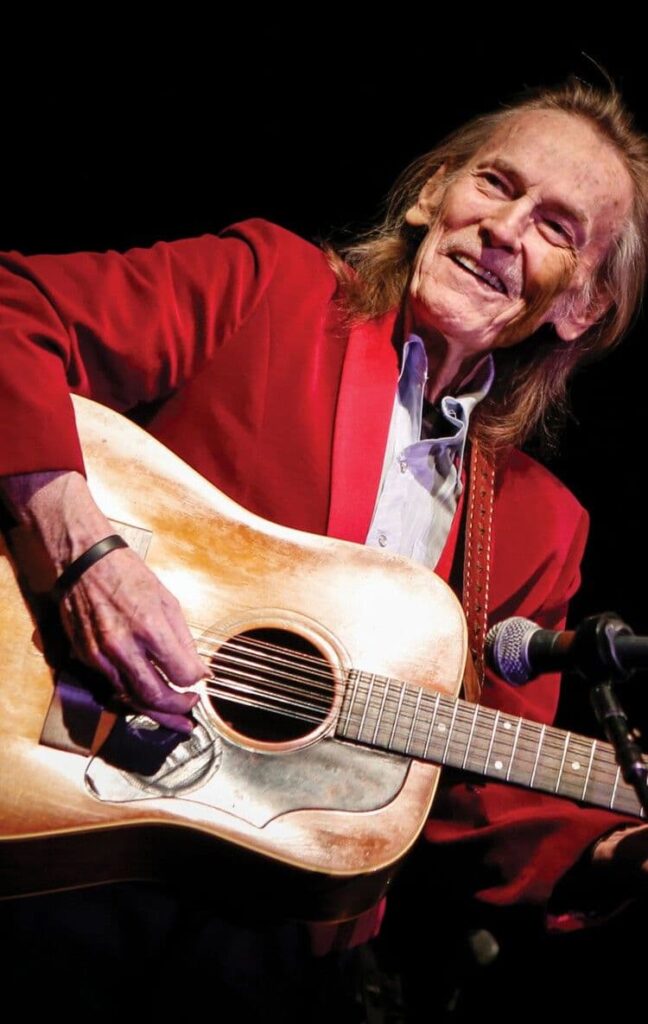
A quiet confession wrapped in melody — a song where love is not shouted, but patiently promised through tenderness, vulnerability, and the worn sincerity of a weathered voice.

There was always something deeply human about Gordon Lightfoot. He never needed dramatic vocal acrobatics or fashionable production to leave an emotional mark. Instead, he relied on something far rarer: honesty. And in “I’ll Prove My Love (Live In Reno)”, that honesty feels almost disarming. The performance carries the warmth of a man who had lived through enough heartache to understand that love is not merely spoken — it is demonstrated, quietly and consistently, over time.

Originally appearing on Gordon Lightfoot’s 1976 album Summertime Dream, “I’ll Prove My Love” was never one of the towering commercial hits that dominated radio the way “Sundown,” “If You Could Read My Mind,” or “The Wreck of the Edmund Fitzgerald” did. The song itself did not chart as a major standalone single, but the album Summertime Dream performed strongly, reaching No. 12 on the Billboard 200 in the United States and becoming one of the defining records of Lightfoot’s mid-1970s period. By then, Lightfoot was already regarded as one of Canada’s most respected singer-songwriters — a craftsman whose work blended folk, country, and soft rock into something timeless and unmistakably personal.

Yet sometimes the songs that stay with listeners the longest are not necessarily the chart-toppers. They are the quieter album tracks — the ones discovered late at night, years after release, when life itself has made their meaning clearer.

That is precisely the feeling carried by “I’ll Prove My Love.”

See also  Gordon Lightfoot - Somewhere U.S.A.

The live performance in Reno reveals dimensions of the song that the studio recording only hints at. Lightfoot’s voice, slightly roughened by time and experience, gives the lyrics added gravity. He sings not like a young man making promises out of excitement, but like someone who understands how difficult promises can be to keep. There is no arrogance in the delivery. No theatrical pleading. Just calm conviction.

And perhaps that is what makes the song so moving.

The lyrics revolve around devotion, but not in the grand cinematic sense popularized by so many love songs of the era. This is not fantasy romance. It is commitment shaped by patience and humility. The narrator does not demand trust immediately; instead, he offers to earn it. That emotional maturity became one of Gordon Lightfoot’s greatest strengths as a songwriter. He understood that love often exists in the spaces between words — in restraint, in loyalty, in the willingness to remain present even when life grows complicated.

Musically, the song reflects the elegant simplicity that defined much of Lightfoot’s finest work during the 1970s. The arrangement is gentle, rooted in acoustic textures, understated rhythm, and melodies that unfold naturally rather than forcefully. In the Reno performance, the instrumentation feels almost conversational, allowing the emotional weight of the lyrics to breathe. Nothing feels rushed. Every pause matters.

That unhurried quality is part of why Gordon Lightfoot’s music has aged so gracefully. While many recordings from the 1970s became tied to trends, his songs often feel detached from time altogether. They speak to universal emotions: regret, longing, devotion, loneliness, memory. Listening decades later, one can still hear echoes of ordinary lives within them — late-night drives, quiet kitchens, fading photographs, letters kept in drawers long after relationships ended.

See also  Gordon Lightfoot - A Gift to the World of Music

By the time Lightfoot performed “I’ll Prove My Love” live in Reno, he had already become something more than a successful recording artist. He had become a storyteller people trusted. Audiences believed him because he sounded like someone who had truly lived the emotions he described. That authenticity separated him from many contemporaries in the soft rock and folk world. Even at the height of his fame, he never seemed interested in celebrity glamour. He remained grounded in the craft of songwriting itself.

There is also something profoundly bittersweet about revisiting performances like this today. The live setting captures a fleeting moment — a room filled with listeners, a voice resonating through the hall, musicians locked into quiet understanding with one another. None of them could know then how these songs would continue traveling across decades, finding new meaning in the lives of future listeners.

And perhaps that is the enduring beauty of “I’ll Prove My Love.”

It reminds us that the strongest emotions are often expressed softly. That devotion does not always arrive with fireworks or dramatic declarations. Sometimes it arrives through consistency, through patience, through simply staying true to one’s word.

Very few artists understood that better than Gordon Lightfoot.

Video

Leave a Reply

Your email address will not be published. Required fields are marked *