
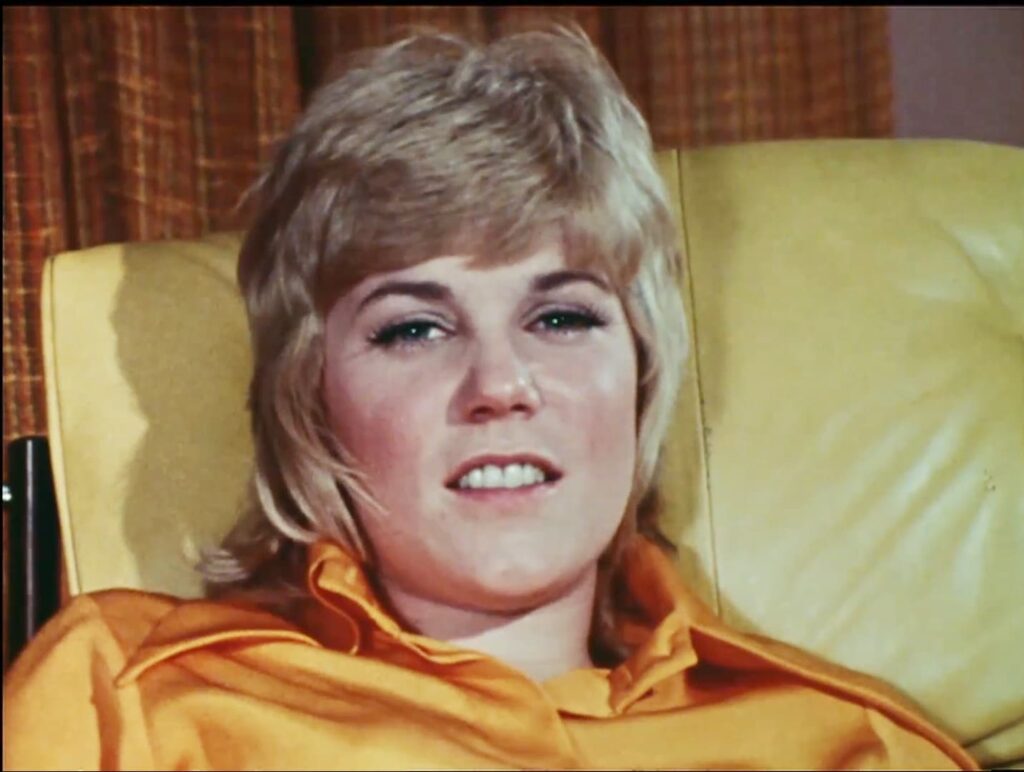
“SOMETIMES I THINK I’M CHEATING PEOPLE” — THE QUIET GUILT BEHIND ANNE MURRAY’S EARLY SUCCESS
In 1971, long before she became one of the most beloved voices in popular music, Anne Murray sat down for a candid interview with CBC and revealed something unexpectedly vulnerable about fame, work, and happiness. At only twenty-six years old, the Canadian singer was already climbing rapidly after the success of “Snowbird”, yet she spoke less like a confident star and more like a thoughtful schoolteacher still trying to understand why life had turned out this way for her.
What makes this interview so memorable today is not glamour or celebrity charm. It is the honesty.
When asked about singing professionally, Anne Murray admitted she sometimes struggled to justify her “reason for existence.” She described performing as something deeply enjoyable, almost suspiciously enjoyable. While most people worked exhausting jobs from nine to five and waited for weekends to rest, she spent nearly every day singing and traveling, yet loved nearly every minute of it. “Sometimes I think I’m cheating people by enjoying it so much,” she confessed with a shy laugh.
That single sentence reveals the essence of who Anne Murray was during those early years.
Unlike many performers of the era who projected confidence and ambition, Murray carried herself with a grounded humility that audiences immediately trusted. Before music, she had studied physical education and briefly taught school in Prince Edward Island. There was always something practical and deeply Canadian about her personality. Even as her records climbed the charts internationally, she still seemed uncomfortable treating herself as a celebrity.
Watching the interview now, older viewers may recognize something increasingly rare in modern entertainment: gratitude without arrogance. Murray did not speak about conquering the industry or becoming immortal. Instead, she sounded almost apologetic for finding joy in her profession. To her, singing was not a burden to endure for applause. It was genuine happiness.
And perhaps that explains why her voice connected so powerfully across generations.
There was never anything forced about Anne Murray’s singing. Whether performing “Danny’s Song,” “A Love Song,” or later classics like “Could I Have This Dance,” she sang with the warmth of someone sitting across the kitchen table rather than standing on a pedestal. Audiences felt comforted by her because she never appeared consumed by ego. Even in success, she remained relatable.
The 1971 interview also captures a fascinating moment before the full weight of fame arrived. At that point, Murray still viewed music almost philosophically. She questioned whether bringing people emotional comfort through songs was “real work.” Ironically, millions of listeners would later find healing, companionship, and memory inside those very performances.
That is the beautiful contradiction of artists like Anne Murray. The thing that came naturally to her became deeply meaningful to others.
Looking back more than fifty years later, her words feel almost bittersweet. In an industry often driven by spectacle and self-promotion, Anne Murray quietly worried that loving her work too much somehow made her undeserving of it. Yet that sincerity became one of the defining reasons audiences stayed with her for decades.
She was not cheating anyone.
She was simply one of the rare artists whose joy could still be heard in every note.