
ON A SUMMER NIGHT IN 1974, ANNE MURRAY TURNED A BEATLES SONG INTO SOMETHING LONELY, ELEGANT, AND ENTIRELY HER OWN
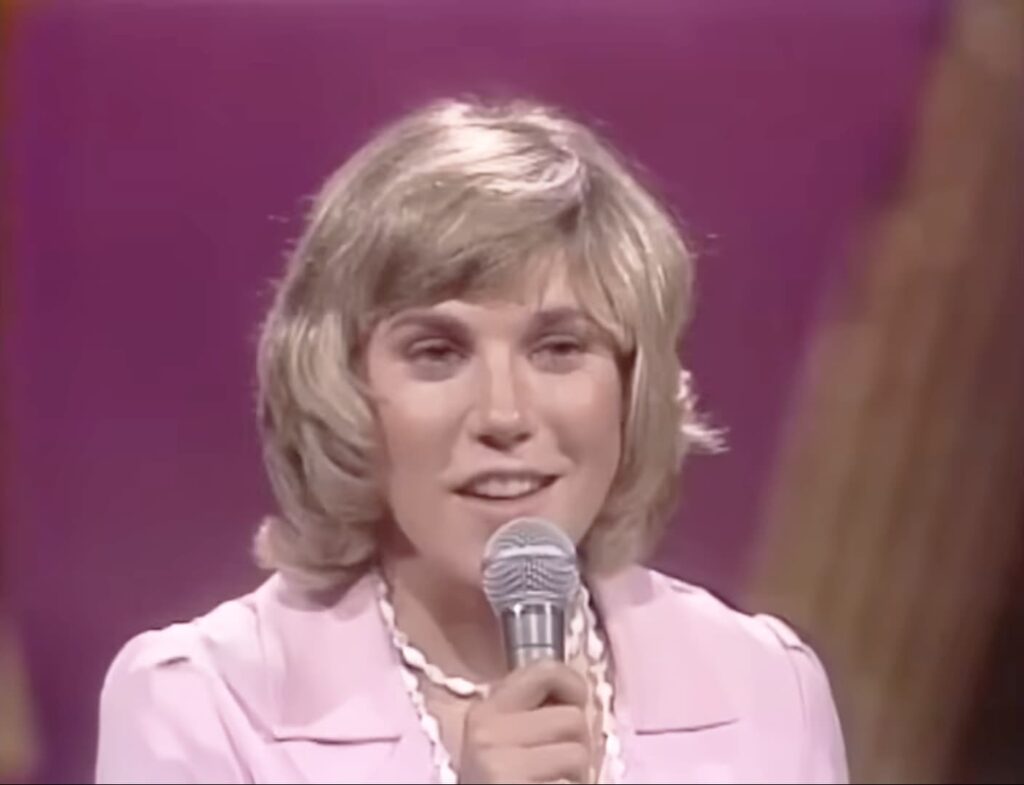
In July 1974, as television audiences across America tuned into The Midnight Special, Anne Murray stepped onto the stage to open the program with her hit version of “You Won’t See Me.” The song had originally appeared on The Beatles’ 1965 album Rubber Soul, written primarily by Paul McCartney during a period of emotional frustration and distance. But when Anne Murray sang it nearly a decade later, the song transformed completely.
What had once sounded like youthful irritation became something softer, sadder, and far more reflective.
From the first moments of the performance, Murray carried herself with the calm confidence that had already made her one of the most recognizable voices of the 1970s. There was no flashy choreography or theatrical production surrounding her. The focus remained entirely on the voice. Warm, controlled, unmistakably human.
And that voice changed the emotional center of the song.
The Beatles’ original recording moved with restless energy, layered harmonies, and the tension of unresolved communication. Anne Murray slowed the emotional pulse. Her interpretation felt less like an argument between lovers and more like the quiet realization that a relationship has already begun slipping away.
“When I call you up, your line’s engaged…”
In Murray’s hands, the lyric no longer sounded angry. It sounded disappointed. Tired. The kind of emotional exhaustion that arrives after trying too long to hold onto someone drifting further away with every passing day.
That subtle emotional shift became the reason her version connected so deeply with listeners.
Released in 1974 on the album Love Song, Murray’s recording of “You Won’t See Me” became one of her biggest crossover successes, reaching No. 1 on the Adult Contemporary chart and breaking strongly into the pop charts as well. At a time when country, pop, and soft rock were increasingly blending together, Anne Murray occupied a rare space between genres. She brought country sincerity into pop music without losing elegance or restraint.
Her appearance on The Midnight Special captured that balance perfectly.
The television lights, the soft 1970s production style, and the understated arrangement all allowed Murray’s phrasing to become the emotional anchor of the performance. Unlike many singers who approached Beatles covers by trying to imitate the originals, Anne instinctively understood that reinterpretation mattered more than imitation.
She did not sing the song like Paul McCartney.
She sang it like Anne Murray.
That distinction changed everything.
There was a remarkable emotional maturity in the performance, especially in the way she handled silence between lines. Murray always possessed an unusual ability to make heartbreak sound conversational rather than dramatic. She rarely forced emotion outward. Instead, she let sadness settle naturally into the melody, trusting listeners to recognize it for themselves.
That quiet approach gave the song lasting power.
Watching the performance today also offers a glimpse into a fascinating musical era. By 1974, popular music was shifting rapidly. Glam rock, singer-songwriters, country-pop, and classic rock all competed for attention. Yet Anne Murray stood apart from nearly all of it. While trends grew louder and more theatrical, she succeeded through calmness, clarity, and emotional sincerity.
Her version of “You Won’t See Me” reflected those qualities completely.
There is also something deeply nostalgic about seeing Murray during this period of her career. She carried herself with grace untouched by cynicism, singing songs about longing, uncertainty, and emotional distance in a way that felt relatable rather than glamorous. Audiences trusted her because nothing about her performances felt artificial.
That authenticity remains visible in this 1974 appearance.
By the final chorus, the song no longer felt connected to Beatlemania or the mid-1960s at all. Instead, it became a timeless portrait of two people slowly losing the ability to reach each other. No explosive ending arrived. No dramatic confrontation unfolded.
Only acceptance.
And perhaps that is why Anne Murray’s rendition continues to resonate decades later.
Because long after relationships fade, arguments disappear, and memories blur with time, there remains one painful truth almost everyone eventually understands:
Sometimes silence says far more than goodbye ever could.