
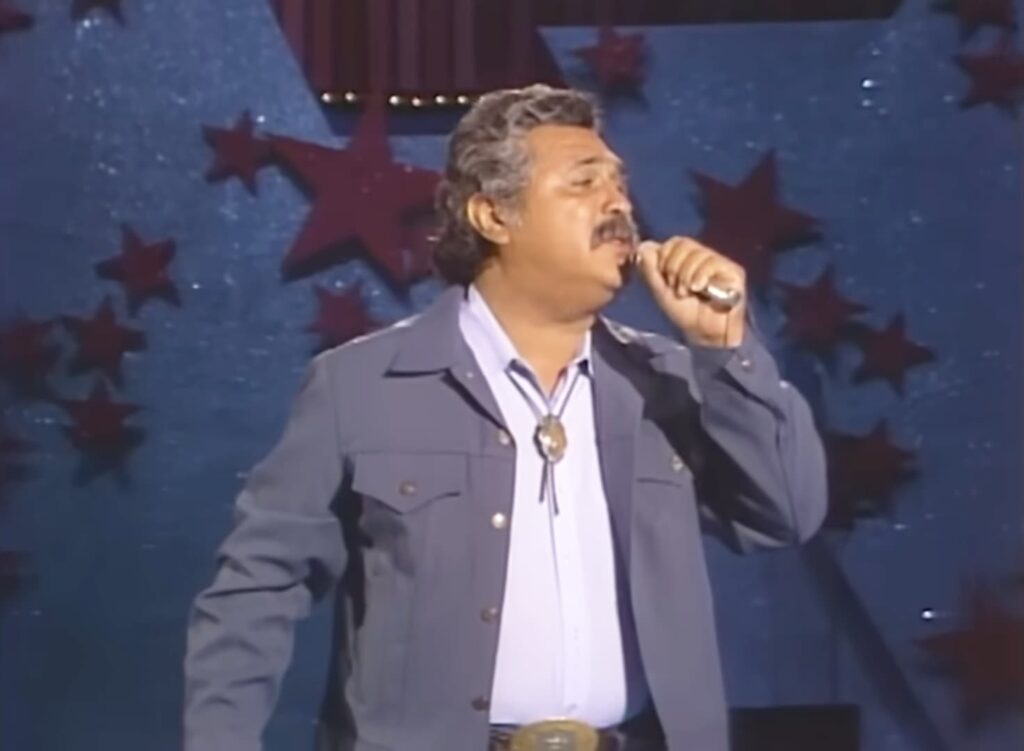
WHEN FREDDY FENDER SANG ABOUT HEARTBREAK IN 1984, IT FELT LESS LIKE A PERFORMANCE AND MORE LIKE A LIFE STORY
During the 1984 MDA Telethon, Freddy Fender walked onto the stage with the quiet humility that had always made him different from many country stars of his era. There was no dramatic entrance, no polished show-business swagger. Someone simply introduced him with a warm “Mr. Freddy Fender, everybody,” and within seconds, the room settled into the presence of a man whose voice carried decades of longing, mistakes, survival, and tenderness.
That night, Fender performed two songs forever tied to his legacy: “Before the Next Teardrop Falls” and “Wasted Days and Wasted Nights.” Together, they became more than a medley of hits. They sounded like chapters from the same weathered life.
As the opening notes of “Before the Next Teardrop Falls” drifted through the theater, the atmosphere softened immediately. Fender did not rush the song. He sang with patience, allowing every line to breathe naturally. His voice carried that unmistakable blend of country sorrow and Tex-Mex warmth that no one else could truly imitate.
“If he brings you happiness, then I wish you both the best…”
Even after nearly a decade of success following the song’s massive breakthrough in 1975, Fender still sounded emotionally connected to every lyric. That sincerity became the foundation of his greatness. He never sounded like a performer repeating an old hit for nostalgia. He sounded like a man still living inside the emotion.
What made the performance especially moving was its simplicity. Fender stood calmly at the microphone while the band played with gentle restraint behind him. No elaborate production was necessary because the emotional weight already existed in the song itself. Every listener understood the pain of loving someone enough to let them go while quietly promising to remain nearby if heartbreak ever returned.
When he reached the line:
“I’ll be there before the next teardrop falls…”
the audience responded with the kind of applause reserved for songs that have become part of people’s personal histories.
By 1984, Freddy Fender was already much more than a chart-topping singer. He represented resilience. Born Baldemar Huerta in Texas, Fender had survived poverty, prejudice, addiction struggles, prison, and years of uncertainty before finally finding stardom in his late thirties. That difficult road gave his voice unusual depth. Listeners believed him because his singing carried visible scars.
After the applause faded, Fender transitioned into “Wasted Days and Wasted Nights,” another song deeply connected to his own turbulent past. Originally recorded years before his mainstream breakthrough, the song had become almost autobiographical in spirit. On the MDA stage, it sounded raw, reflective, and painfully honest.
“Why should I keep loving you when I know that you’re not true…”
There was no anger in his delivery. Only weary understanding.
The performance also revealed Fender’s natural charm and humor. Between verses, he joked casually with the audience and musicians, even laughing at one point and saying, “Don’t listen to the words,” after dedicating part of the song to his wife. The crowd erupted warmly because that humor made him feel approachable, like someone telling stories at a family gathering rather than an untouchable celebrity.
One of the evening’s most memorable moments arrived during the instrumental section when Fender stepped back slightly and encouraged the band with an affectionate “Take it away, little brother.” It was a small moment, but it revealed his generosity as a performer. He understood that music was something shared, not controlled.
Watching the performance today feels like opening a window into a vanished era of television entertainment. The MDA Telethon itself carried a spirit of togetherness that modern broadcasts rarely capture. Artists appeared not only to promote records, but to contribute, connect, and simply entertain people watching at home late into the night.
And in that setting, Freddy Fender felt perfectly at home.
There was a humanity in his performances that audiences immediately recognized. He never hid behind polish. His voice cracked slightly at times. His phrasing wandered gently behind the beat. Yet those imperfections made the songs feel even more truthful.
By the end of “Wasted Days and Wasted Nights,” the audience rose into thunderous applause while Fender smiled modestly and thanked them with visible gratitude. It was not the reaction to a manufactured star. It was affection for a man who had turned personal pain into songs people carried with them for years.
Decades later, the 1984 MDA Telethon performance remains unforgettable because it captured Freddy Fender exactly as audiences loved him most: humble, wounded, funny, soulful, and heartbreakingly real.
 Oldies Songs