
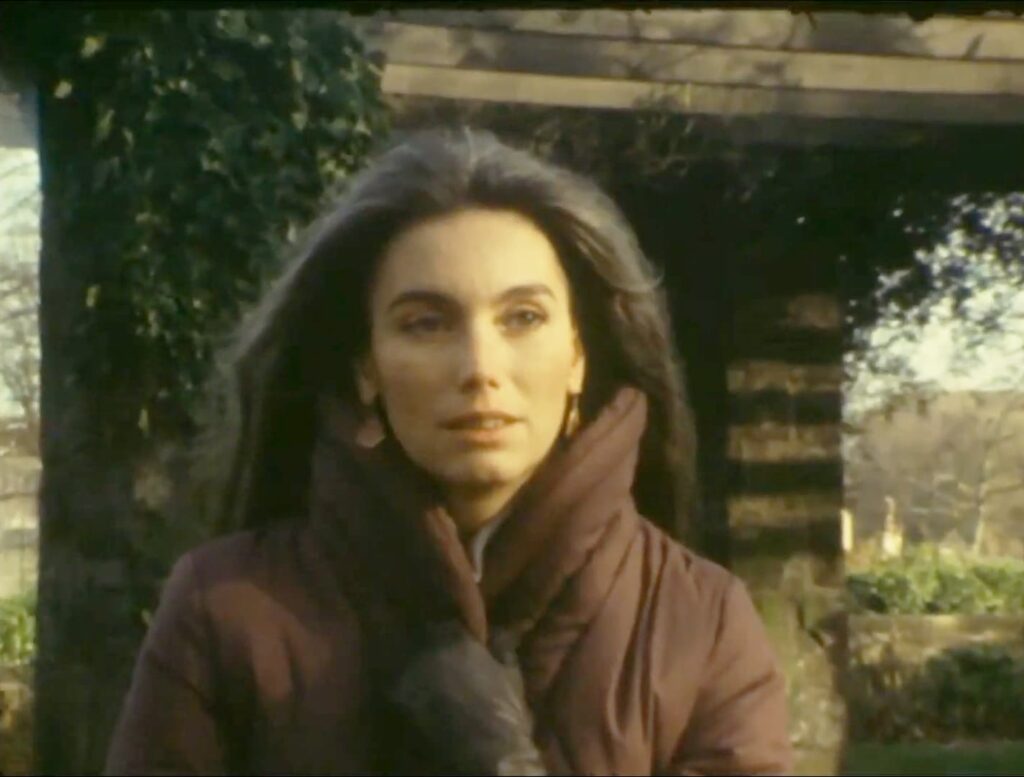
EMMYLOU HARRIS CAME TO IRELAND IN 1982 LOOKING FOR THE SOUL INSIDE THE MUSIC
In 1982, Emmylou Harris arrived in Ireland not merely as an international country music star promoting her live album Last Date, but as a restless musical pilgrim searching for something deeper. At thirty-five years old, Harris was already widely respected for her haunting voice, elegant stage presence, and remarkable collaborations with artists like Gram Parsons, Rodney Crowell, and Willie Nelson. Yet in this rare Irish television interview, what emerges most clearly is not celebrity confidence, but genuine curiosity.
She speaks about Irish traditional music almost like a devoted student.
Many fans at the time may have been surprised hearing a major American country artist enthusiastically discussing groups such as The Chieftains, Planxty, and The Bothy Band. But for Emmylou, the connection made perfect sense. She recognized something in Irish folk music that mirrored the very best qualities of country music itself: roots, emotional honesty, and living tradition.
“I really do love it,” she says with unmistakable sincerity.
And you believe her immediately.
There is no fashionable trend-chasing in the interview. Harris sounds genuinely captivated by the music of Ireland, almost regretful that she had not yet spent enough time there to fully immerse herself in it. She speaks like someone who understands that traditional music is not simply entertainment. It is memory passed through generations.
That idea becomes central to the entire conversation.
At one point, the interviewer asks whether country music has become too conservative or stagnant. In lesser hands, the answer might have turned defensive. But Emmylou Harris responds thoughtfully, separating “tradition” from “conservatism” in a way that still feels insightful decades later.
She admits that country music had briefly lost its way.
Too many artists, she suggests, were abandoning the roots while still labeling the result as country. The music had lost some of its “meat,” as she beautifully puts it. Yet she also sounds hopeful, pointing toward a younger generation beginning to restore authenticity to the genre. She praises Ricky Skaggs, Rodney Crowell, Rosanne Cash, and John Anderson, while naturally including Willie Nelson among the enduring giants.
Listening now, her comments feel almost prophetic.
By the early 1980s, Nashville was increasingly drifting toward slick production and crossover polish. But artists like Harris were quietly protecting the older emotional architecture of country music. Songs still needed stories. Voices still needed scars. Melodies still needed space to breathe.
And nobody embodied that philosophy more gracefully than Emmylou herself.
Even in the performance clips woven throughout the interview, there is a striking stillness in her singing. She never forces emotion. She lets loneliness settle naturally into the phrasing. That restraint became one of her greatest artistic strengths. While many singers chased vocal power, Emmylou Harris specialized in emotional atmosphere. Her voice often sounded less like performance and more like memory returning unexpectedly.
The discussion about Last Date also reveals her subtle sense of humor.
Because of the title, many people assumed the album carried some heavy emotional significance or farewell message. Harris laughs gently at the misunderstanding, explaining that it simply referred to the last date of a tour during which the live recordings were made. “It’s time to move on,” she says casually, unaware how poetic the phrase would sound years later when looking back across her extraordinary career.
Perhaps the most touching moment comes near the end.
Before leaving, Emmylou offers viewers a warm Christmas greeting and expresses hope that she will return the following year with her full band. It is a small moment, but deeply revealing. Despite her fame, she still speaks with the warmth of someone grateful to connect with people rather than perform above them.
Looking back today, this 1982 Irish interview captures Emmylou Harris at a fascinating crossroads. She was already a major star, yet still deeply hungry as a listener and student of music. That openness may explain why her artistry endured so powerfully while trends around her constantly shifted.
Because Emmylou Harris never treated folk music or country music as commercial products first.
To her, they were inheritances.
Living traditions carried by human voices across borders, generations, heartbreaks, and time itself.