
A Restless Southern Highway Song Where Love, Freedom, and Loneliness Ride Side by Side
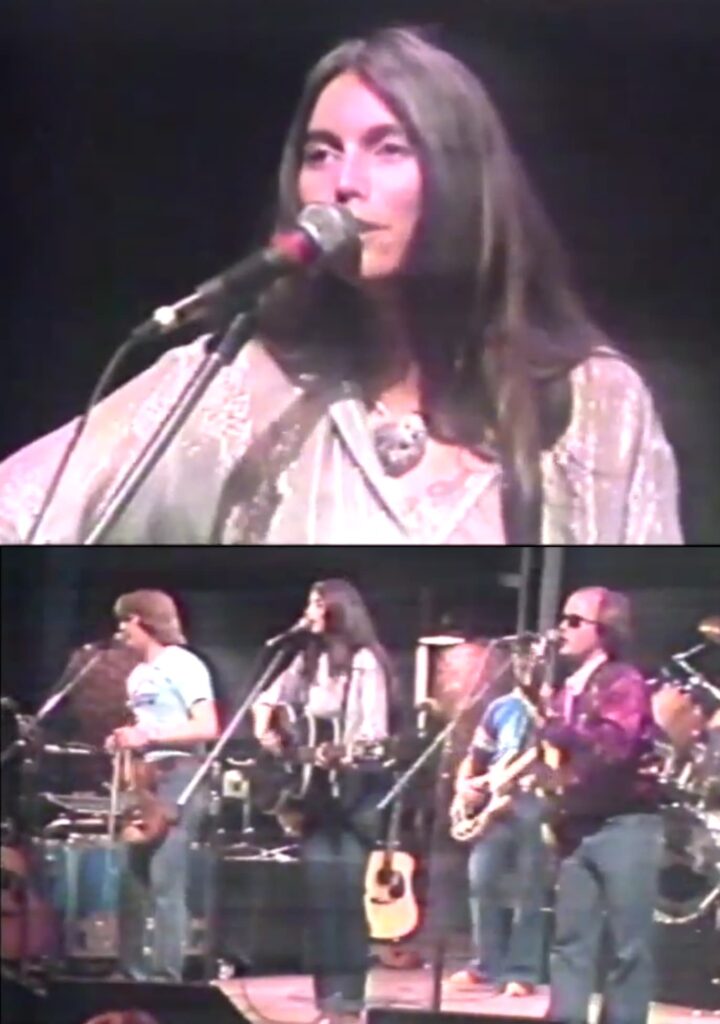
When Emmylou Harris and the Hot Band launched into “Leaving Louisiana in the Broad Daylight,” they did not merely play a country song. They captured motion itself. The performance rolled forward with the loose, unstoppable energy of tires humming across Southern highways long after midnight, carrying with it the spirit of wanderers, dreamers, drifters, and lovers too restless to stay in one place for very long.
Released in 1978 as the opening track and first single from Emmylou Harris’s landmark album Quarter Moon in a Ten Cent Town, the song climbed to No. 15 on the Billboard Hot Country Singles chart. Written by legendary songwriter Rodney Crowell together with Donivan Cowart, “Leaving Louisiana in the Broad Daylight” quickly became one of Harris’s most beloved recordings, celebrated for its vivid storytelling, driving rhythm, and irresistible Cajun-flavored atmosphere.
But statistics never explain why certain songs endure for decades.
The true magic of “Leaving Louisiana in the Broad Daylight” lives in the feeling it creates. From the opening lines, listeners are thrown directly into a Southern tale already in motion. There is no slow introduction, no careful setup. The characters are already running. Already escaping. Already caught somewhere between romance and uncertainty.
“God bless the Mississippi…”
The song unfolds almost like a roadside film passing by through dusty windshield glass. There are traveling men, worried mothers, hard roads, cheap bars, alligators, and endless highways stretching through Louisiana darkness. Yet beneath the playful momentum lies something much deeper: the old American longing to keep moving before life can pin you down completely.
That emotional duality was something Emmylou Harris understood better than almost any artist of her generation.
By the late 1970s, Harris had already become one of the defining voices of country-rock and progressive country music. Following the death of Gram Parsons in 1973, she carried forward many of the musical ideals they had explored together: blending traditional country, folk, bluegrass, Cajun music, and rock-and-roll into something emotionally authentic and deeply American. Unlike the increasingly polished “Urban Cowboy” sound beginning to dominate parts of country radio, Harris’s music still felt rooted in backroads, dance halls, and lived experience.
The album Quarter Moon in a Ten Cent Town perfectly reflected that artistic vision. Alongside songs by writers such as Townes Van Zandt, Billy Sherrill, and Rodney Crowell, Harris created a record balancing heartbreak, wanderlust, and rural storytelling with remarkable elegance. “Leaving Louisiana in the Broad Daylight” stood out immediately because it sounded alive from the very first measure.
Much of that vitality came from the extraordinary musicians surrounding Harris in the Hot Band.
The live version especially gained additional fire through the presence of Ricky Skaggs, whose Cajun-style fiddle transformed the performance into something exhilarating. Long before Skaggs became one of bluegrass and country music’s biggest stars during the 1980s, he was already recognized as a brilliant multi-instrumentalist deeply connected to Appalachian and roots traditions. His fiddle lines on this performance do not simply decorate the song. They drive it forward like flashing highway lights disappearing into humid Southern darkness.
And then come the harmonies.
Near the end of the performance, Harris and Skaggs blend voices with breathtaking natural ease. Their harmonies rise above the rhythm section almost like two travelers singing together from the front seat of an old car somewhere between Louisiana and Texas. There is joy in those harmonies, but also yearning. That tension between freedom and loneliness sits at the heart of the song.
What made Emmylou Harris such a singular interpreter was her ability to uncover emotional depth even inside upbeat material. On the surface, “Leaving Louisiana in the Broad Daylight” feels playful and energetic. Audiences clap along easily. The rhythm invites movement. But beneath the momentum lies an old truth about country music: wandering often comes from dissatisfaction as much as adventure.
The highway in country songs is rarely just a highway.
It represents escape. Reinvention. Loneliness. The hope that somewhere beyond the next state line, life might finally become simpler or kinder. In “Leaving Louisiana in the Broad Daylight,” the characters move endlessly because standing still may force them to confront realities they are trying desperately to outrun.
That deeper emotional undercurrent gives the song lasting resonance decades later.
Watching this live performance now also reveals something increasingly rare in modern music: genuine ensemble chemistry. Nothing feels calculated. The musicians listen to one another closely. The tempo breathes naturally. The energy grows organically rather than mechanically. Harris smiles through the performance not like a distant star, but like someone completely immersed in the joy of playing music with trusted companions.
And perhaps that is why the performance still feels so vibrant today. It captures a disappearing era when country music still carried dirt roads in its soul. An era when songs could be literary without losing warmth, lively without losing depth, and emotionally honest without becoming self-conscious.
By the final chorus, with Ricky Skaggs’s fiddle dancing wildly around Emmylou’s luminous voice, the song seems to lift completely off the stage. For a few brief minutes, the audience is no longer sitting in front of a performance. They are traveling with it.
Rolling through Louisiana beneath endless Southern skies.
Chasing freedom somewhere just beyond the next horizon.