
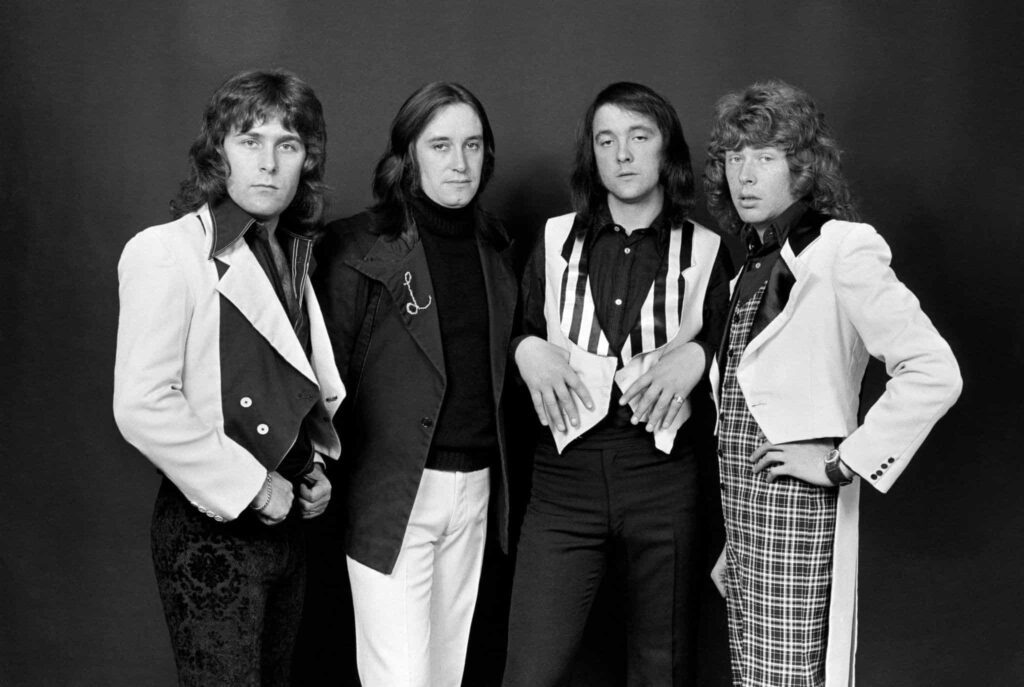
A farewell wrapped in glam-rock sorrow — “Don’t You Say It” captured the moment when Les Gray stepped away from the glitter of the 1970s and sang with the bruised honesty of a man looking back at love, fame, and time itself.
When people remember Les Gray, they almost always remember the wild stomping rhythm of “Tiger Feet,” the Christmas melancholy of “Lonely This Christmas,” or the playful swagger that made Mud one of Britain’s defining glam-rock bands of the 1970s. But hidden beneath the sequins, platform boots, and television smiles was another side of Gray — a voice capable of sounding weary, wounded, and deeply human. That quieter side can be heard in “Don’t You Say It,” a lesser-known 1982 solo-era recording that now feels almost like a private conversation from another lifetime.
Released after the golden age of glam rock had already faded, “Don’t You Say It” arrived during a difficult transitional period for both Les Gray and the surviving identity of Mud. By the early 1980s, musical tastes had shifted dramatically. Punk had already shaken the industry, new wave was dominating radio, and many of the great glam-rock acts suddenly found themselves standing in a world that no longer looked the same. Unlike the explosive chart successes Mud enjoyed during 1973–1975, this single did not become a major hit and failed to enter the upper reaches of the UK charts. In many ways, that commercial silence became part of the song’s emotional power.
And yet, listening to it today, one can hear something remarkably sincere.
The song itself is built around emotional exhaustion — the painful realization that words no longer heal a broken relationship. The repeated plea, “Don’t say you need me… don’t say goodbye,” feels less like anger and more like resignation. This is not the dramatic heartbreak of youthful pop music. It is the tired wisdom that comes after too many chances, too many promises, and too many nights spent hoping things might somehow change.
That emotional maturity gave the song a very different atmosphere from the upbeat, mischievous image most listeners associated with Mud. During the band’s peak years, they specialized in energetic singalongs and retro-inspired rock ’n’ roll revival hits. Songs like “Dyna-Mite,” “The Cat Crept In,” and “Oh Boy” were full of movement and youthful electricity. But “Don’t You Say It” sounds older — not in a negative sense, but in an honest one. The performance carries the feeling of someone who has already lived through success, disappointment, reinvention, and uncertainty.
There is also something unmistakably early-1980s about the production. The polished instrumentation, softer rock arrangement, and restrained emotional delivery reflect a period when many artists from the previous decade were trying to adapt without completely abandoning their roots. Unlike the bombastic glam-rock recordings produced by the famous songwriting team of Nicky Chinn and Mike Chapman, this song feels more intimate and less theatrical. It trades glitter for reflection.
For longtime admirers of Les Gray, the song has gained additional emotional weight over the years because of what followed in his life. After Mud’s major commercial era ended, Gray continued performing under variations of the band’s name and remained closely associated with the nostalgic spirit of 1970s British pop culture. Although he never again achieved the chart dominance he once enjoyed, he retained enormous affection from audiences who remembered that unique voice — rough-edged, Elvis-inspired, but strangely tender underneath.
And perhaps that is why “Don’t You Say It” resonates differently today than it may have in 1982.
Back then, listeners may have heard it simply as another post-glam single from a singer trying to find his place in a changing industry. But decades later, the song sounds almost autobiographical. It carries the ache of endings — not only romantic endings, but the ending of an era itself. The glory days of British glam rock were gone. The screaming teenage audiences had grown older. Music television was changing everything. Even the sound of heartbreak had changed.
Yet voices like Les Gray’s still mattered because they reminded listeners of something timeless: that behind every glittering pop phenomenon is a real person carrying private disappointments and quiet memories.
There is a particularly haunting quality in hearing artists from the 1970s sing about emotional defeat. These were performers once associated with confidence, glamour, and larger-than-life stage presence. When they later recorded songs filled with vulnerability, the contrast became deeply moving. In “Don’t You Say It,” Gray does not sound defeated by love alone — he sounds tired of illusions altogether.
That honesty is precisely what gives the song its enduring charm among collectors and longtime fans of classic British pop. It may never have become one of the defining chart records of its decade, but it preserved something far more personal: the sound of a seasoned singer confronting change with dignity.
And sometimes, those forgotten songs tell the truth more clearly than the famous ones ever could.
In the end, “Don’t You Say It” stands as one of those overlooked recordings that quietly reveal the soul behind the celebrity — a reminder that even after the applause fades, the voice remains, carrying every scar, every memory, and every goodbye along with it.