
A playful hit on the surface, but beneath the cheerful rhythm, “Running Bear” carried the loneliness of impossible love — a story that somehow sounded both innocent and heartbreakingly tragic at the same time.
There are songs that belong to a particular year… and there are songs that seem to float outside of time entirely. “Running Bear”, revived years later by Les Gray, was one of those records. Even listeners who first heard it decades after its original success could still feel the strange mixture of sweetness and sadness hidden beneath its catchy melody. It was simple music, uncomplicated in structure, almost childlike in presentation — yet emotionally, it lingered in the heart far longer than anyone expected.
Most people remember “Running Bear” as the famous late-1950s hit originally recorded by Johnny Preston in 1959, written and produced by the legendary J.P. Richardson, better known as The Big Bopper. The song became a massive international success, reaching No. 1 on the Billboard Hot 100 in early 1960 and also topping charts in the United Kingdom. Tragically, Richardson died in the same plane crash that killed Buddy Holly and Ritchie Valens before the song even reached its commercial peak — a fact that forever wrapped “Running Bear” in an unexpected layer of melancholy.
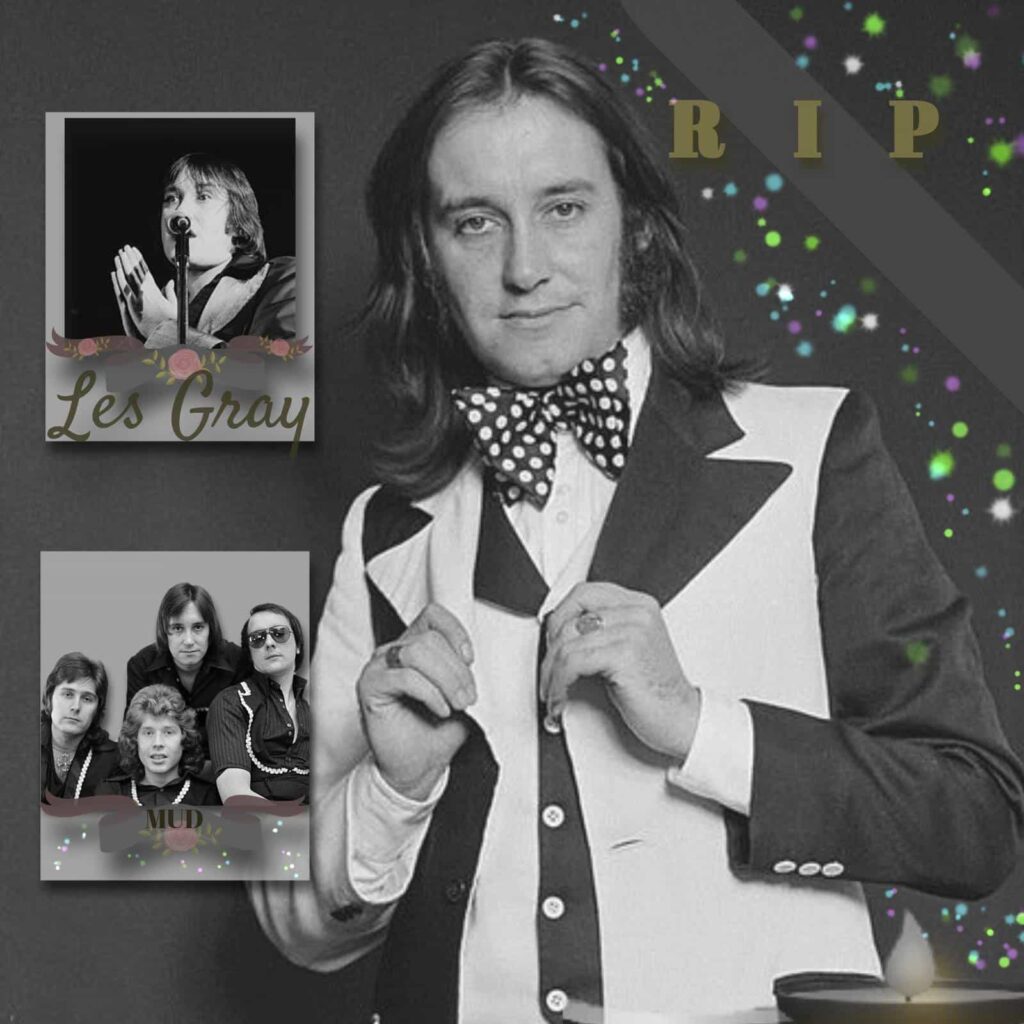
Years later, Les Gray, best known as the charismatic voice of Mud, brought the song back to audiences with his own unmistakable warmth and personality. By the time Gray recorded it, the innocence of early rock ’n’ roll already carried the glow of nostalgia. His version did not simply imitate the original; it felt like a man revisiting an old memory from youth — smiling while knowing that time had already slipped away.
For listeners who grew up during the golden age of pop and rock, Les Gray represented something wonderfully human in British music. Unlike the polished mystique of some rock stars, Gray always sounded approachable, full of humor and heart. With Mud, he helped define the glam-pop atmosphere of the early 1970s through hits like “Tiger Feet”, “Lonely This Christmas”, and “Oh Boy!” Yet even with the band’s energetic image, there was often a surprising tenderness beneath the surface. That same emotional honesty quietly found its way into “Running Bear.”
The story within the song itself is deceptively simple. Two young lovers — Running Bear and Little White Dove — are separated by a river and by the disapproval of their tribes. They long for each other, dream of being together, and ultimately attempt to cross the water toward one another, only to drown in the process. It is, in essence, a folk tragedy disguised as novelty pop.
And perhaps that contradiction is exactly why the song endured.
The melody skips along lightly, almost playfully, while the lyrics tell a story of doomed love. In another arrangement, it could have become a mournful ballad. Instead, the upbeat rhythm softens the sorrow, making the heartbreak somehow even more haunting. It reflects an era when popular music often hid pain behind cheerful arrangements — a style common in early rock and country crossover recordings of the late 1950s and early 1960s.
Listening to Les Gray’s interpretation decades later feels different from hearing the original as a teenager in 1960. Time changes the emotional weight of songs. What once sounded amusing or catchy slowly begins to reveal deeper shades of loneliness and innocence lost. The river in “Running Bear” no longer feels like a literal river. It becomes distance itself — the space between people, between generations, between memory and the present day.
There is also something unmistakably bittersweet about hearing a singer like Les Gray perform material tied to an earlier musical era. By then, rock music had become louder, harder, more cynical. Yet songs like “Running Bear” reminded audiences of a time when storytelling still sat at the center of popular music. Not every record needed rebellion or spectacle. Sometimes all it took was a simple melody and a heartfelt narrative.
Critics over the years have debated whether “Running Bear” should be viewed as novelty music, early pop folklore, or simply a relic of another cultural moment. But ordinary listeners rarely cared about such distinctions. What mattered was the feeling the song created — that strange ache of remembering youth, first love, and the emotional sincerity that older records often carried so effortlessly.
And perhaps that is why the song continues to survive long after its chart success faded into history.
Because beneath its catchy refrain and uncomplicated charm, “Running Bear” quietly reminds us of something many songs eventually forget: even the simplest love stories can leave echoes that last a lifetime.