
A Honky Tonk Heartbreak Revived Under The Texas Night, Where Old Country Pain Still Sounded Proud And Alive
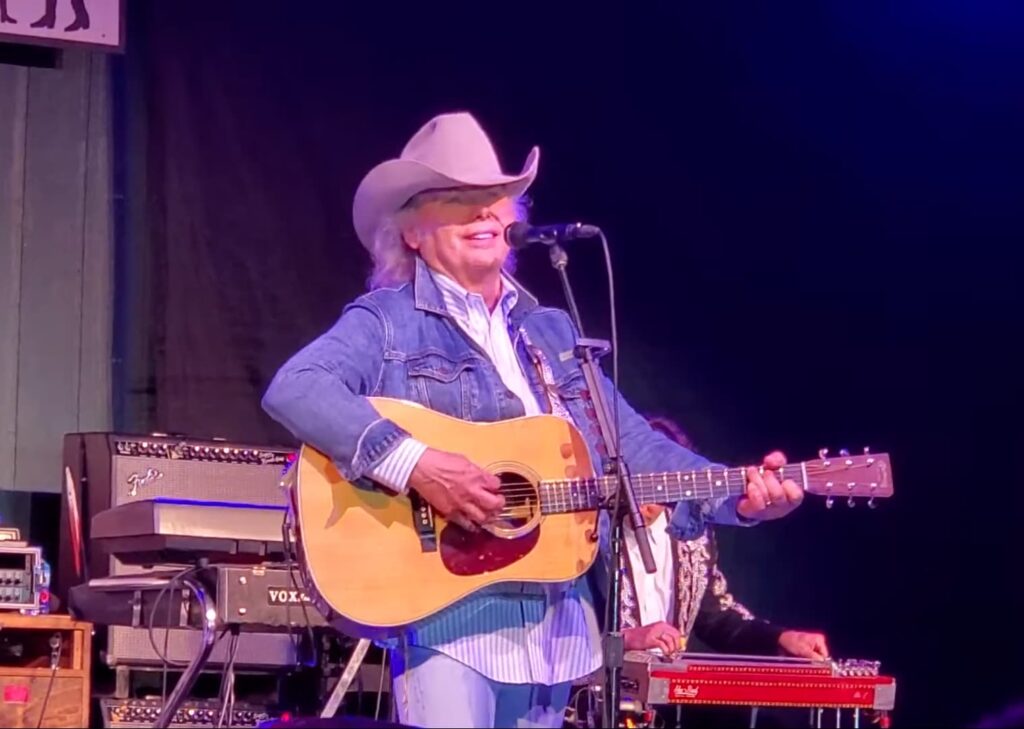
When Dwight Yoakam stepped onto the stage in Helotes, Texas to perform “Tonight the Bottle Let Me Down,” it felt like the spirit of classic honky tonk country music had suddenly returned in full force. The lights were low, the guitars rang sharply through the night air, and the crowd responded with the kind of excitement reserved for songs that have traveled through decades without losing their sting.
Long before Dwight Yoakam became one of country music’s defining neo traditionalists, “Tonight the Bottle Let Me Down” had already earned legendary status through Merle Haggard, who released the song in 1966 during the golden era of Bakersfield country music. It was a song built on heartbreak, loneliness, and the painful realization that even whiskey cannot always numb memory. Few modern artists understood that sound better than Yoakam.
From the opening instrumental moments in Helotes, the performance carried raw energy. Yoakam moved across the stage with the same restless intensity that made him such a striking presence throughout the 1980s and 1990s. Yet beneath the sharp suits, driving rhythm, and electric stage charisma remained a deep respect for traditional country music.
His version of “Tonight the Bottle Let Me Down” never sounded like imitation. Instead, it felt like a conversation across generations between artists who understood the language of heartbreak. Yoakam’s voice, with its high lonely edge and emotional tension, gave the song a slightly different ache from Haggard’s original recording. There was more desperation in it, more motion, almost as if the narrator was trying to outrun the pain rather than simply surrendering to it.
The crowd in Texas understood every word without needing explanation. Songs like this belong to places where dance halls still echo with memories and where old jukeboxes once carried stories of broken romances late into the night. In those moments, country music becomes more than entertainment. It becomes shared experience.
What made Dwight Yoakam so important to country music was his refusal to abandon those roots during an era when the genre increasingly leaned toward polished pop production. Beginning in the mid 1980s with albums like Guitars, Cadillacs, Etc., Etc., he brought Bakersfield-inspired country back into the mainstream with twanging guitars, emotional honesty, and fierce independence.
That same spirit could still be heard in Helotes. The band played tightly, the steel guitar cried behind the rhythm, and Yoakam delivered every line with conviction. Even during the instrumental breaks, the atmosphere carried a rough-edged authenticity that modern country performances often struggle to capture.
Watching the performance today feels like revisiting an older America of roadside dance halls, neon beer signs, two-step rhythms, and lonely drives home after midnight. The song itself is deceptively simple, but its emotional truth remains timeless. Everyone eventually reaches a night when memory feels stronger than distraction, when even the bottle cannot erase what lingers in the heart.
And that is why performances like this endure.
For a few minutes in Helotes, Texas, Dwight Yoakam reminded audiences that classic country music was never about perfection. It was about honesty. About standing in the middle of heartache and singing anyway.
As the applause rose through the venue and the final notes faded, the song left behind the familiar ache that only great honky tonk music can deliver. Not despair exactly. Just the quiet understanding that some memories stay long after the music ends.