
A Songwriter Who Listened to Rivers, Silence, and the Weight of Human Memory
For Gordon Lightfoot, writing a song was never about chasing trends, radio formulas, or fashionable sounds. It was something quieter than that — almost sacred. He once explained that songs often arrived not through force, but through patience: through observation, solitude, and the slow gathering of emotions that most people carry silently through life. That philosophy became the foundation of one of the most respected songwriting careers in modern folk and country music history.
Few artists ever wrote with the emotional honesty of Gordon Lightfoot. Whether it was “If You Could Read My Mind,” “Sundown,” “Early Morning Rain,” or “The Wreck of the Edmund Fitzgerald,” his songs felt less like performances and more like conversations overheard late at night — thoughtful, wounded, reflective, and deeply human. And perhaps that is why his music endured across generations. He never sounded like he was trying to impress anyone. He sounded like he was trying to tell the truth.
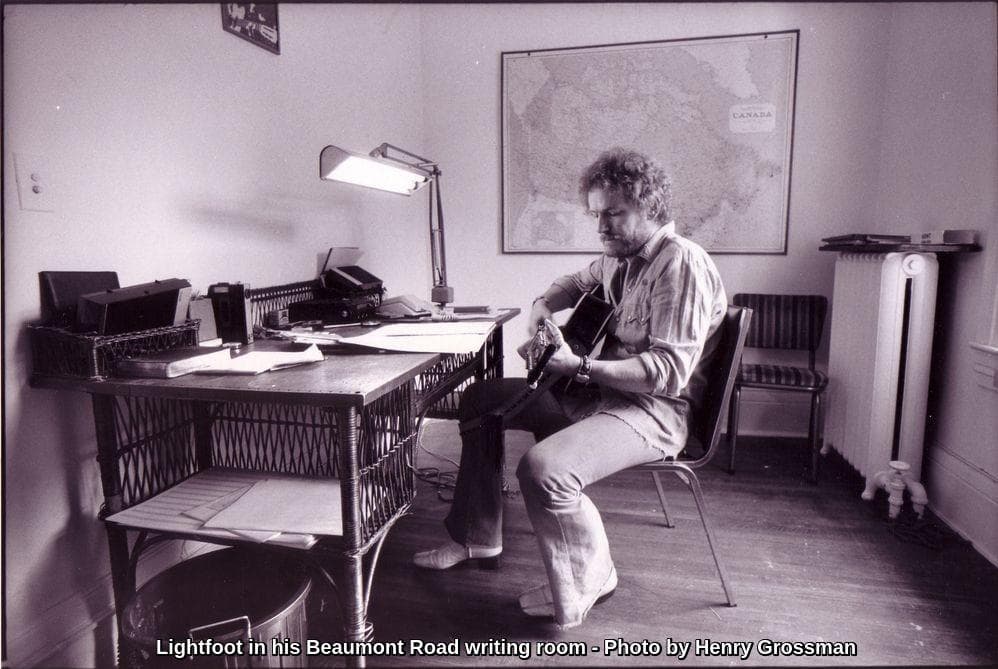
When Lightfoot spoke about songwriting, he often described it as work built from discipline rather than sudden inspiration. He believed a songwriter had to keep showing up — keep listening, keep refining, keep rewriting. In many interviews throughout the 1970s and 1980s, he explained that melodies could come from almost anywhere: a passing memory, a lonely hotel room, a newspaper article, a relationship ending quietly, or even the rhythm of train tracks and highways. But inspiration alone was never enough. The craft mattered equally.
That careful craftsmanship can be heard clearly in “If You Could Read My Mind” from the 1970 album Sit Down Young Stranger — later retitled If You Could Read My Mind after the song became a major hit. The single reached No. 1 in Canada and climbed to No. 5 on the Billboard Hot 100 in the United States, establishing Lightfoot as far more than simply a Canadian folk artist. It became an international standard because listeners immediately recognized its emotional sincerity. The song was inspired by the collapse of his marriage, yet it avoided bitterness. Instead, it sounded weary, reflective, and painfully mature — the voice of someone trying to understand heartbreak rather than simply survive it.
That was one of Lightfoot’s rare gifts as a writer: restraint.
Where many songwriters leaned toward dramatic confession, Lightfoot preferred understatement. He trusted listeners to feel the emptiness between the lines. In songs like “Rainy Day People” or “Carefree Highway,” there is often more emotion hidden in what remains unsaid than in what is openly declared. His writing carried the stillness of northern landscapes — long roads, cold lakes, distant lights, quiet regrets. Even his love songs felt weathered by time.
By the early 1970s, Lightfoot had become one of the most admired songwriters in North America. Major artists including Elvis Presley, Bob Dylan, Johnny Cash, and Barbra Streisand recorded or praised his work. Dylan himself famously said that when he heard a Gordon Lightfoot song, he wished it would last forever. That kind of admiration did not come from commercial success alone. It came from respect among fellow songwriters — the deepest kind of recognition an artist can receive.
Perhaps the clearest example of Lightfoot’s songwriting philosophy appeared in “The Wreck of the Edmund Fitzgerald.” Released in 1976 on the album Summertime Dream, the song reached No. 2 on the Billboard Hot 100 and became one of the greatest narrative ballads ever recorded. Inspired by the true sinking of the SS Edmund Fitzgerald on Lake Superior in November 1975, Lightfoot transformed a newspaper tragedy into something timeless and haunting. He reportedly studied articles carefully, revising lyrics repeatedly to honor the real sailors involved. For him, accuracy mattered. Humanity mattered more.
That attention to detail reflected how seriously he viewed songwriting itself. He did not see songs as disposable entertainment. He saw them as documents of feeling — emotional history preserved in melody.
And yet, despite the literary depth of his work, Gordon Lightfoot never lost the accessibility that made audiences love him. His voice carried warmth and weariness at the same time. There was no theatricality in it. No unnecessary ornament. Just a man singing stories that sounded lived-in. Even when his arrangements became fuller during the Sundown era in the mid-1970s, the heart of the music remained intimate.
“Sundown,” released in 1974, became his only No. 1 single on the Billboard Hot 100. Driven by jealousy, suspicion, and emotional vulnerability, the song revealed another side of Lightfoot’s writing — darker, restless, almost dangerous beneath its smooth acoustic groove. Rumors long connected the song to his turbulent relationship with actress Cathy Smith, though Lightfoot himself often remained careful about fully explaining his lyrics. That mystery only deepened the song’s emotional power.
What made Gordon Lightfoot extraordinary was not simply that he wrote beautiful melodies. Many artists can do that. What separated him was his ability to write songs that seemed to understand people quietly — their loneliness, their memories, their regrets, their fading hopes, and their resilience. Listening to his music often feels like opening an old photograph album and discovering emotions still preserved between the pages.
Even decades later, his songwriting continues to resonate because it was never tied to passing eras. It came from observation, honesty, and emotional patience. Gordon Lightfoot wrote songs the same way some people live their lives: carefully, thoughtfully, carrying both joy and sorrow without needing to announce either too loudly.