
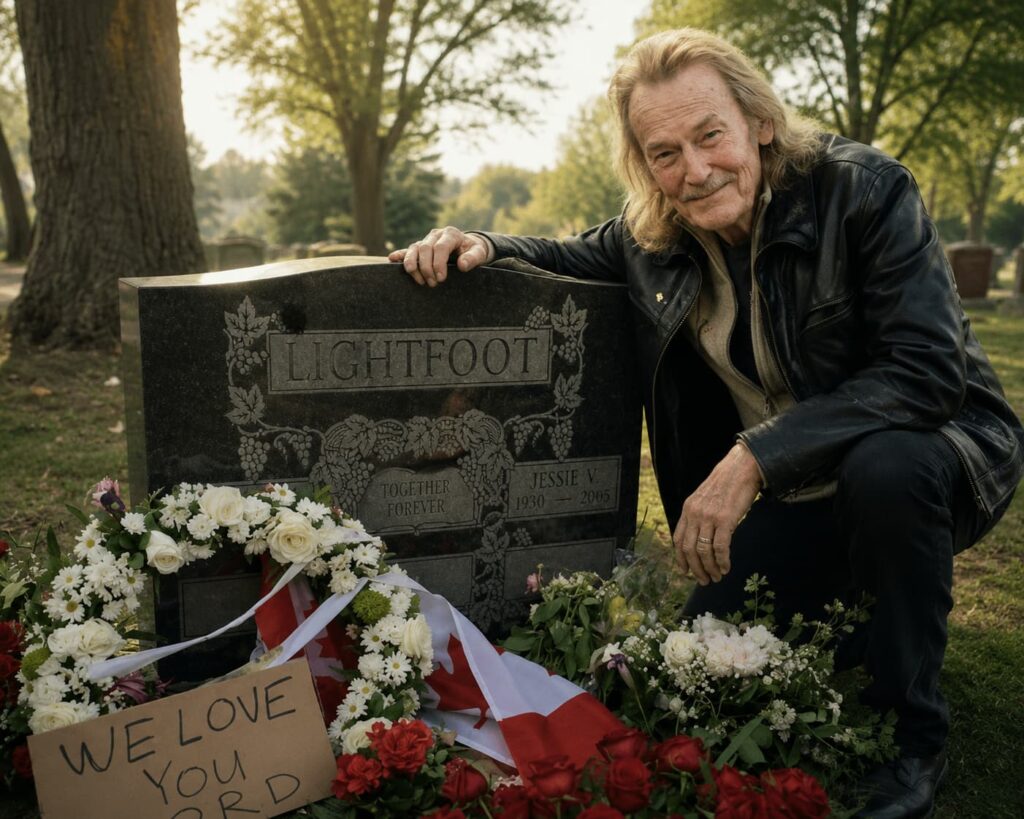
A restless farewell wrapped in folk melody — “For Lovin’ Me” captured the uneasy spirit of a man who could never stay long enough to be understood, and it revealed the sharp, wandering poetry that would soon make Gordon Lightfoot one of Canada’s greatest songwriters.
Long before stadium tours, before the gold records and the sweeping success of “If You Could Read My Mind” or “Sundown,” there was a young songwriter from Ontario quietly shaping songs filled with loneliness, distance, and emotional honesty. “For Lovin’ Me” was one of those songs — simple on the surface, but carrying the kind of emotional weight that lingers for decades after the final verse fades away.
Written in the early 1960s by Gordon Lightfoot, the song became one of the earliest compositions to introduce the world to his remarkable storytelling talent. Though Lightfoot recorded his own version, the song first gained wider recognition through folk legends Peter, Paul and Mary, whose 1965 rendition helped bring it into the mainstream folk revival movement. Their version appeared on the album A Song Will Rise, which reached No. 8 on the Billboard 200 chart in the United States. Around the same period, Lightfoot’s own recording appeared on his debut album Lightfoot! in 1966, an album now regarded as one of the foundational records in Canadian folk music history.
There is something strikingly cold — and painfully human — about the lyrics of “For Lovin’ Me.” Unlike the sentimental love songs dominating radio at the time, this song does not beg forgiveness or promise devotion. Instead, the narrator admits, almost casually, that he leaves people behind because he simply cannot stay. The line between honesty and selfishness becomes blurred, and that emotional ambiguity is exactly what makes the song so unforgettable.
The song reflected a side of Gordon Lightfoot that many listeners would later come to recognize throughout his career: the traveling soul. In the 1960s, folk musicians often lived out of suitcases, moving from coffeehouse to coffeehouse across Canada and the United States. Constant travel created emotional distance, unstable relationships, and a feeling that home was always somewhere else. “For Lovin’ Me” feels born directly from that lifestyle. It is not merely a breakup song — it is the confession of a man already halfway out the door before love even begins.
Musically, the song carries the clean, understated beauty of classic folk music. The acoustic guitar arrangement leaves space for the lyrics to breathe, and that restraint gives the song its quiet power. Lightfoot never needed dramatic vocal tricks to create emotion. His voice carried a weathered sincerity — calm, reflective, and deeply believable. Even when singing about emotional detachment, there was sadness underneath it, as though the narrator already understood the emptiness waiting for him down the road.
One fascinating aspect of “For Lovin’ Me” is how differently audiences interpreted it over the years. Some heard cruelty in the lyrics. Others heard fear — the fear of commitment, vulnerability, or emotional permanence. But many listeners recognized something even deeper: the loneliness of people who spend their lives moving forward while quietly leaving pieces of themselves behind. That emotional complexity helped elevate the song far beyond a standard folk tune.
The timing of the song was also important. During the mid-1960s, folk music was beginning to evolve from traditional storytelling into more personal and introspective songwriting. Artists were becoming less interested in polished romance and more willing to expose emotional contradictions. In many ways, Gordon Lightfoot helped pave that road. His writing carried literary depth without losing accessibility, and younger songwriters would later follow similar paths.
Over time, “For Lovin’ Me” became one of the songs most closely associated with Lightfoot’s early career. It was covered by numerous artists, including Ian & Sylvia, and remained a favorite among folk audiences who appreciated songs that felt emotionally truthful rather than idealized. Even decades later, the song still sounds remarkably modern because human restlessness never truly changes.
There is also a bittersweet irony in hearing the song today. With age and hindsight, listeners often hear something different than they did years ago. What once sounded rebellious may now sound lonely. What once felt independent may now feel regretful. That is the quiet brilliance of Gordon Lightfoot as a songwriter — his songs matured alongside the people who listened to them.
And perhaps that is why “For Lovin’ Me” continues to resonate after all these years. It understands that not every goodbye comes with anger. Some departures happen simply because certain people are unable to stay still long enough to build a lasting home inside another person’s heart.
In the end, the song remains a haunting early portrait of a songwriter who spent much of his life turning solitude into poetry. And few artists ever did it with the grace, honesty, and aching beauty of Gordon Lightfoot.