
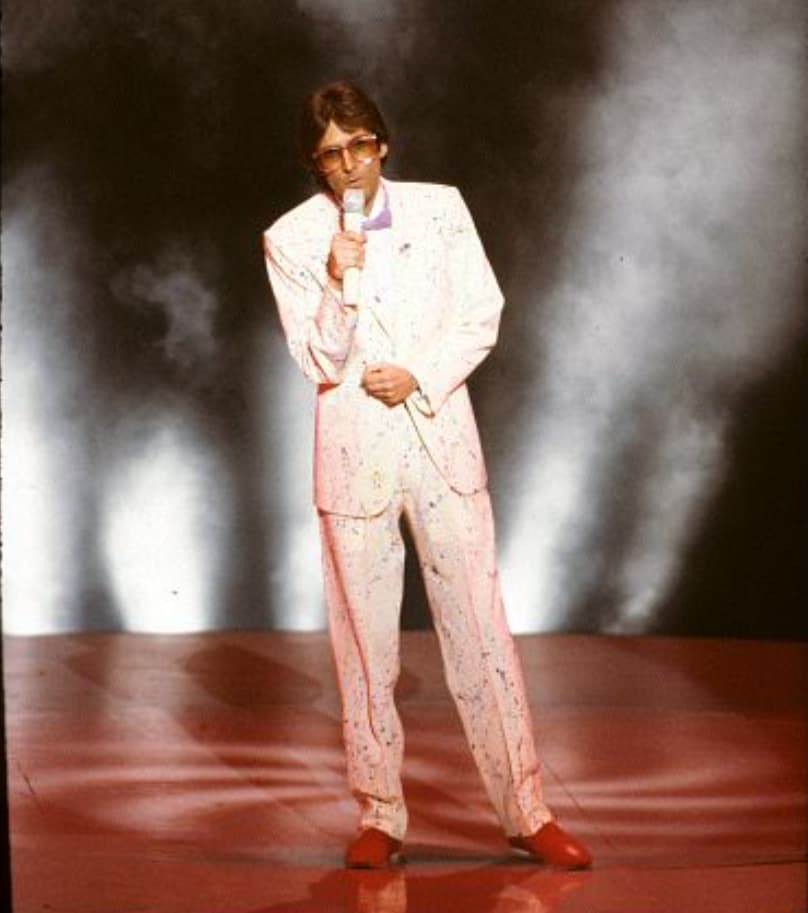
A Quiet Love Song About Fate, Timing, and the Fragile Hope of Finding Someone Who Changes Everything
When Stephen Bishop sang “It Might Be You”, he did not sound like a man trying to impress the world. He sounded like someone quietly opening his heart. And perhaps that is exactly why the song has endured for more than four decades — not through grand drama or vocal fireworks, but through sincerity, warmth, and the gentle ache of possibility.
Released in late 1982 as the love theme from the film Tootsie, starring Dustin Hoffman and Jessica Lange, “It Might Be You” became one of the defining adult contemporary ballads of its era. The song climbed to No. 25 on the Billboard Hot 100 and reached No. 5 on the Adult Contemporary chart in early 1983 — impressive numbers for a soft, introspective song in an age increasingly dominated by louder pop productions and synthesizer-driven hits.
Yet chart positions only tell part of the story.
The real legacy of “It Might Be You” lives in memory — in quiet living rooms, late-night radio programs, long drives under winter skies, and in the hearts of listeners who understood the strange mixture of loneliness and hope hidden inside its melody.
By the early 1980s, Stephen Bishop was already respected as one of America’s finest soft-rock songwriters. He had written and recorded deeply melodic songs such as “On and On” and “Save It for a Rainy Day,” building a reputation for emotional honesty and understated craftsmanship. Unlike many performers of his generation, Bishop never relied on flamboyance. His strength was subtlety. He sang as though he were speaking directly to one person.
That quality made him the perfect voice for “It Might Be You.”
The song itself was written by legendary lyricists Alan Bergman and Marilyn Bergman, alongside celebrated composer Dave Grusin. At first glance, the lyrics seem simple — a man wondering if the love he has finally discovered is the one he has been searching for all his life. But beneath that simplicity lies something much deeper: the fear of emotional vulnerability after years of disappointment.
“Somewhere in my life
There’s been heartache and pain…”
Those opening words immediately set the emotional tone. This is not youthful infatuation. This is mature longing. The narrator has lived enough life to know that happiness is never guaranteed. That understanding gives the song its bittersweet beauty.
And then comes the title phrase — “It might be you.”
Not certainty. Not triumph. Just hope.
That hesitation is what makes the song feel so human. Many love songs speak in absolutes, but “It Might Be You” speaks in possibilities. It understands that real love often arrives quietly, almost cautiously, after people have already been wounded by life.
In the context of Tootsie, the song became even more poignant. The film itself balanced comedy with themes of loneliness, identity, and emotional honesty. While audiences laughed at the brilliant performances, this song provided the film’s emotional soul. It softened the edges of the story and reminded viewers that beneath confusion and disguise, people are simply searching for connection.
One fascinating detail about the recording is the delicacy of Bishop’s performance. Rather than oversinging, he allowed space inside the song. The pauses, the softness, the restrained phrasing — these choices gave listeners room to place their own memories into the music. It became personal for millions of people because it never forced emotion upon them.
Over the years, the song quietly evolved into a kind of emotional time capsule for listeners who came of age in the late 1970s and early 1980s. Unlike trend-driven hits that faded with fashion, “It Might Be You” remained timeless because its emotional center never aged. The feeling of wondering whether love has finally arrived — after disappointment, after loneliness, after years of waiting — belongs to every generation.
There is also something unmistakably comforting about the production itself. The gentle piano, soft orchestration, and warm acoustic textures create an atmosphere that now feels almost lost in modern music. Songs from that era often allowed silence and tenderness to breathe naturally. They did not rush. They trusted melody and emotion.
Listening to Stephen Bishop sing this song today feels like opening an old photograph album. The world it came from may be gone, but the emotions remain startlingly alive. One can almost picture dimly lit kitchens after midnight, cassette tapes playing softly beside a window, or couples slow dancing without saying very much at all.
That is the quiet miracle of “It Might Be You.”
It never demanded attention. It simply stayed close to people through the years.
And perhaps that is the reason the song still matters. In a world that often celebrates noise, speed, and certainty, Stephen Bishop gave listeners something gentler — a song about emotional risk, fragile hope, and the beautiful uncertainty of love itself.