
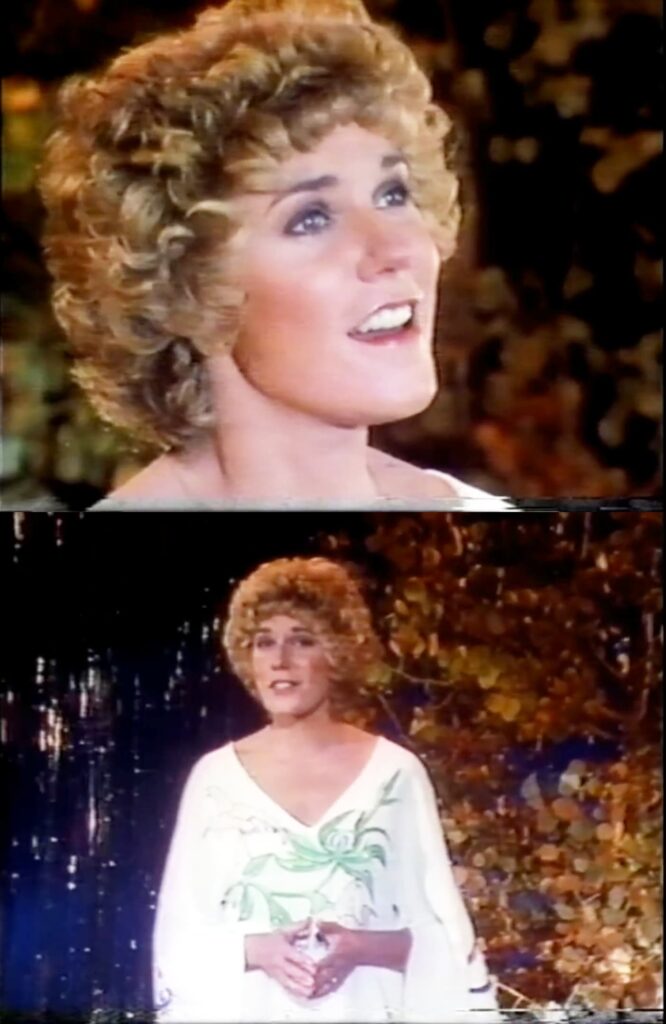
In 1975, Anne Murray Sang “Danny’s Song” Beside Lake Tahoe and Turned a Television Special Into a Quiet Celebration of Love and Family
In 1975, during Perry Como’s Lake Tahoe Holiday, Anne Murray stepped onto a rustic wooden deck overlooking the shimmering waters of Lake Tahoe and delivered a performance of “Danny’s Song” so warm and sincere that it still feels comforting decades later. There were no elaborate stage effects or dramatic theatrics. Just mountain air, sunlight reflecting off the lake, and one of the most recognizable voices of the 1970s singing about hope, devotion, and simple happiness.
At the time, Murray was already becoming one of the defining voices of soft rock and country-pop. Her 1972 recording of “Danny’s Song” had transformed the song into an international hit, helping establish her crossover appeal far beyond country music audiences. Originally written by Kenny Loggins of Loggins and Messina as a heartfelt gift for his brother Danny and sister-in-law upon the birth of their child, the song carried a gentle optimism that perfectly matched Murray’s vocal style.
The Lake Tahoe performance captured that emotional purity beautifully.
Dressed in classic seventies fashion, Murray appeared completely at ease against the breathtaking alpine scenery. Her calm presence and natural smile gave the performance an intimacy that television specials often struggle to create. Rather than overwhelming the song with showmanship, she leaned into its simplicity, allowing the lyrics to speak directly to the audience.
As she sang lines about having “no money in the billfold” but still feeling rich in love, the performance radiated sincerity. Murray’s smooth contralto voice floated effortlessly through the acoustic arrangement, carrying both tenderness and quiet strength. It was the kind of vocal performance that did not demand attention loudly. Instead, it invited listeners closer.
What made Anne Murray’s interpretation of “Danny’s Song” so enduring was her ability to sound emotionally genuine without becoming sentimental. She understood that the song’s power came from ordinary details: young love, uncertainty about the future, and the belief that family could make difficult times meaningful. In her hands, those themes felt universal.
The visual setting added another layer of nostalgia to the performance. The peaceful waters of Lake Tahoe, the rustic deck, and the relaxed television production reflected a softer era of entertainment when musical specials focused more on atmosphere and emotional connection than spectacle. Watching it today feels almost like opening a faded photo album from another time in American television history.
For many viewers in 1975, Murray represented warmth and stability during a decade often marked by cultural change and uncertainty. Her music carried reassurance. Songs like “Danny’s Song” reminded audiences that joy could still be found in small moments and simple promises shared between people who loved each other.
Looking back now, the performance has become even more emotionally resonant. It preserves Anne Murray during the height of her youthful elegance and vocal brilliance, standing beneath open skies with a song that still speaks quietly to generations of listeners.
Long after the television cameras stopped rolling, the performance continued to live on because it captured something timeless. Not glamour. Not fame. But the peaceful belief that love, family, and hope could still feel enough.
That is why “Danny’s Song” remains one of Anne Murray’s most cherished recordings. In moments like this 1975 performance, she did more than sing a hit song. She created a memory people continue carrying with them long after the music fades.