
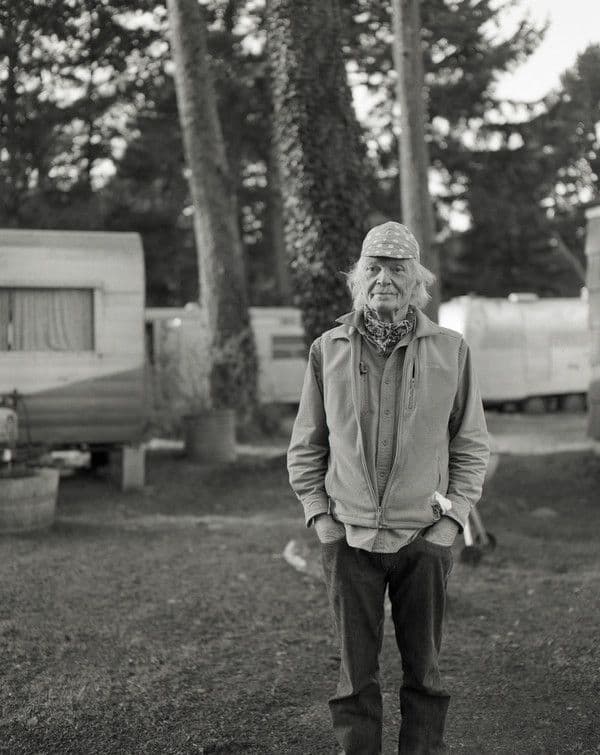
A Gentle Plea for Compassion Hidden Inside a Folk Whisper
Few songs in the long and winding history of American folk music feel as quietly human as “Be Kind to Me” by Michael Hurley. It is not a song built for grand arenas, chart domination, or polished radio perfection. Instead, it belongs to the dim glow of late-night record players, to lonely highways, to old wooden porches where memories seem to gather after sunset. In many ways, the song represents everything that made Michael Hurley such a beloved cult figure among devoted folk listeners for more than half a century: honesty without decoration, humor mixed with sadness, and a voice that sounded less like performance and more like conversation.
Unlike mainstream hits of the 1960s and 1970s, “Be Kind to Me” never entered the major Billboard charts. That fact, however, says far more about the music industry than it does about the song itself. Hurley was never interested in chasing commercial success. While many artists of his generation polished their sound for wider audiences, he remained fiercely independent, wandering between folk, country blues, old-time music, and surreal storytelling. His recordings often felt handmade, intimate, and beautifully imperfect. Because of that, listeners who discovered him tended to hold onto his music almost like a personal secret.
The song appeared during a period when the American folk scene was changing dramatically. By the early 1970s, folk music had already splintered into many directions—country rock, singer-songwriter confessionals, political protest songs, and experimental acoustic music. Yet Michael Hurley stood outside all of those categories. He occupied a strange and magical corner entirely his own. Albums such as “Armchair Boogie” and “Hi Fi Snock Uptown” became treasured works among underground folk enthusiasts, even if mainstream audiences rarely heard his name.
What makes “Be Kind to Me” so enduring is its emotional simplicity. The title itself feels almost heartbreakingly direct. There is no poetic disguise hiding the song’s central message. It is a humble request for gentleness in a world that can often feel cold, confusing, and emotionally distant. Hurley delivers those words with a weary tenderness that sounds deeply lived-in, as though every line came from personal experience rather than imagination.
Listening to the song today, one can hear traces of loneliness, vulnerability, and quiet resignation beneath its relaxed surface. Yet it never collapses into despair. That is part of Hurley’s genius. His music often acknowledged sadness without surrendering completely to it. There was always warmth somewhere in the corners of his songs, even when the stories carried emotional bruises.
His singing style played a major role in that emotional effect. Michael Hurley did not possess the technically powerful voice of a commercial folk star. He sang with looseness, rough edges, and a wandering rhythm that occasionally felt almost conversational. But that very imperfection became the source of his authenticity. In an era when many recordings became increasingly polished, Hurley sounded startlingly real. Listeners believed him instantly because nothing about his delivery felt calculated.
The instrumentation on “Be Kind to Me” also deserves attention. Like much of Hurley’s work, the arrangement remains understated and organic. Acoustic guitar lines drift gently beneath the vocals, creating the feeling of someone playing quietly in the next room. There is space inside the recording—space to think, to remember, to feel. Modern productions often fear silence, filling every second with layers of sound. Hurley understood that emotional truth sometimes arrives more powerfully through restraint.
Over the decades, the song has gained a reputation as one of those hidden folk treasures passed between generations of dedicated music lovers. Artists within alternative folk and indie communities frequently cited Hurley as a profound influence. Musicians admired the freedom in his songwriting—the sense that he answered only to his own imagination. Though never a household name, he became what many critics call a “musician’s musician,” respected deeply by fellow artists who recognized the rare honesty inside his work.
There is also something timeless about the emotional core of “Be Kind to Me.” As people grow older, songs about pride and youthful rebellion sometimes lose their urgency. But songs about tenderness, regret, loneliness, and the need for human understanding often grow more powerful with time. Hurley seemed to understand that instinctively. His music did not chase excitement; it searched for truth.
Many listeners returning to the song years later describe a peculiar emotional reaction: it feels smaller than life on the surface, yet somehow larger emotionally the longer it lingers in memory. That quiet after-effect is difficult to create in music. Some songs impress instantly and fade quickly. “Be Kind to Me” does the opposite. It settles slowly into the heart.
Part of the enduring beauty of Michael Hurley’s music lies in its refusal to hurry. His songs move like old memories themselves—uneven, reflective, occasionally humorous, occasionally sad, but always deeply human. In a world increasingly obsessed with speed and spectacle, recordings like this remind listeners why folk music mattered in the first place. It was never merely entertainment. At its best, it was companionship.
And perhaps that is why “Be Kind to Me” continues to resonate decades after its release. Beneath the gentle melody and wandering folk arrangement lies a universal plea that never grows old: to be treated with patience, understanding, and kindness while moving through the difficult passage of life. Few artists expressed that fragile hope more sincerely than Michael Hurley.