
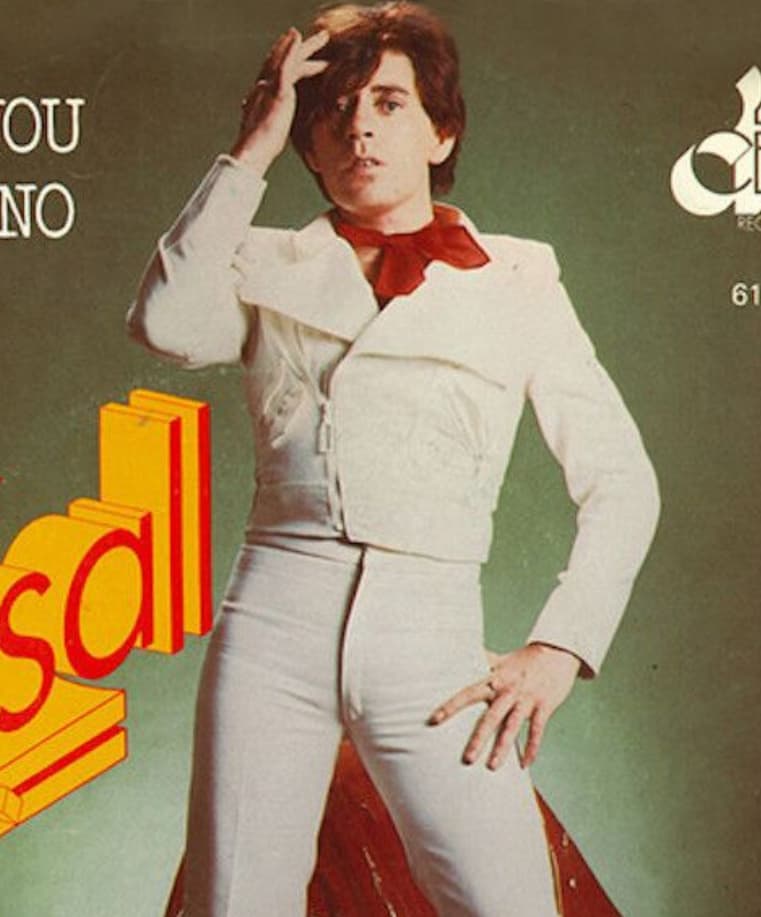
A wistful glam-rock dream about love, illusion, and the fragile hope that disappears the moment we wake up
In the mid-1970s, when glitter, platform boots, and towering choruses still echoed through British radio, John Rossall stepped away from the thunderous shadow of The Glitter Band and quietly released one of the most overlooked singles of the glam-rock era: “I Was Only Dreaming.” It was not a chart success. In fact, the song failed to enter the UK Top 100, despite receiving airplay in parts of Britain and becoming a fond memory for many who heard it in school discos and on regional radio stations.
And perhaps that is exactly why the song has endured in a different way.
Not every great song becomes a hit. Some records survive not through statistics, but through memory — through the strange emotional weight they carry decades later. “I Was Only Dreaming” belongs to that category. It is one of those songs people rediscover years later and wonder how something so heartfelt could have slipped quietly past the charts.
By 1975, glam rock itself was beginning to change. The explosive innocence of the early decade was fading. Audiences who once embraced the outrageous sparkle of Gary Glitter, Sweet, Mud, and The Glitter Band were slowly moving toward softer pop, disco, and more introspective songwriting. In that uncertain moment, John Rossall — known as one of the most recognizable faces and voices of The Glitter Band — attempted to establish himself as a solo artist.
There is something deeply human about this record when heard in that context.
Unlike the pounding stomp rhythms that made The Glitter Band famous, “I Was Only Dreaming” feels more vulnerable, more romantic, and strangely cinematic. Critics and fans have often noted traces of David Bowie in Rossall’s vocal phrasing, particularly the theatrical melancholy Bowie explored during the early 1970s. But Rossall never sounds like a mere imitator. Instead, he sounds like a man reaching for something just beyond his grasp — perhaps artistic freedom, perhaps emotional truth, perhaps simply a new identity after leaving a hugely successful group.
That longing gives the song its emotional power.
Lyrically, the song revolves around the painful realization that happiness may have existed only in imagination. Like many great nostalgic pop songs, it captures the moment between fantasy and reality — that instant when a beautiful memory dissolves and one is left staring into silence. The title itself, “I Was Only Dreaming,” carries a universal sadness. Everyone, at some point in life, has awakened from a hope that felt real.
And Rossall sings it not with anger, but resignation.
That emotional restraint is what makes the song age so gracefully. Modern listeners often expect dramatic production or emotional excess, but songs from this era frequently trusted melody and atmosphere instead. Here, the shimmering glam instrumentation contrasts beautifully with the loneliness at the center of the lyric. The guitars sparkle, the rhythm pushes forward, yet underneath it all there is heartbreak quietly unfolding.
For listeners who grew up during the golden age of British pop television and vinyl singles, the song also carries another layer of emotion: it represents a time when artists could disappear almost overnight. In the 1970s, the music industry moved quickly. One missed hit could change everything. Talented musicians who once stood under bright television lights could suddenly find themselves remembered only by devoted fans and collectors.
That reality gives John Rossall’s solo career a bittersweet quality.
He had already achieved fame with The Glitter Band, contributing to some of the defining glam-rock sounds of the era. Yet “I Was Only Dreaming” feels less like the work of a star chasing another hit and more like a deeply personal statement from an artist standing at a crossroads. There is courage in that kind of record — especially when commercial success no longer feels guaranteed.
Over the years, the song has gradually gained cult appreciation among glam-rock enthusiasts. Writers revisiting obscure 1970s singles have described it as a forgotten gem that deserved far more recognition than it received at the time. Listening to it now, decades removed from the noise of the charts, it becomes easier to appreciate what audiences may have missed back then.
Because the song is not merely about dreaming.
It is about the fragile nature of memory itself.
About the versions of ourselves we once were.
About the people we almost became.
And perhaps that is why “I Was Only Dreaming” still lingers so strongly for those who remember hearing it long ago — drifting from an old radio speaker somewhere in the middle of the 1970s, sounding for three short minutes like the soundtrack to a life that was already beginning to fade into the past.