
No One in the Room Knew That a Joke About Heaven Would One Day Become the Way Millions Said Goodbye to John Prine
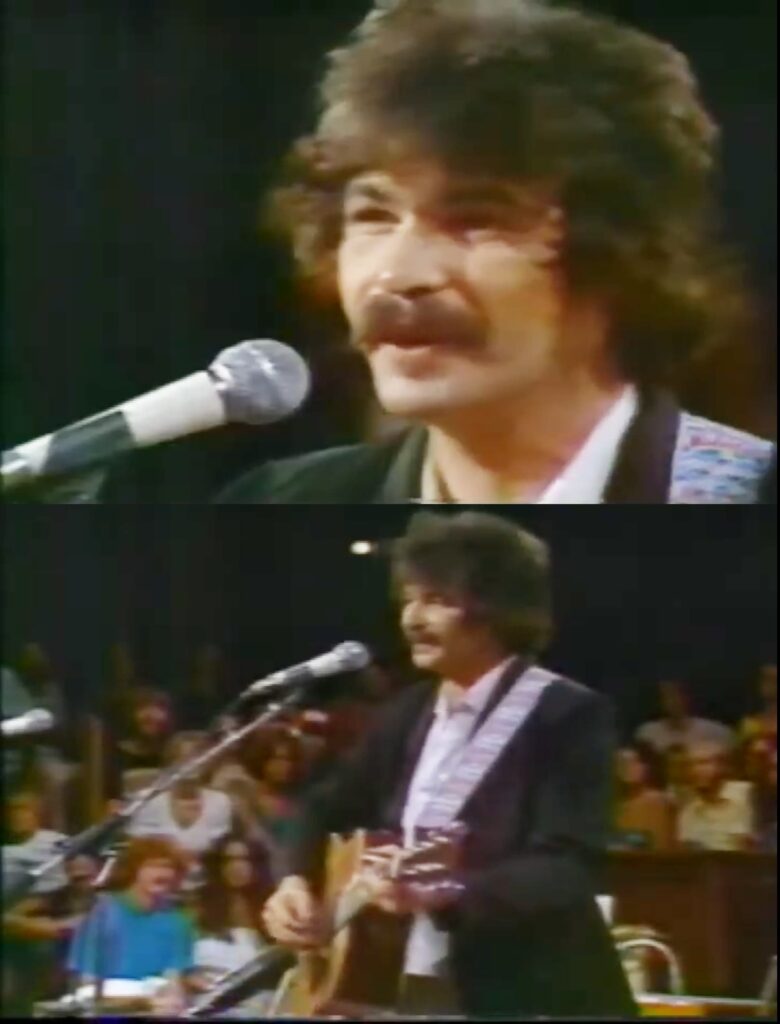
In 1978, John Prine walked onto a stage and introduced audiences to a brand-new song called “Fish and Whistle.”
At the time, it was simply another track from his newly released album Bruised Orange, a collection that would eventually be regarded as one of the finest works of his career. The audience listening that night could not possibly know that decades later, one particular line from the song would take on a meaning far beyond anything Prine intended when he wrote it.
They were just hearing a funny, thoughtful song from a gifted songwriter.
Nothing more.
Nothing less.
Yet history would have other plans.
One of the most remarkable things about this 1978 performance is how young Prine still was. Barely in his early thirties, he often sounded like someone who had already lived several lifetimes. While many songwriters his age were writing about youthful ambition or romance, Prine was crafting songs about aching ankles, dead-end jobs, faith, forgiveness, and the quiet frustrations of ordinary life.
In “Fish and Whistle,” he casually sings about the pain of wearing shoes all day.
It sounds like the complaint of an old man.
Yet it came from a songwriter barely past thirty.
The reason is simple. Prine wrote from experience rather than imagination. Before becoming a respected musician, he had worked as a mailman in Chicago. He served in the Army. He knew physical labor. He knew routine. He understood the small aches and disappointments that accumulate during everyday life.
That authenticity became one of his greatest strengths.
Perhaps no lyric in the song has inspired more discussion than the chorus:
“You forgive us, we’ll forgive you.”
It is a line that still catches listeners by surprise.
Most songs about faith ask for God’s forgiveness.
Prine flips the idea on its head.
The lyric is humorous, provocative, and strangely profound all at once. Is he joking? Challenging traditional beliefs? Suggesting that people sometimes struggle with God just as they struggle with each other?
The beauty of the line is that it never fully explains itself.
Like many of Prine’s best lyrics, it leaves room for interpretation.
He understood that questions are often more interesting than answers.
Throughout the performance, listeners encounter the kind of details that made him unique. He sings about being fired because he was afraid of bees. He remembers awkward encounters and ordinary jobs. His characters are rarely heroes. They are imperfect, slightly confused, occasionally unlucky people trying to make sense of life.
In other hands, these observations might seem trivial.
In John Prine’s hands, they become poetry.
What makes this particular performance especially emotional today is knowing what happened decades later.
Near the end of every chorus comes the line:
“We’ll whistle and go fishing in heaven.”
In 1978, it feels playful.
A little whimsical.
A little absurd.
Exactly the sort of image John Prine loved.
But after his passing in 2020, the lyric began to take on a completely different meaning. Fans around the world repeated those words while remembering him. What once sounded like a gentle joke suddenly felt like the perfect farewell.
The transformation is almost impossible to ignore.
A line written more than forty years earlier became part of his legacy.
Not because it was intended as a final statement.
But because it captured something essential about who he was.
Even when writing about death, Prine refused to surrender his sense of humor.
Even when discussing faith, he avoided preaching.
Even when confronting hardship, he left room for a smile.
Looking back, “Fish and Whistle” represents John Prine at the height of his songwriting powers. He could take subjects as unrelated as forgiveness, tedious work, aching feet, heaven, and bees, then somehow weave them into a song that feels both funny and deeply human.
That gift is exceedingly rare.
And perhaps that is why the performance continues to resonate.
Because hidden inside its jokes and everyday observations is a quiet philosophy about life itself: forgive what you can, laugh whenever possible, and keep moving forward.
And if there happens to be a heaven waiting at the end of the road, many listeners still like to imagine John Prine there today, smiling beneath a wide sky, whistling softly, and heading off toward another fishing spot.