
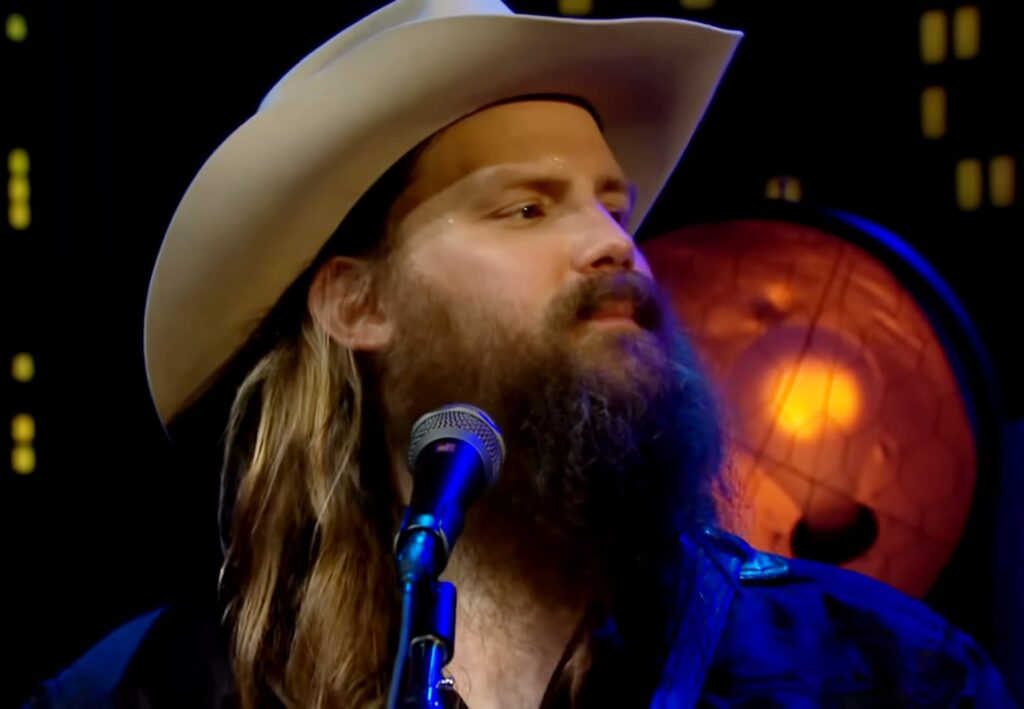
A song written decades earlier found a new life when Chris Stapleton turned “Tennessee Whiskey” into one of the defining performances of modern country music.
When Chris Stapleton took the stage at Austin City Limits to perform “Tennessee Whiskey,” he was not simply singing a beloved country classic. He was participating in a rare musical moment where a cover version becomes so powerful that it reshapes the legacy of the song itself.
Today, many listeners assume “Tennessee Whiskey” belongs to Stapleton. Yet the song’s history reaches back long before his rise to stardom. Written by Dean Dillon and Linda Hargrove, it was first recorded by David Allan Coe in 1981 before becoming a major hit for George Jones in 1983. For years, Jones’ recording was considered the definitive version. Then came Stapleton.
What happened next was something few artists ever accomplish. He did not merely cover the song. He made audiences hear it differently.
On the famous Austin City Limits stage, there were no dazzling visual effects, no elaborate production tricks, and no distractions competing for attention. The focus remained exactly where it belonged: on the music. A guitar, a band, and a voice that sounded as though it had traveled a long road before arriving at that microphone.
From the opening line, Stapleton approached the song with remarkable restraint. He did not rush to impress. He did not chase dramatic gestures. Instead, he allowed the lyrics to breathe. Every phrase carried the weight of lived experience, turning the familiar story of redemption and devotion into something deeply personal.
That authenticity has always been one of Stapleton’s greatest strengths. Before becoming one of the most recognizable names in country music, he spent years working behind the scenes in Nashville. He wrote songs for other artists and built a respected career as a songwriter while remaining largely unknown to the broader public. Success arrived much later than it does for many stars.
In that sense, the journey behind “Tennessee Whiskey” feels strangely connected to Stapleton’s own story. Both spent years waiting to be fully appreciated. Both eventually found their moment when the right audience finally listened.
Part of what makes this performance so fascinating is the ongoing debate about its musical identity. While the song is firmly rooted in country tradition, Stapleton’s interpretation reaches far beyond those boundaries. Listeners can hear traces of Southern soul, blues, gospel, and rhythm and blues woven throughout the arrangement.
Many critics have noted that his phrasing often feels closer to classic soul singers than to traditional country vocalists. The influence of artists such as Etta James and Otis Redding seems to linger in the background. Rather than pulling country music away from its roots, Stapleton expanded those roots, reminding audiences how closely connected these American musical traditions have always been.
The most unforgettable moments arrive during the final section of the performance. As the band stretches the song’s closing lines, Stapleton begins to improvise around the melody. Each repetition of “Tennessee whiskey” carries a slightly different emotion. Nothing feels scripted. Nothing feels rehearsed for perfection.
That imperfection is precisely what gives the performance its power.
The setting itself adds another layer of meaning. For decades, Austin City Limits has been regarded as one of the most respected stages in American music. Legends such as Willie Nelson, John Prine, Guy Clark, and Merle Haggard all stood beneath those lights. When Stapleton performed there, many viewers sensed they were witnessing a passing of the torch between generations of storytellers.
Looking back today, what makes this performance so memorable is not simply the song. It is the feeling it leaves behind.
This was recorded before Stapleton became a stadium-filling superstar, before countless awards and industry accolades cemented his place among country music’s most important voices. In this moment, he still seemed like a hardworking songwriter standing before an audience and singing with everything he had.
That is why many longtime fans continue to treasure this appearance. It may not be the biggest performance of “Tennessee Whiskey” that Chris Stapleton ever delivered.
But it remains one of the purest.
More than a decade later, the debates continue. Is Stapleton’s version greater than George Jones’ classic recording? Is the song country, soul, or something in between? Would Stapleton have become a superstar without it?
The fact that these questions are still being asked reveals the true significance of the performance. “Tennessee Whiskey” is no longer just a hit song. It has become the musical signature of Chris Stapleton, the song that transformed a respected songwriter into one of the defining artists of his generation.