
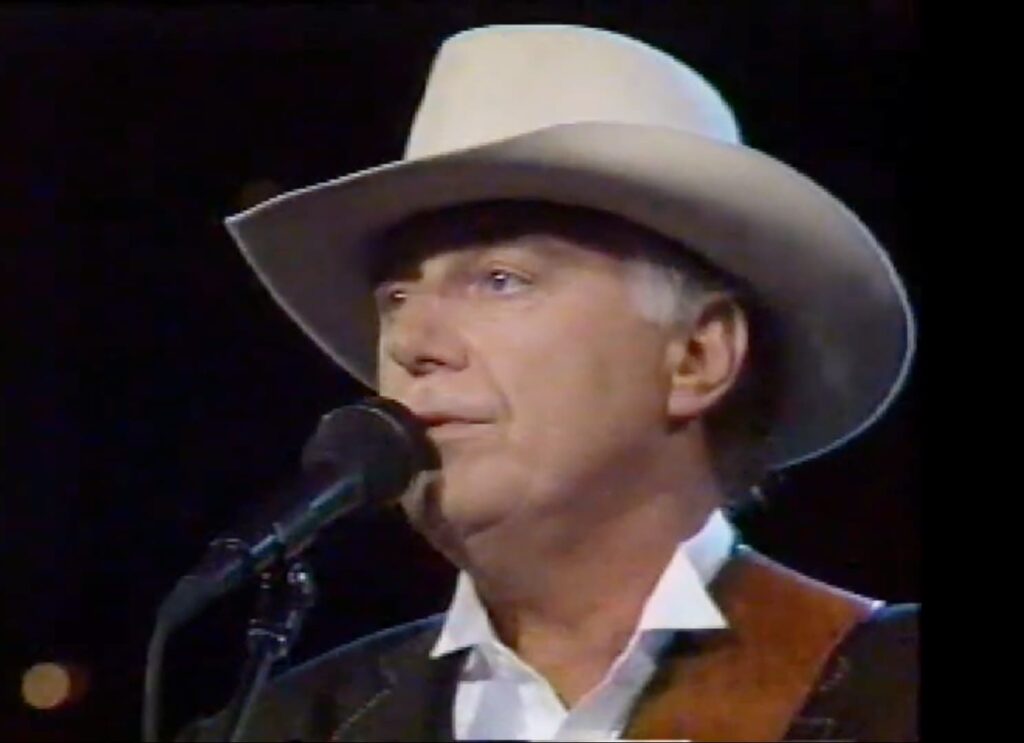
A Forgotten Song, A Timeless Lesson: Jerry Jeff Walker’s Gentle Reminder That Love and Freedom Matter More Than Money
There was something wonderfully human about the moment Jerry Jeff Walker stepped to the microphone and introduced “Morning Song To Sally.” Before playing a note, he confessed that he had written the song so long ago that he had nearly forgotten it existed. Then came the line that drew smiles from the audience and revealed the strange journey of a songwriter’s life. After hearing Nanci Griffith record the song for one of her projects honoring beloved songwriters, Walker found himself thinking, “That’s a good song. How neat, I wrote it. All I got to do is learn it again.”
In a career that produced classics such as “Mr. Bojangles,” Jerry Jeff Walker wrote hundreds of songs, many of them becoming part of the rich fabric of Texas music. Yet this rare performance showed how even the creator of a song can lose track of a quiet treasure buried deep within his own catalog. Thanks to Griffith’s admiration and willingness to revisit forgotten gems, “Morning Song To Sally” was given a second life, and Walker was reunited with a piece of his younger self.
The song itself revealed a side of Walker that casual listeners did not always see. Gone was the carefree troubadour known for rowdy gatherings and rambling adventures. In his place stood a reflective storyteller singing about a brief romance that lingered long after it ended. The lyrics recall a love that lasted only a short time yet left an imprint powerful enough to survive years of distance and change. As Walker sang of morning light stretching across the bed and memories returning with the dawn, the performance felt less like entertainment and more like a conversation with the past.
His weathered voice gave the song an added layer of meaning. Decades after writing it, Walker no longer sounded like the young man who first put those words on paper. He sounded like someone who had lived through every mile between then and now. That passage of time transformed “Morning Song To Sally” into something deeper, a meditation on how certain memories never truly disappear, no matter how many years pass.
What made the performance especially memorable was the way it flowed into “I Makes Money, Money Don’t Make Me.” On the surface, the two songs could not have been more different. One looked backward at love and memory. The other celebrated independence and rejected the idea that wealth defines a person’s worth. Yet together they formed a remarkably complete philosophy of life.
In “I Makes Money, Money Don’t Make Me,” Walker delivered one of the clearest statements of his worldview. He was not criticizing success or hard work. Instead, he was warning against postponing life while waiting for some future moment of financial perfection. The song encouraged listeners to pursue what mattered now, to stop hesitating, and to refuse to let money become the measure of a meaningful life.
Looking back today, especially after Walker’s passing in 2020, those words carry even greater weight. “Money don’t make me” sounds less like a lyric and more like a summary of the life he chose to live. He never became the typical Nashville superstar, nor did he chase fame at all costs. What he earned instead was something far more enduring: the respect and affection of generations of music lovers who recognized authenticity when they heard it.
That is why this performance remains so moving. There were no elaborate stage effects, no grand production, and no attempt to impress through spectacle. There was only Jerry Jeff Walker, a guitar, a forgotten song rediscovered, and a simple truth repeated with conviction. Love fades into memory. Time keeps moving. Money comes and goes. But the moments that matter most are the ones we choose to live while we still can.