
A Song Anne Murray Chose From Memory Became One of the Most Unexpected Hits of Her Career
When Anne Murray first sang “Daydream Believer” in 1968, she had no way of knowing that the cheerful pop hit would eventually become part of her own musical legacy. At the time, it was simply a song she loved. The record was sitting at No. 1 for The Monkees, and Murray was performing it on the Halifax television program Let’s Go, a regional show that reached audiences across Canada. More than a decade later, that same song would return to her life in a way neither she nor anyone else could have predicted.
Reflecting on the recording years later, Murray recalled how the decision to include “Daydream Believer” on one of her albums was surprisingly casual. While working with longtime producer Brian Ahern, the pair often searched for older songs that might fit naturally alongside new material. When the conversation turned to finding an old favorite, Murray immediately thought of the Monkees classic she had enjoyed singing years earlier.
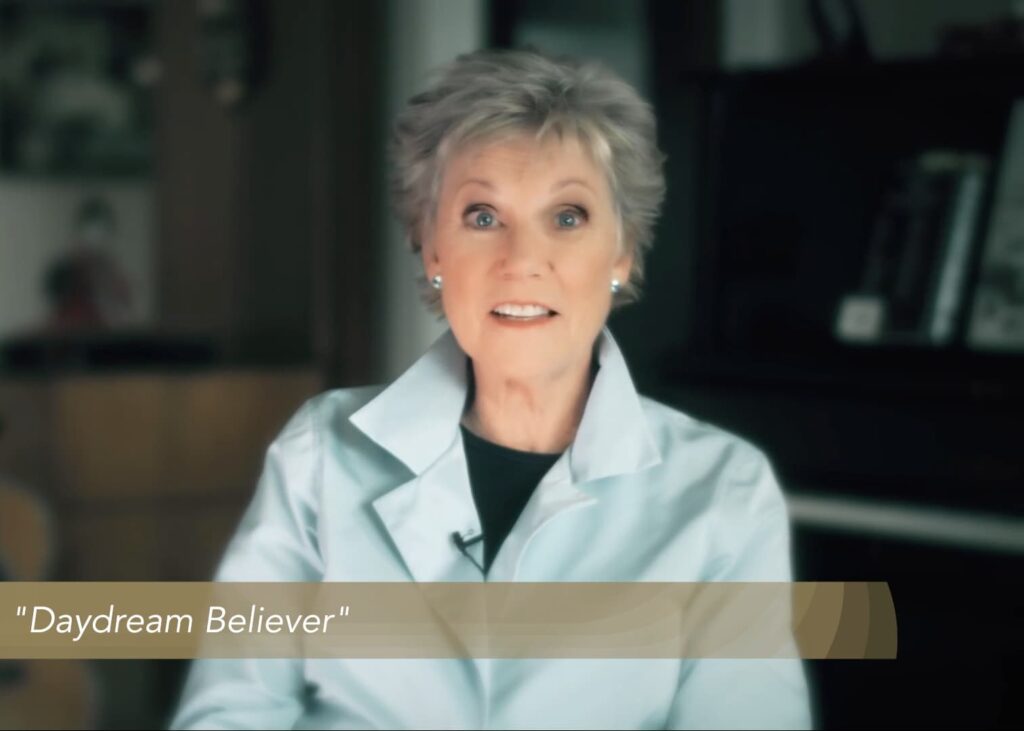
What makes the story so charming is her complete lack of expectation. Looking back, she smiled at the memory and admitted, “I never, never dreamed it would ever become a hit for me.”
That simple remark reveals something many listeners rarely consider. Some of the most successful recordings in music history were not born from careful marketing plans or industry calculations. Sometimes they begin as little more than a fond memory.
For Anne Murray, “Daydream Believer” became exactly that kind of story. In 1968, she was simply a young television performer covering one of the biggest songs of the moment. Years later, the same song found its way back into her life and became associated with her own career. It is the kind of full-circle moment that feels almost impossible to script.
The journey is especially interesting because the song seemed, at first glance, somewhat different from the style most listeners associated with Murray. Throughout the 1970s and beyond, she became known for warm ballads, heartfelt storytelling, and a calm, reassuring vocal style. “Daydream Believer,” by contrast, arrived with bright energy, youthful optimism, and the infectious spirit of late 1960s pop.
Rather than transforming the song into something entirely different, Murray preserved its upbeat character while adding her own unmistakable warmth. The result allowed listeners to hear familiar lyrics through a more mature and reflective voice, giving the song a slightly different emotional texture without losing its original charm.
There is another fascinating layer hidden beneath the song’s cheerful title. While “Daydream Believer” is remembered as a joyful singalong, its lyrics quietly explore the collision between youthful dreams and adult reality. Beneath the catchy melody lies a story about growing older, accepting life’s imperfections, and discovering contentment in ordinary moments. Those themes fit remarkably well with Murray’s artistic identity, which often celebrated the beauty found in everyday experiences.
The story also highlights the understated influence of Brian Ahern, the producer who helped shape some of Murray’s most successful recordings. Their creative partnership was built less on commercial strategy than on shared musical instincts. In this case, a simple conversation about favorite songs led to one of the most memorable recordings of her career.
Today, fans still enjoy debating which version of “Daydream Believer” they prefer. Some remain loyal to The Monkees’ youthful original, a defining sound of late 1960s pop culture. Others favor Murray’s interpretation, appreciating the warmth, maturity, and storytelling quality she brought to the song. Neither side is entirely wrong. The enduring appeal of the composition may be proof that a truly great song can thrive in more than one voice.
Perhaps the most touching part of Murray’s reflection is its simplicity. She does not focus on chart positions, sales figures, or industry success. Instead, she remembers a television studio in Halifax, a song she loved, and a moment from 1968 that stayed with her. Years later, that memory unexpectedly returned and became one of the most beloved chapters of her own story.
Sometimes the songs we cherish most have a way of finding their way back home.