
Sometimes the Greatest Love Songs Are About the One Person Who Never Left Your Heart
In 1971, Buck Owens delivered a joyful live performance of “Ain’t It Amazing Gracie,” a song that perfectly showcased the warmth, humor, and heartfelt simplicity that made him one of country music’s most beloved stars. While many country hits of the era focused on heartbreak, loneliness, and lost romance, Owens chose a different path. This was a song about gratitude, loyalty, and the realization that true love is often found not in perfection, but in devotion.
By 1971, Buck Owens was already one of the most powerful figures in country music. As the leading architect of the Bakersfield Sound, he had spent the previous decade challenging Nashville’s polished productions with a sharper, more energetic style built around twangy Telecaster guitars and straightforward storytelling. His influence stretched far beyond California, helping reshape the sound of modern country music and inspiring future generations of artists.
Yet beneath the driving rhythms and bright melodies that defined many of his recordings was a songwriter and performer who understood the emotional value of ordinary life. “Ain’t It Amazing Gracie” is a perfect example.
The song tells the story of a man who leaves home searching for success, adventure, and a bigger life. He boards a train and travels far from the woman he left behind. Along the way, he encounters new places and attractive strangers, experiences that might seem exciting at first glance. But no matter how far he travels, one thought remains constant: his heart belongs to Gracie.
What makes the song especially charming is its honesty. The narrator openly admits that Gracie may not be the prettiest woman in the world, nor the smartest. Yet none of that matters. Her kindness, faithfulness, and genuine love outweigh every other quality. It is a message that feels increasingly rare in popular music, where romance is often portrayed through grand gestures rather than everyday commitment.
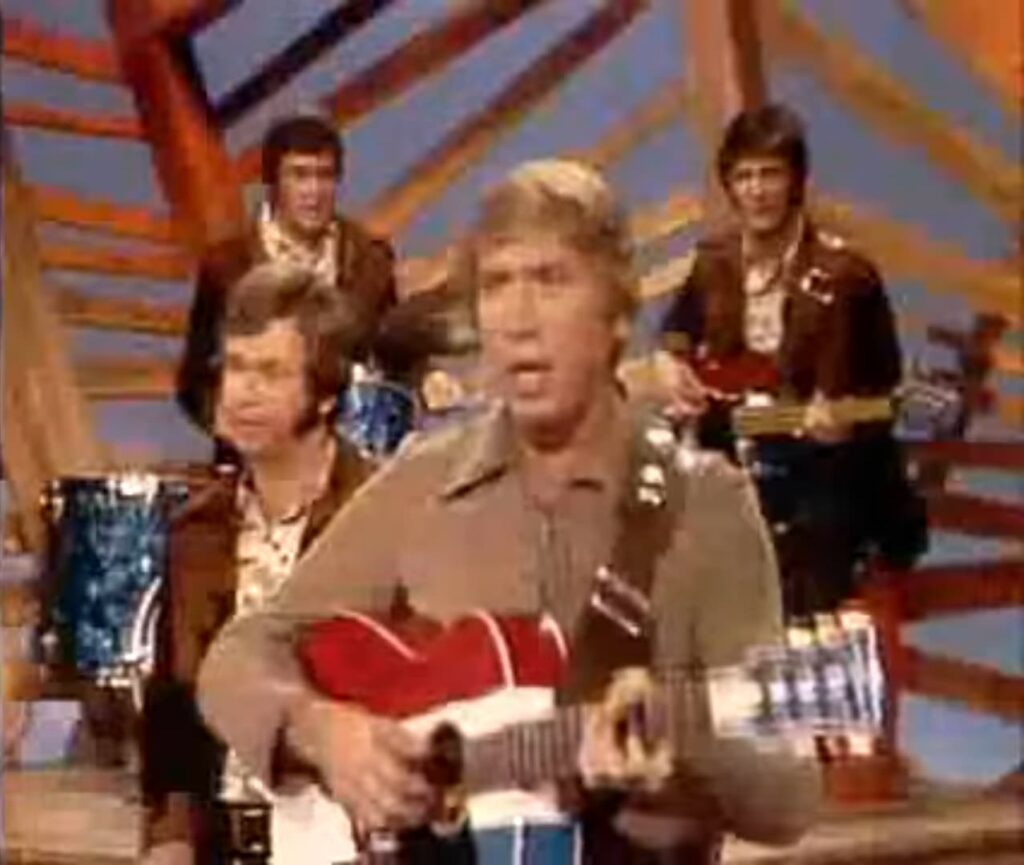
During this live performance, Owens delivers the song with an infectious sense of happiness. His voice carries the relaxed confidence of someone who truly enjoys the story he is telling. The audience responds warmly, drawn into a narrative that feels both humorous and deeply relatable. There is no bitterness, no regret, and no dramatic conflict. Instead, the song celebrates one of life’s simplest truths: sometimes we do not fully appreciate what we have until we spend time away from it.
Musically, the performance is a classic example of the Bakersfield Sound at its finest. The bright guitar work, lively tempo, and crisp arrangement create an atmosphere that is both playful and unmistakably country. Even when singing about love and devotion, Owens avoids sentimentality. The song moves forward with energy and optimism, reflecting the working-class spirit that made his music so popular.
Looking back today, “Ain’t It Amazing Gracie” feels like a snapshot from a different era of country music. It comes from a time when songs often found extraordinary meaning in ordinary people. There are no dramatic plot twists, no broken relationships, and no tragic endings. Just a man realizing that the greatest treasure in his life was waiting for him all along.
That message may be the reason the song continues to resonate decades later. Success can be chased. Adventure can be found. The world can offer endless distractions. Yet the things that matter most are often the people who remain steadfast through every season of life.
More than fifty years after this performance, Buck Owens still sounds completely convincing when he sings about Gracie. His smile can almost be heard in every line. And by the time the final chorus arrives, listeners understand that the song is not really about travel, fame, or beautiful strangers. It is about recognizing the value of a faithful heart and being thankful enough to say so.
In a career filled with chart-topping hits, “Ain’t It Amazing Gracie” remains one of Buck Owens’ most endearing reminders that lasting love is not always glamorous, but it is often the most remarkable thing of all.