
A Quiet Heartbreak Hidden Behind a Brave Smile and a Simple Lie
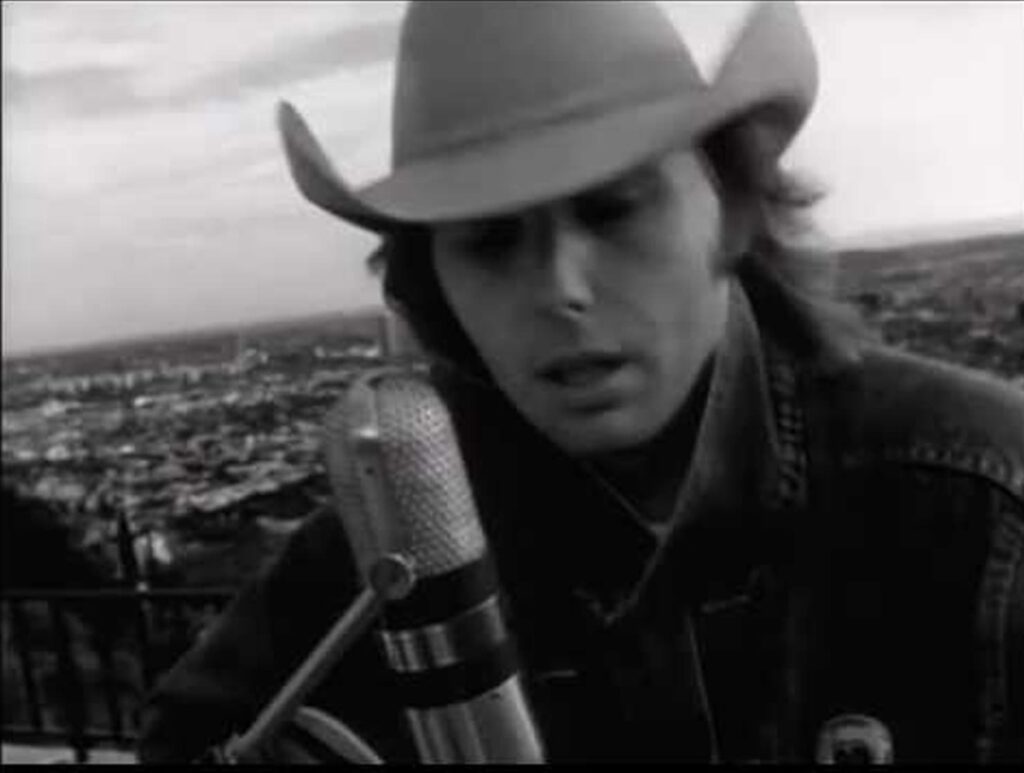
When Dwight Yoakam released “It Only Hurts When I Cry” in December 1991, country music listeners were given a song that felt both timeless and deeply personal. Co-written by Dwight Yoakam and the legendary Roger Miller, the single became the fourth release from Yoakam’s acclaimed album If There Was a Way. The song climbed to No. 7 on the U.S. country chart and reached No. 4 in Canada, further cementing Yoakam’s place among the most respected voices in modern country music.
What makes “It Only Hurts When I Cry” especially significant is its connection to Roger Miller, one of country music’s most beloved songwriters. The song was among the final compositions Miller helped create before his passing in 1992. That knowledge adds an extra layer of poignancy to every verse, transforming an already moving ballad into a lasting piece of musical history.
Built around a classic country arrangement, the song tells the story of someone trying to convince the world that everything is fine after love has slipped away. The title itself carries the song’s gentle irony. The narrator insists that the pain appears only when he cries, laughs, breathes, or remembers, which is to say, almost all the time. Rather than expressing anger or bitterness, the lyrics embrace a quiet sadness, the kind that settles into everyday life and lingers long after a relationship ends.
Yoakam’s performance is remarkably restrained. His distinctive voice never overreaches. Instead, he allows the emotion to emerge naturally through subtle phrasing and heartfelt delivery. That simplicity is one reason the song continues to resonate decades later. It captures a feeling that many recognize immediately: the effort to appear strong while carrying a broken heart that refuses to heal.
The early 1990s were a period when country music was expanding its audience, yet songs like “It Only Hurts When I Cry” remained rooted in the genre’s traditional storytelling values. There are no dramatic twists or grand declarations. The song succeeds because it speaks honestly about loss, loneliness, and the small private moments when memories return unexpectedly.
The legacy of the song continued years later when Raul Malo, the celebrated lead singer of The Mavericks, recorded his own version for the 2007 album After Hours. Malo’s interpretation introduced the composition to a new generation of listeners while honoring the emotional depth that made the original so memorable.
More than three decades after its release, “It Only Hurts When I Cry” remains one of Dwight Yoakam’s most enduring recordings. It stands as a touching collaboration between two gifted songwriters, one at the height of his career and another nearing the end of an extraordinary journey. In its gentle melody and bittersweet honesty, the song reminds us that some heartbreaks never truly disappear. They simply become part of the stories we carry with us, quietly returning whenever a familiar voice, a forgotten memory, or an old country song drifts through the air once again.
 Oldies Songs