
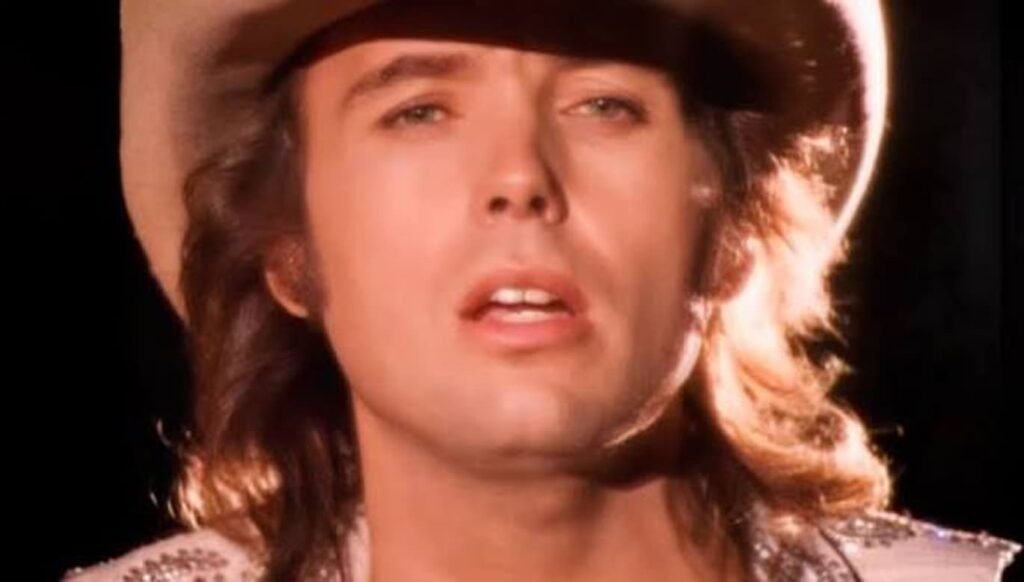
A Country Rebel Reimagines an Elvis Classic While Preserving Its Heartbreak and Urgency
In 1992, Dwight Yoakam took on one of the most beloved songs ever associated with Elvis Presley, recording his own version of “Suspicious Minds” for the soundtrack of the romantic comedy film Honeymoon in Vegas. Rather than simply imitate the King of Rock and Roll, Yoakam transformed the classic into something uniquely his own, blending its emotional tension with the sharp edges of honky-tonk, rockabilly, and modern country music.
Originally written by songwriter Mark James, “Suspicious Minds” became one of Elvis Presley’s signature hits when it topped the Billboard charts in 1969. The song told a timeless story of a relationship trapped in a cycle of doubt and mistrust. Beneath its infectious melody was a painful reality: two people who loved each other deeply but struggled to overcome suspicion and insecurity.
More than two decades later, Dwight Yoakam approached the song from a different musical angle. By 1992, he had already established himself as one of country music’s most distinctive voices. Through albums such as Guitars, Cadillacs, Etc., Etc., Hillbilly Deluxe, and If There Was a Way, Yoakam had revived traditional country sounds at a time when many artists were moving in a more polished direction. His music drew heavily from Bakersfield country, rockabilly, and the raw energy of classic honky-tonk.
That background made him an ideal artist to reinterpret “Suspicious Minds.” Instead of the sweeping orchestral arrangements often associated with Elvis’s version, Yoakam injected the song with driving guitars, rhythmic intensity, and a restless energy that felt perfectly suited to the early 1990s. The result was both familiar and refreshingly different.
The connection between the song and Honeymoon in Vegas proved especially fitting. The film itself paid tribute to Elvis’s enduring cultural legacy, featuring numerous references to Presley throughout its story. Yoakam’s performance helped bridge two musical generations, honoring the original while introducing the song to audiences who may not have grown up during Elvis’s era.
Listening to the recording today, one of its greatest strengths is how naturally Yoakam inhabits the narrative. The lyrics remain as emotionally powerful as ever. A man pleads for trust while watching his relationship slowly unravel under the weight of doubt. Lines about being “caught in a trap” and struggling to build dreams together still resonate because they capture fears that are universal and timeless.
During live performances, Yoakam often amplified that emotional urgency. With his trademark swagger, energetic stage presence, and unmistakable Kentucky drawl, he delivered the song with a sense of frustration and longing that felt genuine rather than theatrical. The audience could hear both the determination and the heartbreak hidden beneath the driving rhythm.
More than thirty years after its release, Yoakam’s version of “Suspicious Minds” remains one of the most successful country reinterpretations of an Elvis classic. It demonstrates how a great song can evolve across generations while retaining the emotional truth that made it memorable in the first place.
For fans of both Dwight Yoakam and Elvis Presley, the recording stands as a remarkable meeting point between two eras of American music. One artist helped define popular music in the twentieth century. The other carried traditional country music into a new generation. Together, through “Suspicious Minds,” they remind listeners that great songs never truly belong to a single moment in time. They continue to live, adapt, and find new voices long after they are first heard.
 Oldies Songs