
A Familiar Song, Gently Reclaimed: How “You Won’t See Me” Found New Warmth in a Winter Night
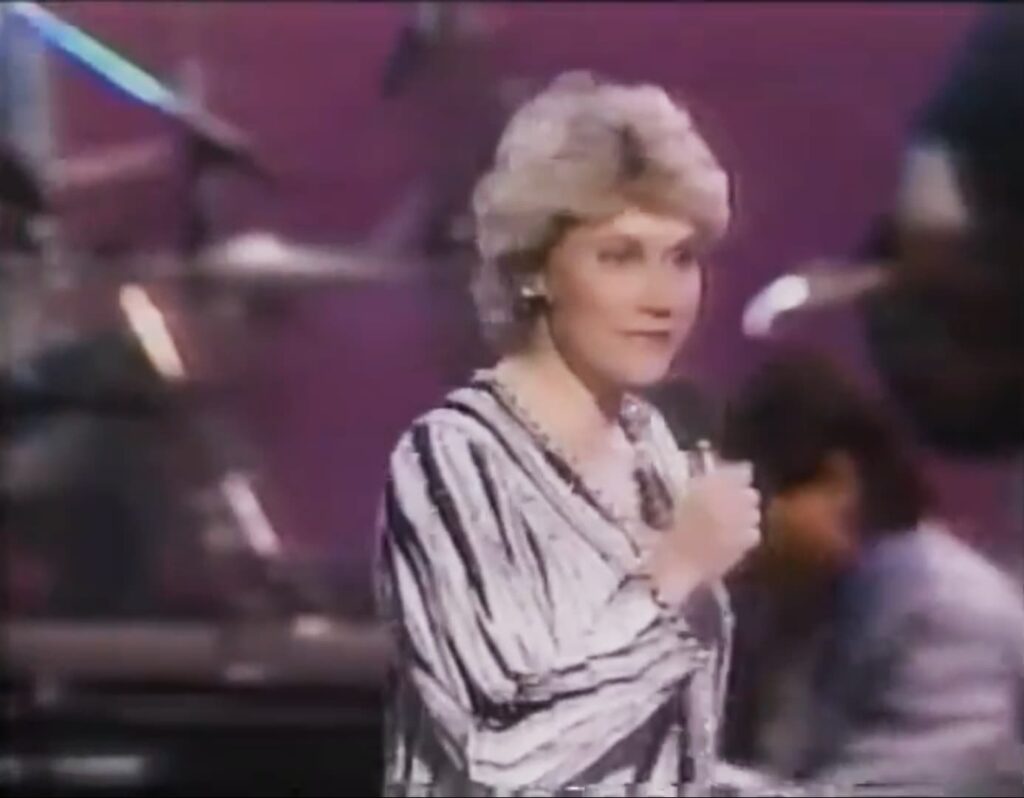
During her Winter Carnival in Quebec television special around 1983, Anne Murray offered a graceful rendition of “You Won’t See Me”, transforming a well-known composition into something quieter, softer, and deeply personal. Originally written by Paul McCartney and first recorded by The Beatles in 1965, the song carried a tone of emotional distance. In Murray’s hands, however, that distance felt less like frustration and more like quiet acceptance.
The performance unfolded in a setting that reflected the spirit of the season. There was a sense of calm in the atmosphere, as if the cold outside had settled gently into the room, encouraging stillness rather than spectacle. Murray stood composed, her presence understated yet reassuring. She did not attempt to reshape the song dramatically. Instead, she allowed her voice to soften its edges.
Her phrasing is the defining element here. Where the original carried a subtle urgency, Murray slows the emotional pace, giving each line space to linger. The lyrics feel less confrontational and more reflective, as though time has passed and clarity has taken the place of tension. This shift in tone aligns with her broader artistic identity, one built on warmth, control, and sincerity rather than vocal excess.
What makes this rendition particularly compelling is its sense of emotional maturity. There is no bitterness in her delivery, no attempt to emphasize conflict. Instead, the song becomes a quiet acknowledgment of distance that cannot easily be bridged. It is this restraint that gives the performance its lasting impact.
In the context of early 1980s television specials, where variety and entertainment often leaned toward brightness and energy, Murray’s interpretation stands apart. It invites the listener inward rather than reaching outward. The audience response mirrors this approach, attentive and respectful, as if aware that the moment calls for listening rather than reaction.
Looking back, this performance serves as a reminder of Murray’s unique ability to reinterpret familiar material without losing its essence. She does not overwrite the song’s history. She adds to it, gently, almost imperceptibly.
And in doing so, “You Won’t See Me” becomes something more than a story of separation. It becomes a quiet reflection on time, distance, and the calm understanding that sometimes follows when words have already said all they can.