
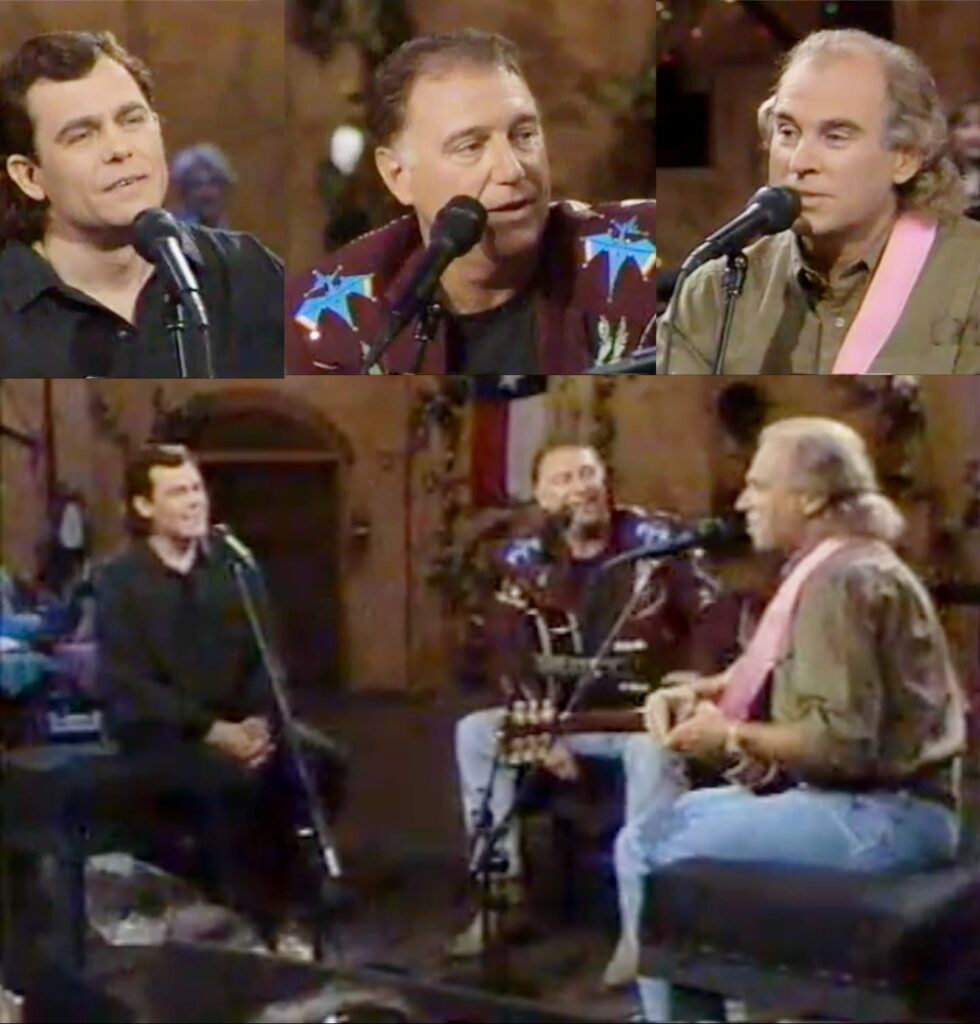
Three Road-Worn Troubadours, One Stage, and the Beautiful Chaos of American Songwriting
The 1992 reunion of Jerry Jeff Walker, Jimmy Buffett, and harmonica wizard Greg “Fingers” Taylor was far more than an evening of music and jokes. It was the sound of a generation of wandering songwriters looking back at the roads that shaped them. Watching the performance now feels almost like sitting on the porch with old friends who survived decades of highways, cheap motels, smoky bars, broken phones, bad decisions, and unforgettable songs.
Nothing about the night feels manufactured. That is precisely why it remains so powerful.
Long before corporate branding reshaped country and Americana music into polished products, artists like Jerry Jeff Walker and Jimmy Buffett built careers from stories, friendships, accidents, and pure instinct. They belonged to an era when songs traveled through bars and college towns before they reached radio stations. Their legends were carried by word of mouth, late-night conversations, and battered guitars hauled across state lines.
By 1992, both men were already cultural icons, though in very different ways.
Jerry Jeff Walker had become one of the spiritual fathers of the Texas outlaw and progressive country movement. Best known for writing “Mr. Bojangles,” the haunting 1968 classic later immortalized by the Nitty Gritty Dirt Band, Walker spent decades shaping the Austin music scene into a refuge for artists uninterested in Nashville conformity. His blend of folk storytelling, country soul, and rambling bohemian spirit made him something closer to a folk hero than a commercial entertainer.
Jimmy Buffett, meanwhile, had evolved into one of America’s most unlikely superstars. Though often casually dismissed as merely the creator of beach-party escapism, Buffett was in reality an exceptional storyteller deeply influenced by Gulf Coast culture, folk music, country songwriting, and literary observation. His 1977 breakthrough hit “Margaritaville,” from the album Changes in Latitudes, Changes in Attitudes, reached No. 8 on the Billboard Hot 100 and eventually became one of the most recognizable songs in American popular music history.
But the Jimmy Buffett seen in this 1992 performance is not the corporate empire figure he would later become. Here, he still feels connected to the wandering troubadour roots that first drew audiences to him. The chemistry with Jerry Jeff Walker reveals exactly where Buffett’s storytelling instincts came from.
In many ways, Jerry Jeff was one of Buffett’s great musical mentors.
That influence becomes beautifully obvious throughout the conversation onstage. The stories tumble out naturally: late-night Nashville chaos, disastrous phone company confrontations, college gigs gone wrong, and the strange chain of accidents that turned unknown young musicians into lifelong companions. Nothing sounds rehearsed because these stories had clearly been lived many times before they were retold.
One of the most revealing moments comes when Buffett recalls being invited back to the University of Southern Mississippi, only to scandalize the administration by performing “Why Don’t We Get Drunk.” The story captures something essential about Buffett’s early career. Before he became a mainstream cultural figure, he was seen as a rebellious Gulf Coast songwriter whose music often collided with conservative expectations. His humor disguised deeper truths about freedom, loneliness, and American escapism.
The arrival of Fingers Taylor adds another emotional layer to the evening.
Greg “Fingers” Taylor was far more than Buffett’s harmonica player. He was one of the defining musical voices of Buffett’s classic era. His harmonica work gave songs like “Come Monday” and “Margaritaville” their dusty, drifting warmth. In many ways, Fingers represented the emotional bridge between Buffett’s folk-country storytelling and the loose coastal atmosphere surrounding the music.
The story of Buffett meeting Fingers in Hattiesburg feels almost mythological now. Buffett jokes about “photography and use of the library” classes while essentially admitting he was drifting through college life without direction. Then comes the classic moment: a random harmonica player steps up, proves he is actually talented, and suddenly the road begins. That kind of story belongs to an America that feels increasingly distant now — an era where musical careers were built through instinct, trust, and movement rather than algorithms and marketing teams.
Older audiences especially recognize the emotional texture of nights like this.
There is something deeply comforting about musicians who openly laugh at their own struggles and foolishness. The infamous “phone company war” story is hilarious precisely because it feels so real. Buffett smashing the phone receiver in frustration while Jerry Jeff unknowingly sleeps upstairs sounds like a scene from an old road movie about broke musicians trying to survive one more week. Beneath the humor lies the reality of how difficult those early years truly were.
And yet, none of them speak with bitterness.
Instead, the stories are told with gratitude.
That warmth culminates beautifully when Buffett jokingly thanks Jerry Jeff for inspiring “Margaritaville” and promises to “spend your money foolishly.” The audience laughter masks something sincere underneath. Buffett knew exactly how much he owed Jerry Jeff Walker and the Texas songwriting culture that embraced him before the rest of America did.
When they finally launch into “Margaritaville,” the performance no longer feels like a famous hit being replayed for nostalgia. It feels like a room full of old survivors celebrating the unpredictable roads that brought them together. The audience sings along not merely because they know the words, but because the song itself became woven into American life over generations.
By then, “Margaritaville” had already transcended radio success. It had become a state of mind — part escapism, part melancholy, part laughter in the face of aging and disappointment.
Watching Jerry Jeff grin beside Buffett during the performance is especially moving today because it captures a disappearing kind of musical brotherhood. These were artists who built communities rather than brands. Their friendships were forged in bars, vans, motel rooms, and endless highways rather than publicity campaigns.
The performance remains unforgettable because it reminds listeners that great American music was never born from perfection.
It came from restless people chasing songs through trouble, freedom, heartbreak, absurdity, and the endless hope that somewhere down the road, another unforgettable night was still waiting.